What Is a Moisturiser?
In short
A moisturiser is a cream, lotion or gel that helps your skin hold on to water.
It does three jobs at once. It adds water to the surface of your skin. It slows down the water that escapes. And it softens your skin, so it feels smooth instead of tight or rough.
Nearly every skin type does better with one. That includes oily skin.
Part 1 — What a moisturiser is
What is a moisturiser?
A moisturiser is a product you put on your skin. It helps your skin hold water.
That's the whole idea.
Your skin loses water all day. It escapes into the air around you, slowly, without you noticing.
A moisturiser does two things about that. It puts some water back. And it slows down the water that's leaving.
Open any moisturiser and you'll find two main things: water and oil. The water gives your skin what it needs. The oil helps that water stay put.
Everything else in the tube has a smaller job. Some parts hold the mix together. Some keep it fresh. Some make it feel nice on your skin.
Moisturisers come in different textures. People often think a thick cream is stronger than a light gel. That's not quite right. The texture mostly tells you how much oil is inside.
- Gel — the least oil. Light and watery, sinks in fast. Suits oily skin and hot weather.
- Lotion — a little oil. Thin and easy to spread. Suits normal or mixed skin.
- Cream — more oil. Thicker and richer. Suits dry skin and cold weather.
- Balm — a lot of oil. Heavy and slightly waxy. Suits very dry or cracked skin.
- Ointment — mostly oil. Greasy, and sits on top. For badly damaged skin, short term.
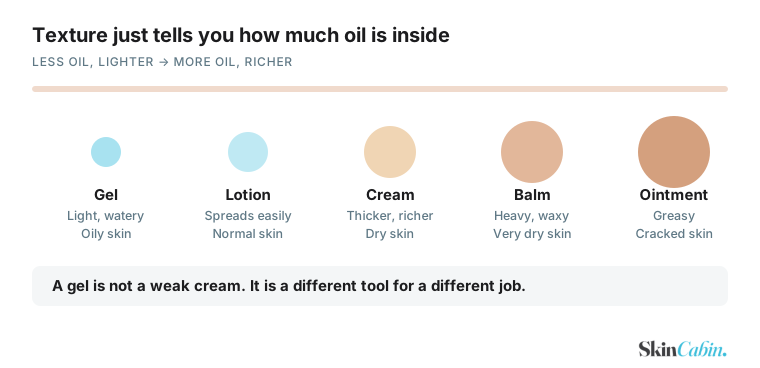 Texture is not strength. It is how much oil is inside.
A gel is not a weak cream. It's a different tool for a different job. If you've ever wondered whether a moisturiser and a lotion are the same thing, that's the answer — it's the oil.
Someone with oily skin may do better with a gel. Someone with dry skin may do better with a cream. Neither one is stronger. They just suit different skin.
So the thickest cream on the shelf isn't the best one. It's the best one for dry skin.
What does a moisturiser do?
A moisturiser does four jobs at the same time.
1. It adds water to your skin. The top layer of your skin can soak up water. A moisturiser gives it some.
2. It slows water escaping. Water is always leaving your skin into the air. A moisturiser puts a soft layer on top. That layer slows the water down.
3. It smooths the surface. Dry skin has tiny gaps and flakes on top. A moisturiser fills those gaps. Your skin feels softer straight away.
4. It helps your skin repair. Your skin fixes itself all the time. When your skin is dry, that repair work gets harder. Holding water in makes the job easier.
Managing dryness, or improving it?
There is a difference worth knowing.
Every moisturiser manages dryness while you are wearing it. It adds water, holds it in, and your skin feels better.
Some go further. Ingredients like ceramides, niacinamide and panthenol help rebuild the wall itself. Over weeks, your skin gets better at holding water on its own.
So one type works while it is on your skin. The other helps your skin work better between uses. There's more on whether a moisturiser treats dry skin or just masks it.
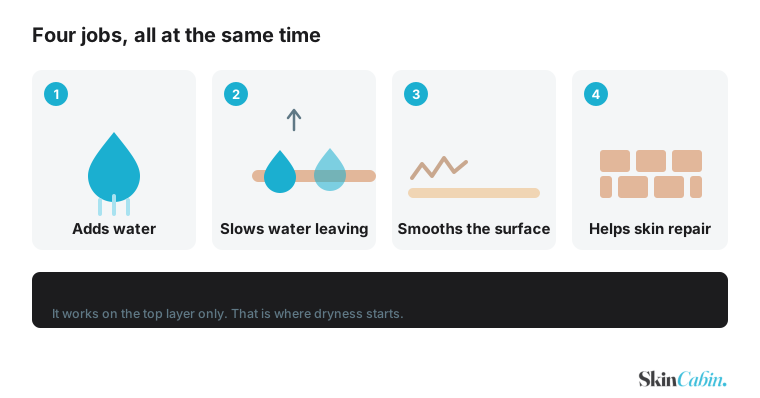 Four jobs, happening at once.
Notice what's missing from that list.
A moisturiser doesn't feed your skin. It doesn't sink deep down and change what's happening below. It works on the top layer only.
That might sound like a weakness. It isn't. The top layer is where dryness starts.
Moisturiser, serum, face oil or cleanser?
People mix these four up all the time. Here's the difference.
- Cleanser — washes off dirt, oil and makeup. First step.
- Serum — adds one thing, like vitamin C. Goes on after cleansing.
- Moisturiser — adds water and holds it in. Goes on after serum.
- Face oil — softens and seals, but adds no water. Last step.
Face oil is the one that surprises people. Oil has no water in it.
Oil can keep water in. It can't put water there.
That's why an oil on its own can't replace a moisturiser. If your skin is dry and the air is dry, oil alone can leave you feeling worse.
That's the short answer. But "slows water escaping" only makes sense once you know something else. Your skin is losing water every second of the day. Most people are never told this part. And it explains everything that follows.
Part 2 — Why your skin needs one
Why does skin get dry?
Your skin loses water into the air all the time. Day and night. This happens even when your skin looks perfectly fine. It's normal.
So why doesn't your skin dry out completely? Because of the outer layer of your skin.
The skin barrier The skin barrier is the very top layer of your skin. It's made of flat, dead skin cells packed close together. Between them sits a fatty material that holds them in place.
Think of a brick wall. The cells are the bricks. The fats are the mortar. The wall keeps water in and keeps harmful things out.
Your skin is a wall, not a sponge. It's built to keep things out, not soak things up.
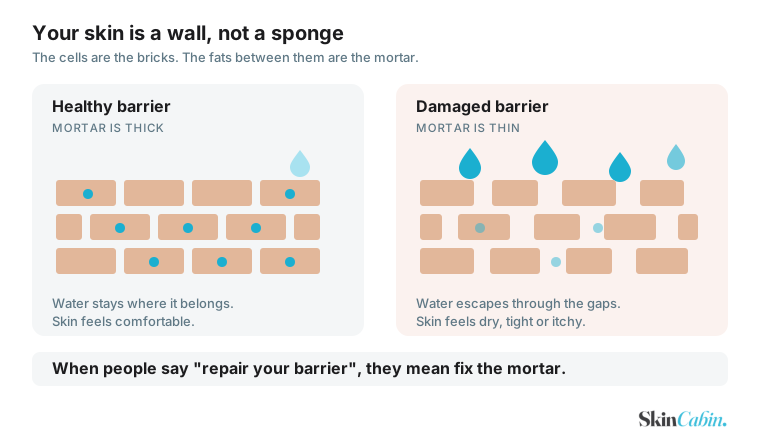 A healthy barrier keeps water in. A damaged one lets it out.
When the wall is in good shape, water leaves slowly. Your skin feels comfortable.
When the wall has gaps, water rushes out. Your skin can't replace it fast enough. That's when skin feels dry, tight, rough or itchy.
So when people talk about "repairing your barrier", this is what they mean. Fixing the mortar.
Lots of everyday things damage the wall:
- Cold air. Cold air holds less water. So it pulls more water out of your skin.
- Heating indoors. Heating dries the air in your home. Often more than the air outside.
- Hot showers. Hot water strips away the fats between your skin cells.
- Harsh soap. Foaming washes and bar soaps can take off more oil than they should.
- Washing too often. Every wash takes a little of the wall away.
- Getting older. Your skin makes less oil as you age. So the mortar gets thinner.
- Strong skincare. Acids, scrubs and retinol can damage the wall if you use too much, too fast.
Look at that list again. Most of these are things you do. Not things you were born with.
That's good news. It means dry skin is often something you can change.
Dry skin vs dehydrated skin
These sound like the same thing. They're not.
Telling them apart helps you pick the right product.
Dry skin is short of oil. Your skin doesn't make much oil on its own. It tends to feel rough. It can look dull or flaky. This is usually a skin type. You have it most of the time.
Dehydrated skin is short of water. Your skin has enough oil but not enough water. It feels tight. Fine lines show up more. This is temporary. It's not a skin type.
The difference between a moisturiser and a hydrator covers this in more detail.
Here's the part that confuses everyone. You can have oily skin that is short of water.
Your face can look shiny by midday and still need water. Oil and water are different things.
That sounds obvious. But it's the whole reason oily skin can still feel dry. You can be oily and thirsty at the same time.
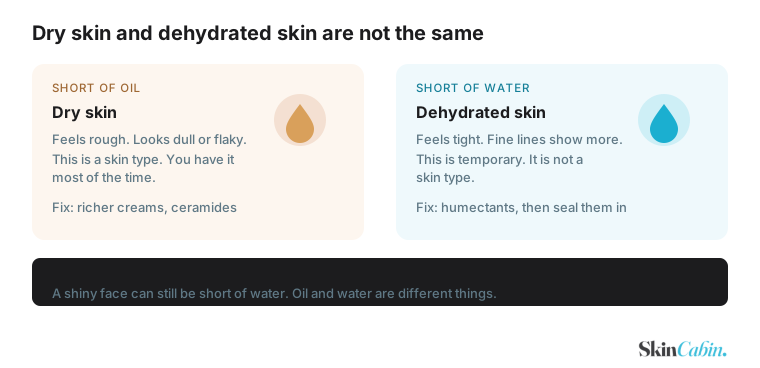 Dry skin is short of oil. Dehydrated skin is short of water.
A quick way to tell them apart:
- Skin feels rough and flaky? It's likely short of oil.
- Skin feels tight but still goes shiny? It's likely short of water.
- Feels both rough and tight? It may be short of both.
Why your face feels tight after washing. Tight is not clean.
That feeling means your cleanser took off too much oil. Water is now escaping fast. A good cleanser leaves your skin comfortable, not squeaky.
Why winter is worse. In winter you get cold, dry air outside. Then heated, dry air inside. You also take hotter showers.
All three pull water out of your skin at once. Most people need a richer moisturiser in winter.
If you want to know what happens when you skip it entirely, we've covered what happens to skin if you never moisturise.
✓ What you know now
- Your skin loses water all day. That's normal.
- The outer layer of your skin slows the loss down.
- When that layer is damaged, skin feels dry, tight or itchy.
Part 3 — What's inside the tube
Every moisturiser looks different. Some cost £8. Some cost £200.
But inside, nearly all of them rely on the same three kinds of ingredient.
What is a moisturiser made of?
Every moisturiser is built from three kinds of ingredient. Each one has a different job.
Learn these three and you can read any product label you ever pick up.
Humectants — they pull water in
Humectant An ingredient that pulls water in and holds it near the top of your skin.
Humectants work like a sponge. They grab water and keep it close to the surface. Your skin feels plump and comfortable.
Common ones: glycerin, hyaluronic acid, urea, panthenol, aloe.
Glycerin does most of the work in most products. It's cheap. It's been studied for years. And it works well. If glycerin sits near the top of the ingredients list, that's a good sign.
One thing to know. Humectants work best when something seals them in.
Put a hyaluronic acid serum on bare skin in dry air, with nothing on top, and your skin can still feel tight. The water it pulls in has nowhere to stay. So humectants need a partner.
Emollients — they smooth and fill
Emollient An ingredient that softens your skin and fills the small gaps on the surface.
Go back to the brick wall. When the mortar gets thin, small gaps appear.
Emollients settle into those gaps. Your skin feels smooth right away. And the wall works better.
Common ones: squalane, plant oils, fatty alcohols, ceramides, shea butter.
Fatty alcohols confuse people. The word "alcohol" sounds drying. But these are not the drying kind.
Cetyl alcohol and stearyl alcohol are waxy and softening. They're good for dry skin.
Occlusives — they seal the top
Occlusive An ingredient that forms a thin layer on your skin to stop water escaping.
Occlusives are the lid. They don't add water. They stop the water you already have from leaving.
Common ones: petroleum jelly (also called petrolatum), dimethicone, mineral oil, beeswax, shea butter.
Petroleum jelly is the strongest of them all. You may know it as Vaseline. It cuts water loss more than anything else.
It also feels greasy. That's why most face creams use lighter options like dimethicone instead.
Why a good moisturiser uses all three
- Humectants pull water in. They work like a sponge. Glycerin and hyaluronic acid.
- Emollients smooth and fill the gaps. They work like mortar in a wall. Squalane and ceramides.
- Occlusives stop water leaving. They work like a lid. Petroleum jelly and dimethicone.
For the full list of which ingredients belong in each group, see humectants, emollients and occlusives.
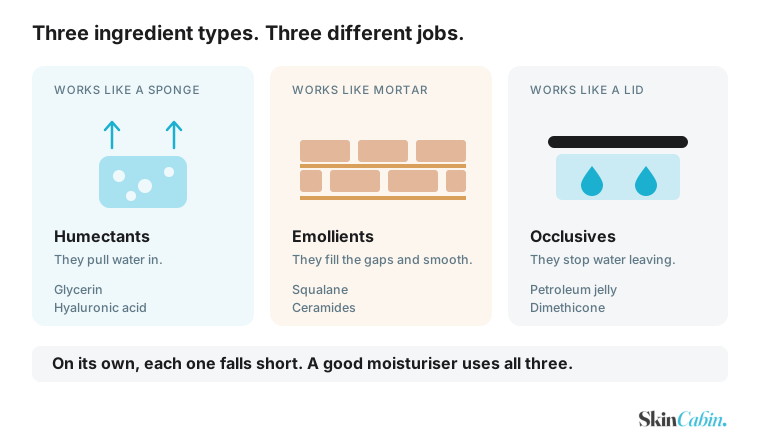 A sponge, some mortar, and a lid.
On its own, each one falls short.
A humectant pulls water in but lets it go again. An occlusive holds water in but adds none. An emollient feels nice but does little for water.
Together they work properly.
Think of dry soil in a garden on a hot day.
You pour the water in. That's the humectant. You fill the cracks so it doesn't run straight off. That's the emollient. You cover it so the sun can't take it back. That's the occlusive.
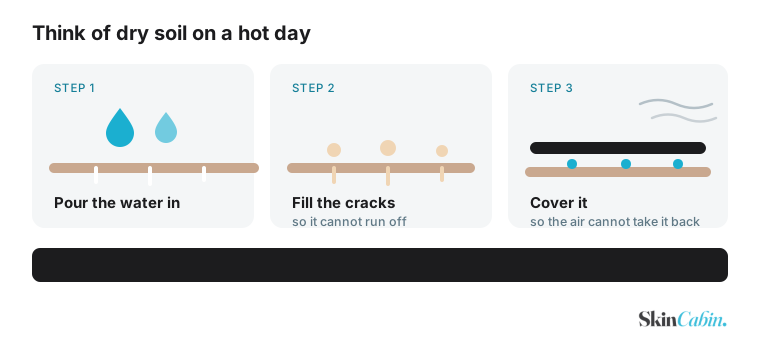 Pour it in. Fill the cracks. Put a lid on.
Nearly every good moisturiser does all three. The packaging may not say so.
What are the other ingredients for?
Look at a full ingredients list. Most of it won't be humectants, emollients or occlusives. Here's what the rest is doing.
Water. Usually the first ingredient, and the biggest part of the product. It's not filler. Water is what your skin is short of.
Emulsifiers. Oil and water don't mix. Emulsifiers stop the oil and water splitting apart in the jar.
Thickeners. These control the texture. They're the difference between a runny lotion and a thick cream.
Preservatives. Any product with water in it will grow mould and bacteria. Preservatives stop that.
People often treat preservatives as the bad guy. They're a safety feature, not a shortcut.
pH adjusters. Healthy skin is slightly acidic. These keep the product in a range your skin is happy with.
Fragrance and essential oils. These make a product smell good. They are also the most common cause of skin reactions to moisturisers.
Essential oils are still fragrance. "Natural" does not make them gentler. If your skin reacts easily, fragrance-free is the safer choice.
Which ingredients help a weak skin barrier?
Does your skin feel dry, tight or easily upset? These are the ingredients worth looking for. For how to tell whether yours is damaged and how long repair takes, see what is the skin barrier.
Ceramides. These are fats that sit between your skin cells. Your skin makes them on its own. It makes fewer as you get older. Putting them back helps rebuild the wall.
Niacinamide. A form of vitamin B3. It calms redness and helps your skin build its own fats. It also helps with oil. That makes it useful for oily skin that still feels tight.
Glycerin. Simple, cheap and reliable. Pulls water in and helps your skin recover.
Panthenol. A form of vitamin B5. It adds water and calms skin that feels sore.
Colloidal oat. Ground-up oats. Calms itching and redness. Common in products for eczema-prone skin.
Cholesterol and fatty acids. These work alongside ceramides. Products with all three tend to repair a damaged wall better than any one alone.
How to read an ingredients list in 30 seconds
You don't need to know all 30 ingredients. Here's what matters.
The order tells you the amount. Ingredients are listed from most to least. What's near the top makes up most of the product. What's at the bottom is often there in tiny amounts.
Only the top five really count. A brand may shout about one ingredient. If it sits second from the bottom of the list, there's barely any in there.
The label sells. The list tells.
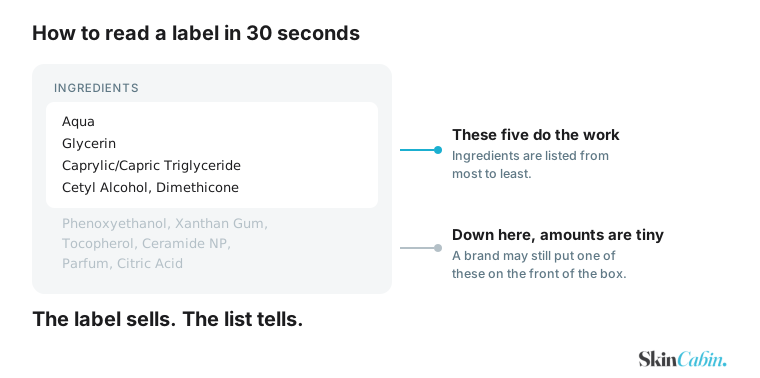 The top five are the product. The rest is detail.
Claims that tell you nothing:
- "Dermatologist tested" — tested, but we're not told what happened
- "Clinically proven" — no fixed standard for this
- "Natural" — not a controlled word. Natural is not a safety rating.
- "Chemical free" — everything is a chemical, water included
Claims that do tell you something:
- Fragrance-free — no scent added. Useful if your skin reacts easily. Watch out for "unscented", which can still hide a scent.
- Non-comedogenic — this means the brand tried to make it less likely to block pores. It's not a promise. But it tells you what they were aiming for.
- Suitable for eczema-prone skin — usually means a simple formula and no fragrance.
✓ What you know now
- Humectants pull water in. Emollients smooth. Occlusives seal.
- A good moisturiser does all three.
- The ingredients list is ordered by amount, so the top five tell you most of what you need.
Part 4 — Does this apply to me?
You now know what a moisturiser does and what's inside it. The next question is the one people actually came for.
Do you need one?
Does everyone need a moisturiser?
Nearly everyone, yes. But for different reasons, and with different products.
Dry skin. Yes, clearly. Your skin makes less oil, so the wall between your cells is thinner. Look for creams and balms with ceramides.
Oily skin. Yes. This one surprises people.
Oil and water are different. Your skin can make plenty of oil and still be short of water. Skipping moisturiser often leaves skin feeling tight. That pushes people to wash more, which damages the wall further.
A light gel or lotion with glycerin and niacinamide usually works well.
Acne-prone skin. Yes. This matters even more if you use acne treatments. Most of them dry your skin out.
A moisturiser helps you keep using your treatment without your skin getting sore and flaky. Look for light, fragrance-free products that say non-comedogenic.
Combination skin. Yes. Some people use a light product on the oily parts and a richer one on the dry parts. Others find one balanced lotion is fine. Both work.
Sensitive skin. Yes. This group may benefit most of all.
Choose simple, fragrance-free products with a short ingredients list. Fewer ingredients means fewer chances to react.
Older skin. Yes. Your skin makes less oil as you age, so dryness is more common. Richer creams with ceramides tend to suit better.
Teenagers. Usually yes. Especially if you use acne treatments. A light, fragrance-free lotion is plenty. Nothing complicated is needed.
Men. Same skin, same rules. Men's skin is a bit thicker and often oilier, so lighter textures often suit. A special "men's" product isn't needed.
Does the season change things? Often, yes. Many people want something richer in winter and lighter in summer.
If your skin feels tight in January and greasy in July, switching products makes sense. That's not a marketing trick.
If you're still unsure, do I actually need a moisturiser? goes through it case by case.
Is there anyone who doesn't need one? A few people do fine without.
If you have oily skin, live somewhere humid, use a gentle cleanser, and your skin never feels tight or rough, you may be one of them.
But if you use any acne treatment, retinol or acid, you still need a moisturiser.
Part 5 — How to use it
When should you put it on?
Twice a day is the usual advice. Once in the morning. Once at night.
The best moment is straight after washing. Washing takes away some of your skin's own oil. Water then starts leaving faster.
Putting moisturiser on at that point makes the biggest difference. One study found better results when moisturiser went on right after bathing, rather than an hour later.
Can't manage twice a day? Keep the night one. Your skin does more repair work while you sleep.
Damp skin or dry skin?
Damp skin.
Wash your face. Pat it with a towel until it's damp but not dripping. Then put your moisturiser on.
The reason is simple. Damp skin gives your moisturiser something to hold on to.
If your face is bone dry, there's less water to keep in. If it's damp, you keep that water instead of losing it to the air.
Don't wait too long. Skin dries within a couple of minutes. Aim to apply within about a minute of patting dry.
How much should you use?
For your face, about a pea-sized to almond-sized amount suits most people.
Still see white streaks after a minute of rubbing? You've used too much.
For body amounts and the measure dermatologists use, see how much moisturiser should you use.
For your body, use more than feels normal. Most people use too little on their arms and legs.
One study looked at how much people used. Skin held more water when people used a decent amount twice a day, right after bathing. A thin layer once a day did less.
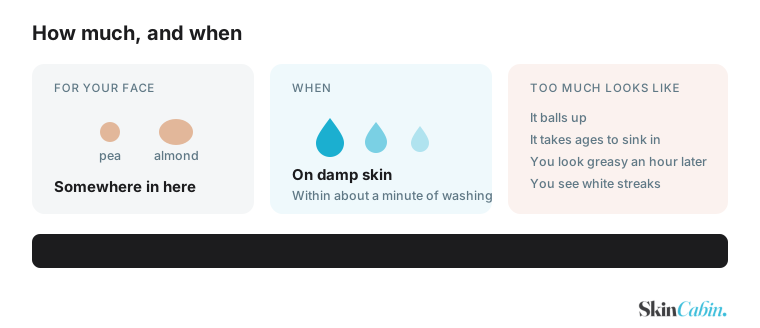 How much, and when.
Signs you're using too much: The product balls up. It takes ages to sink in. Your face looks greasy an hour later. Or you get small bumps.
Signs you're using too little: Your skin feels tight again within an hour. Or it feels rough by the end of the day.
What order do your products go in?
The rule is simple. Thinnest first. Thickest last. For the full routine, waiting times and which combinations clash, see what order do skincare products go in.
Morning:
- Cleanser
- Serum
- Moisturiser
- Sunscreen
Night:
- Cleanser
- Treatment, like retinol or acid
- Moisturiser
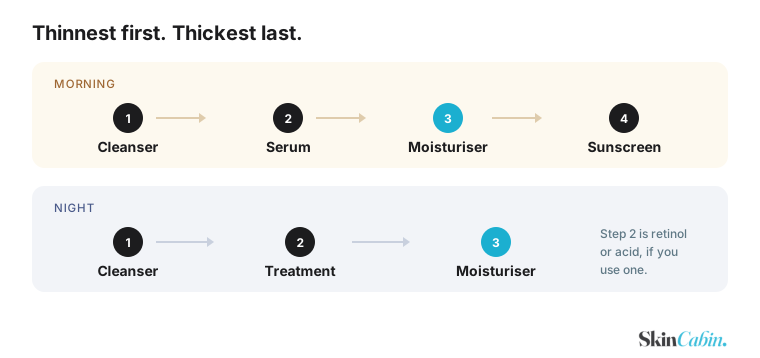 Morning and night, in order.
With retinol. You have two choices.
Put moisturiser on after your retinol, as normal. Or, if retinol upsets your skin, put a thin layer on before the retinol too. This slows the retinol down and makes it easier on your skin.
With acids and vitamin C. Put these on clean, dry skin first. Then moisturiser on top. Wait a minute or two between steps.
With sunscreen. Sunscreen goes on last. Give your moisturiser a couple of minutes to settle first. Otherwise the two can roll off each other.
With makeup. Let your moisturiser sink in fully before makeup. Rushing this is the top reason foundation looks patchy.
How long does it take to work?
Different effects arrive at different speeds. Knowing which is which stops you giving up too soon.
Within minutes. Your skin feels smoother and less tight. That's the emollients filling gaps on the surface.
Within hours. Your skin holds more water. It stays comfortable for longer.
Within two to four weeks. If your barrier was damaged, it starts to recover. Flaking settles down. Redness calms. Your skin stops reacting to everything.
Never. A moisturiser won't remove wrinkles or shrink your pores. More on that below.
Still feel dry after four weeks of steady use? The product is probably not right for you.
Do you need more than one?
Day and night. Not required, but it can help.
Many people use something lighter in the morning, so it sits well under sunscreen and makeup. Then something richer at night.
Face and body. Yes, ideally.
Body skin is thicker and less likely to break out. So body lotions are often heavier and more strongly scented. That can be too much for a face.
Eye cream. Optional.
The skin around your eyes is thinner and easily upset. But most eye creams are just gentler moisturisers in smaller jars, at higher prices. If your normal moisturiser doesn't sting your eyes, you can use it there.
Switching by season. Often worth it. A richer cream in winter and a lighter one in summer suits most people.
✓ What you know now
- Put it on twice a day, on slightly damp skin, right after washing.
- Thinnest product first. Thickest last.
- Smoother skin comes in minutes. Real repair takes weeks.
Part 6 — When it goes wrong
Sometimes you do everything right and it still doesn't work.
Almost always, there's a simple reason.
Why is my moisturiser not working?
Most moisturiser problems have simple causes. Here are the common ones.
It balls up and rolls off my skin
This is called pilling. It's usually one of four things:
- Too much product. Your skin can only take in so much.
- Not waiting between layers. Each layer needs a moment to settle.
- Products that don't get along. Silicone products and water-based products often refuse to blend.
- Dead skin on the surface. The product catches on flakes.
To work out which of the four is yours, see why is my moisturiser pilling.
Fix: use less. Wait a minute between steps. Press the product in instead of rubbing hard.
I broke out after switching
There are two likely reasons.
The formula is too rich for you. Some heavier ingredients can block pores on acne-prone skin. Try a light gel or lotion instead of a thick cream.
Your skin is upset, not blocked. Fragrance or a strong active can cause small bumps that look like spots. Did it start right after you added a scented product? That's a clue.
Telling those two apart properly matters, and we cover it in does moisturiser cause breakouts.
One thing to rule out. Retinol and acids can cause a short flare-up called purging. Moisturisers don't work that way. So a moisturiser breakout is usually a sign the product is wrong for you.
It stings or burns
Stop using it. Stinging is a warning, not a workout.
Common causes are fragrance, essential oils, drying alcohol high on the list, or strong actives.
Sometimes the product is fine and your barrier is already damaged. Then everything stings. If that sounds like you, go back to a plain, fragrance-free moisturiser and a gentle cleanser for two weeks.
It feels greasy or makes me shiny
Usually too much product. Or a texture that's too rich.
Try something lighter. A gel or lotion instead of a cream. And use less. If your skin looks shiny within an hour, the formula is heavier than you need.
My skin still feels dry afterwards
Usually one of three things.
The formula has no occlusive. Water goes in and comes straight back out. Look for dimethicone, shea butter or petrolatum on the label.
It's nearly all humectants. In dry air, that can leave skin feeling tight. Add a richer cream on top.
The problem isn't dryness. Is your skin also red, sore and easily upset? The wall may be damaged. That takes a few weeks to recover.
It leaves a white cast or won't sink in
Often a mineral sunscreen above or below it. Or a very thick layer.
Try putting it on damp skin. Use less. And warm it between your fingers first.
It worked before and now it doesn't
Your skin didn't get used to it. Something around it changed.
The usual causes are the seasons turning, a house move, a new cleanser, a new active, or a change in age or hormones.
Products don't stop working. Conditions change.
How do you know if it's wrong for you?
Is it a reaction, or is your skin just settling in?
A reaction:
- Starts within minutes or hours
- Stings, burns or itches
- Looks red, blotchy or puffy
- Gets worse each time you use it
Your skin settling in:
- Builds over several days
- Feels mild, and settles quickly
- Looks a bit shiny or tacky at most
- Gets better each time you use it
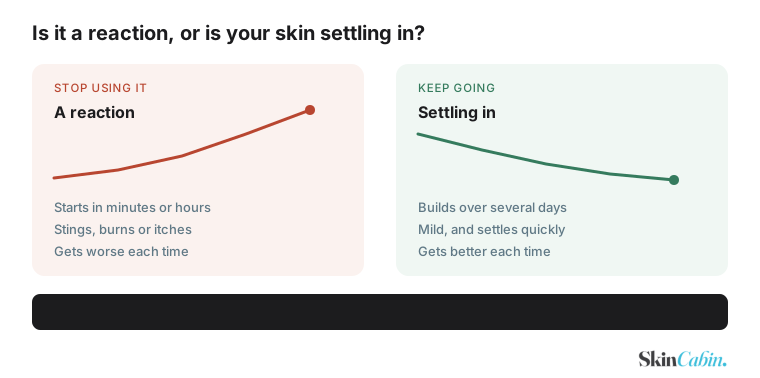 A reaction climbs. Settling in falls away.
A reaction gets worse. Settling in gets better. If it's getting worse, stop.
How long should you give a new moisturiser?
Two to four weeks, if nothing hurts. That's long enough to see real change. But stop straight away if it stings, burns or itches.
How to patch test properly:
- Put a small amount on the inside of your arm, or behind your ear.
- Do this twice a day for five to seven days.
- Watch for redness, itching, bumps or stinging.
- Nothing happened? Try it on a small part of your face for a few days.
This takes a week. It can save you a month of trouble. Worth doing with any product if your skin reacts easily.
Part 7 — What's not true
Moisturisers are useful. They're also sold with a lot of promises they can't keep.
Knowing the difference saves you money.
What a moisturiser cannot do
Knowing the limits helps you spend your money better.
It won't remove wrinkles.
A moisturiser makes fine lines look softer while your skin holds water. Plump skin catches light differently. That effect is real, but it doesn't last. It fades as your skin dries out.
Deep lines sit in the structure of your skin. A moisturiser doesn't reach that far.
It won't cure acne.
Acne involves oil, blocked pores, bacteria and swelling. A moisturiser doesn't act on any of those directly.
What it does do is help you keep using acne treatments that would otherwise dry you out. That matters a lot.
It won't change your pore size.
Pore size comes mostly from your genes and how much oil you make. Skin that holds water can make pores look a bit less obvious. The pores themselves don't change.
It won't cure eczema or psoriasis.
These are medical conditions. Moisturisers are an important part of managing them, and doctors recommend them for that reason. But they are not a cure. See a doctor.
It won't replace sunscreen.
Some moisturisers include SPF. That's a nice bonus.
But most people put moisturiser on far more thinly than sunscreen needs to be. So the real protection is often lower than the number on the bottle. If sun protection matters to you, use a separate sunscreen.
Common myths
"Your skin gets addicted to moisturiser"
It doesn't. There's no good evidence for it, and no known way it could happen.
Here's where the idea comes from. Once you get used to comfortable skin, going back to dry skin feels much worse than before.
Your skin didn't get weaker. Your memory of dry skin did.
We've written about whether skin can become dependent on moisturiser separately.
There is one small grain of truth. A heavy occlusive can hide a damaged wall instead of repairing it. That's a reason to pick a repairing formula. It's not a reason to stop.
"Oily skin doesn't need moisturiser"
We covered this above. It's worth repeating, because it's the most common mistake in skincare.
Oil and water are different. Oily skin can still be short of water.
And skipping moisturiser tends to leave skin feeling tight. That pushes people towards harsher washing, which makes everything worse.
"Expensive moisturisers work better"
Price mostly reflects packaging, marketing and how a product feels. Not how well it works.
One study looked at best-selling moisturisers. It pointed towards products that are cheap, easy to find, and unlikely to cause a reaction.
Glycerin, petroleum jelly, dimethicone and ceramides are not expensive. A £10 moisturiser with a good formula beats a £100 one with a poor formula.
That said, feel isn't nothing. The best moisturiser is the one you'll actually use.
"Drinking more water hydrates your skin"
Drinking enough water is good for you. But it won't push extra water into your skin's outer layer, if you're already drinking enough.
That layer loses water to the air. The fix is on the outside, not the inside.
Being badly dehydrated does show in your skin. Drinking one extra glass doesn't.
"Natural ingredients are gentler"
Not always.
Some of the most common causes of skin reactions are natural. Essential oils. Citrus extracts. Plant fragrances.
Meanwhile petrolatum and dimethicone are both made in a lab. And both are among the least likely to upset anyone.
Where an ingredient came from tells you nothing about how your skin will react to it.
Your skin can't read the label. It only responds to what's on it.
"You should feel it working"
Tingling is not a sign of a product working. It's usually a sign of irritation.
A good moisturiser should feel like almost nothing. Comfortable. Smooth. Boring.
Boring is the goal.
Part 8 — Next steps
How do you choose one?
Four steps.
- Match the texture to your skin and your weather. Gel or lotion for oily skin and warm weather. Cream or balm for dry skin and cold weather.
- Check the top five ingredients. You want a humectant like glycerin, something that smooths, and something that seals.
- Go fragrance-free if your skin reacts easily. This one choice prevents most problems.
- Give it two to four weeks. Judge it after a month, not after one use.
Every moisturiser on SkinCabin is scored the same way. Find products →
When should you see a doctor?
A moisturiser handles ordinary dryness. See a doctor or pharmacist if:
- Your skin is cracked, bleeding or weeping
- Four weeks of proper moisturising hasn't helped
- Itching keeps you awake at night
- You have red, scaly or thickened patches
- Redness is spreading, or the skin feels hot
- Your skin changed suddenly for no clear reason
- You have painful acne that leaves marks
These can point to eczema, psoriasis, an allergy or an infection. All of them do better with proper treatment than with a different cream.
Quick recap
- A moisturiser helps your skin hold water. That's the whole job.
- Your skin loses water all the time. Your outer layer slows this down.
- Cold air, heating, hot showers and harsh washing damage that layer.
- Three ingredient types do the work. Humectants pull water in. Emollients smooth. Occlusives seal.
- Good moisturisers have all three.
- Dry skin is short of oil. Dehydrated skin is short of water. You can be oily and short of water.
- Nearly everyone benefits, including oily and acne-prone skin.
- Put it on twice a day, on damp skin, straight after washing.
- Use a pea-sized to almond-sized amount on your face.
- Thinnest first, thickest last. Sunscreen goes on last in the morning.
- Stinging means stop.
- Your skin can't get addicted to moisturiser.
- Price is a poor guide. Read the ingredients instead.
Frequently asked questions
Do I really need a moisturiser, or is it just marketing? You need one if your skin feels tight, rough or itchy. You also need one if you use any acne treatment, retinol or acid. Moisturisers have a clear, measured effect on how much water your skin holds. A few people with oily skin in humid places do fine without one.
Does oily skin need moisturiser? Yes. Oil and water are different things. Oily skin can still be short of water. Use a light gel or lotion, not a rich cream.
Can my skin become addicted to moisturiser? No. Skin that's been comfortable just feels worse when it gets dry again. You've got used to the difference. Your skin hasn't got weaker.
Should I put moisturiser on wet or dry skin? Slightly damp. Pat your face until it's damp but not dripping. Then apply within about a minute.
How much moisturiser should I use on my face? About a pea-sized to almond-sized amount. If you can still see white streaks after a minute, that's too much.
Does moisturiser go before or after serum? After. Serums are thinner, so they go first. Thinnest to thickest is the rule.
Does moisturiser go before or after sunscreen? Before. Sunscreen is the last step in the morning.
Why does my moisturiser ball up on my face? Usually too much product. Or not waiting between layers. Or two products that won't blend. Use less and pause a minute between steps.
Why did I break out after starting a new moisturizer? Either the formula is too rich for you, or something in it is upsetting your skin. Fragrance is the most common cause. Moisturisers don't cause purging, so treat it as a sign the product is wrong.
Can I use body lotion on my face? It's not ideal. Body lotions are usually heavier and more strongly scented. That can block pores or upset facial skin.
Do I need an eye cream? Not always. Most eye creams are gentler moisturisers in smaller jars. If your normal one doesn't sting your eyes, you can use it there.
Is an expensive moisturiser better? Not reliably. The most useful ingredients are cheap. Price usually reflects texture, packaging and marketing. Read the top five ingredients instead.
Will moisturiser get rid of my wrinkles? No. It makes fine lines look softer while your skin holds water. But that fades, and it doesn't change deeper lines.
How long before a moisturiser works? Your skin feels smoother within minutes. If your barrier was damaged, real change takes two to four weeks.
Sources
- American Academy of Dermatology — Dry skin: overview
- American Academy of Dermatology — Dermatologists' top tips for relieving dry skin
- American Academy of Dermatology — How to pick the right moisturiser for your skin
- How much moisturiser to use, and when — study on application dose, timing and frequency
- Ingredients and allergy risk in best-selling moisturisers — cohort study
- Cleveland Clinic — Dry skin (xeroderma)