What Is the Skin Barrier?
In short
Your skin barrier is the very top layer of your skin. It keeps water in and keeps irritating things out.
When it's working, your skin feels comfortable and doesn't react much. When it's damaged, your skin feels tight, stings easily, and reacts to products that never used to bother it.
It repairs itself. Most of the healing happens in two to four weeks, if you stop making it worse.
Where is it, exactly?
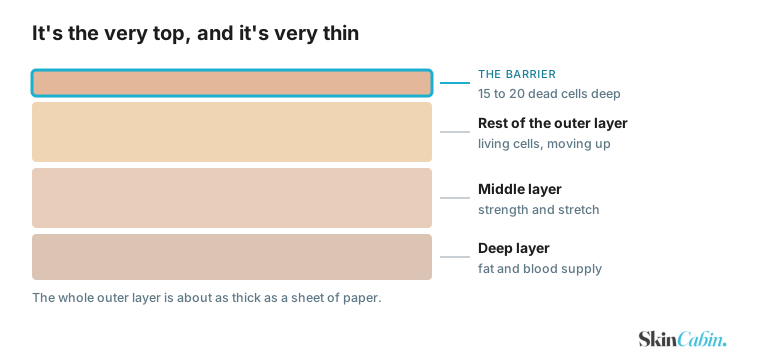
Your skin has three main layers. The barrier is only part of the top one.
 Thinner than you'd think.
The top layer is called the epidermis. It's about as thick as a sheet of paper.
The very top of that is the bit we call the barrier. It's roughly fifteen to twenty cells deep, and every one of those cells is dead.
Below that sit the living layers. Then the deeper structure that gives skin its strength.
So barrier damage means damage to something very thin. That's why it heals fairly fast. It's also why it's so easy to damage.
What is it made of?
Our guide to what a moisturiser does uses a wall to picture this. Flat dead cells as bricks. Fatty material between them as mortar.
Here's what that mortar is actually made from, because this is the part that matters when you're choosing products.
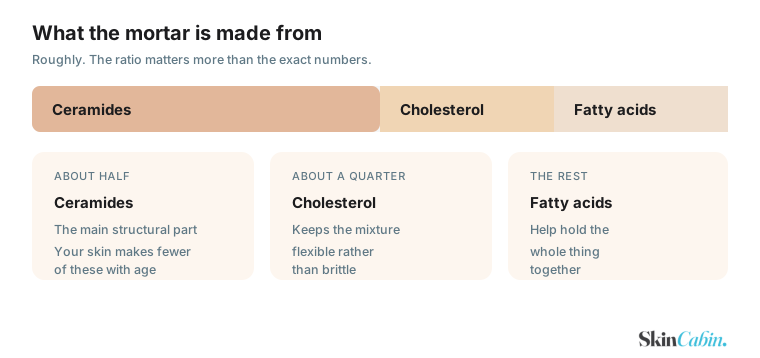 The three fats, in roughly the proportions your skin uses.
Roughly half is ceramides. These are fats your skin makes itself. They're the main structural part.
About a quarter is cholesterol. Yes, the same word you hear about in blood tests. In skin, it keeps the mixture flexible rather than brittle.
The rest is fatty acids. These help hold the whole thing together.
The ratio matters more than the amount. Skin repairs best when all three are there in roughly the proportions it uses itself. That's why products with all three often beat a big dose of ceramides alone.
And inside the bricks
The dead cells aren't empty. They hold a mix of small water-holding substances your skin makes itself. Amino acids, urea, lactic acid and salts.
You'll see this called natural moisturising factor. It's what keeps the surface cells soft and pliable.
Harsh cleansers wash it out. That's one reason your face feels tight after a foaming wash. And why it takes hours to feel normal again.
What does it actually do?
Three jobs, all at once.
Keeps water in. Water is constantly evaporating from your skin into the air. The barrier slows that down. Nothing stops it completely.
Keeps irritants out. Pollution, harsh ingredients, allergens and general grime. A healthy barrier is a poor doorway.
Keeps microbes in check. Your skin surface is slightly acidic. That suits the bacteria that belong there and discourages the ones that don't. Harsh soap pushes it the wrong way for a few hours.
The measurement. Researchers judge barrier health by how fast water escapes. The term is transepidermal water loss, usually shortened to TEWL. Higher numbers mean a leakier barrier. You'll see it in product studies.
How do you know if yours is damaged?
There's no test you can do at home. But the pattern is recognisable.
The usual signs:
- Skin stings when you apply things that never used to sting
- Tight straight after washing, and it stays tight
- Redness that comes and goes without a clear cause
- Rough or flaky patches
- Products you've used for years suddenly don't agree with you
- Skin feels dry no matter how much moisturiser you use
- Small bumps that aren't quite spots
The clearest single sign is on that list already. A product you've used happily for a year starts stinging. The product didn't change. Your barrier did.
What it isn't. Barrier damage is uncomfortable, not dangerous, and it isn't permanent. Skin repairs itself continuously.
What damages it?
Most of it is things people are doing on purpose, believing they're helping.
Over-cleansing. Washing twice a day is plenty for most faces. Foaming cleansers strip more than gentle ones.
Too many actives. Acids, retinol and vitamin C all have a place. Using several at once, every day, is the most common cause of a wrecked barrier.
Exfoliating too often. Scrubs and acids both. More is not better.
Hot water. It dissolves the fats between your skin cells. Lukewarm is enough.
Cold, dry air. Winter, heating, air conditioning, aeroplanes.
Harsh soap. Especially bar soap on the face.
Age. Your skin makes fewer ceramides as you get older.
Some skin conditions. Eczema involves a barrier that doesn't work properly to begin with.
Notice how many of those are choices. That's the good news.
How long does it take to repair?
This is the question people most want answered, so here's the honest timeline.
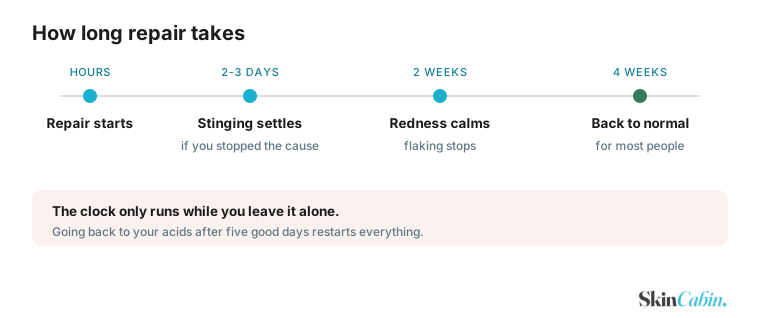 Four weeks, if you leave it alone.
Within hours. The very first repair signals start almost immediately after damage.
Two to three days. The worst of the stinging and tightness usually settles, if you've stopped whatever caused it.
Two weeks. Most of the visible improvement. Redness calms, flaking stops.
Four weeks. Most people are back to normal.
Longer. Badly damaged skin, older skin, or skin that keeps getting re-damaged can take two to three months.
The catch. The clock only runs while you leave it alone. Go back to your acids after five good days and it restarts.
What to do about it
The treatment is mostly subtraction. Stop doing the things that caused it.
For two to four weeks:
- Stop all actives. Acids, retinol, vitamin C, scrubs. All of them, not some of them. See what order do skincare products go in for reintroducing them safely.
- Switch to a gentle cleanser. Cream or milk texture, not foaming. Once a day is enough for many people while repairing.
- Lukewarm water only.
- Moisturise twice a day, on damp skin.
- Keep wearing sunscreen. This is the one active step you don't stop.
- Add nothing new. Not even something that promises to help.
What to look for while repairing. Ceramides, cholesterol and fatty acids together, if you can find them. Our guide to humectants, emollients and occlusives lists what does what. Failing that, ceramides plus glycerin. Niacinamide and panthenol help too.
What to avoid: fragrance, essential oils, and anything that tingles.
Then reintroduce slowly. One active, twice a week, for two weeks. If that's fine, build up. Adding it all back at once is how people end up here twice.
What do "barrier repair" products actually do?
Two things, and it's worth knowing which you're buying.
They supply the missing materials. Ceramides, cholesterol and fatty acids. The same things your skin uses to rebuild its own mortar. This genuinely helps.
They cover while it heals. An occlusive layer reduces water loss and gives your skin better conditions to work in.
What they don't do is speed up your skin's own repair work. No ingredient makes that faster. What they do is stop it going backwards.
So a barrier cream is genuinely useful. It just isn't a shortcut.
Is slugging worth it?
Slugging means putting a layer of petroleum jelly over your face at night to seal everything in.
It works for what it does. Petroleum jelly reduces water loss more than anything else you can buy.
It suits very dry skin, a damaged barrier, and cold dry weather.
It doesn't suit acne-prone skin, or oily skin in humid weather. Don't use it over actives either. Sealing an acid or retinol under it makes them stronger and more irritating.
And it isn't repairing anything. It's covering. Use a moisturiser with ceramides underneath if you want both jobs done.
When it isn't your barrier
Worth knowing, because "damaged barrier" has become the explanation for everything.
Eczema involves a barrier that doesn't work properly, but it's a medical condition and needs proper treatment.
Rosacea causes redness and stinging that look like barrier damage and won't resolve with a gentle routine alone.
Perioral dermatitis is a rash around the mouth and nose. It's often mistaken for dryness, and often made worse by rich creams.
Allergic reactions are a response to a specific ingredient, not general damage.
If four weeks of gentle care hasn't helped, it may not be a barrier problem. That's the point to see a doctor.
Frequently asked questions
What is the skin barrier? The top layer of your skin. Flat dead cells packed together with fatty material between them. It keeps water in and keeps irritants out.
How do I know if my skin barrier is damaged? The clearest sign is products that never used to sting starting to sting. Also tightness after washing, redness that comes and goes, and dryness however much moisturiser you use.
How long does it take to repair a damaged skin barrier? Most of the improvement comes in two to four weeks, if you stop what caused it. Badly damaged skin can take two to three months.
What repairs the skin barrier fastest? Stop all actives. Use a gentle cleanser and lukewarm water. Moisturise twice a day. No ingredient speeds up the repair itself.
Which ingredients help? Ceramides, cholesterol and fatty acids together are the closest match to what your skin uses. Niacinamide, panthenol and glycerin all help too.
Can I use retinol with a damaged barrier? Stop it for two to four weeks, then reintroduce twice a week. Continuing through the damage is what keeps people stuck.
Is slugging good for the skin barrier? It cuts water loss well, which gives your skin better conditions to heal. It doesn't repair anything itself, and it doesn't suit acne-prone skin.
Does the skin barrier get weaker with age? Yes. Your skin makes fewer ceramides as you get older. That makes it easier to damage and slower to recover.
Can you over-repair a barrier? Not really. But you can pile on so many products that one of them irritates you. That's why the advice during repair is to add nothing new.
Is a damaged barrier the same as dry skin? No. Dry skin is short of oil. A damaged barrier leaks water and lets irritants in. They often happen together, but they're different.
What is TEWL? Transepidermal water loss — how fast water escapes through your skin. It's how researchers measure barrier health. Higher means leakier.
Looking for a moisturiser with ceramides in it? Every product on SkinCabin is scored on its ingredients, not its marketing. Find products →