Brown and Red Acne Marks, and How Long They Last
In short
Spots leave two different kinds of mark, and they need completely different things.
Brown or grey marks are pigment. They fade over three to twenty-four months, and treatment can speed that up.
Red or pink marks are not pigment. They're widened blood vessels, and no brightening ingredient will touch them. They fade on their own in three to six months.
Neither one is a scar. Scars are changes in the texture of your skin — a dent or a raised lump. Marks are flat.
The three things people mix up
Get this straight and everything else follows.
Flat brown or grey mark. Extra melanin left after the spot healed. This is pigmentation.
Flat red or pink mark. Widened blood vessels left after the inflammation. Not pigmentation at all.
A dent, pit or raised lump. That's a scar. The structure of your skin changed. Creams won't fix it, and it needs a professional treatment if it bothers you.
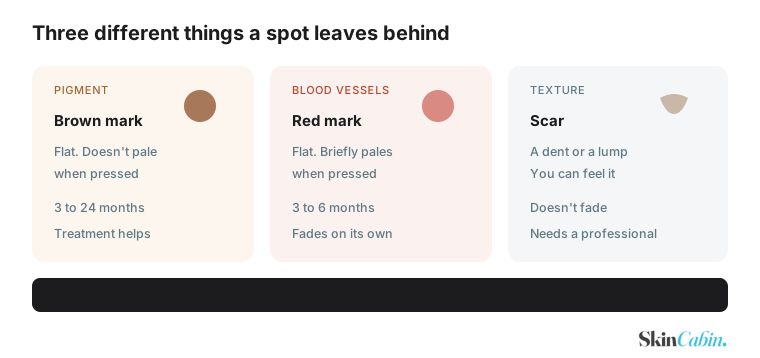 Three different things. One two-second test.
The test that takes two seconds. Press the mark gently with a fingertip and let go.
- It briefly goes pale, then the colour returns — blood vessels. Red mark.
- The colour doesn't change — pigment. Brown mark.
- You can feel a dip or a bump — scar.
Why this matters so much
Brightening ingredients act on melanin. Red marks contain none.
So someone with red marks buys vitamin C. Four months later, nothing. They decide their skin is beyond help. The product worked exactly as designed. It was aimed at the wrong thing.
It goes the other way too. Someone with brown marks waits for them to fade alone, because they read that redness settles by itself. Pigment doesn't behave that way.
Ten seconds with a fingertip saves months.
Brown marks: what's happening
A spot becomes inflamed. Your skin's repair response tells your pigment cells to make more melanin. The spot clears. The extra colour stays.
Where the melanin ends up decides how long it takes.
Near the surface. Melanin sitting in the top layers. Looks brown or tan with a fairly clear edge. Your skin sheds these layers naturally, so it lifts as those cells turn over. Three to twelve months.
Deeper down. Bad inflammation damages the boundary between the top layer and the one below. Melanin drops through and gets trapped. Looks greyer, with a hazier edge. Nothing sheds it. Twelve to twenty-four months, sometimes longer.
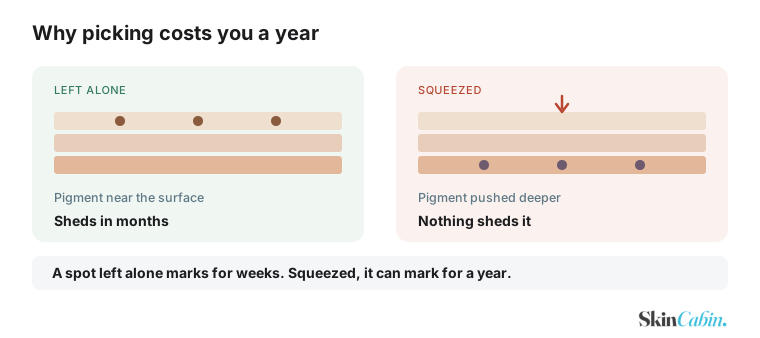 Squeezing pushes it below the layers that shed.
This is exactly why picking costs so much. Squeezing pushes inflammation deeper. Deeper inflammation puts pigment lower down. Lower pigment takes years instead of months.
A spot left alone might mark for six weeks. The same spot squeezed can mark for a year.
Why some people mark far more than others
Skin with more melanin has pigment cells that respond more readily. Same spot, same inflammation, stronger and longer-lasting mark.
If that's your skin:
- Marks after spots are more common and last considerably longer
- Harsh treatments carry more risk, because irritation itself causes marking
- Preventing the inflammation matters more than treating the mark afterwards
The trap. Aggressive scrubs, strong peels and anything that stings all cause inflammation. On skin that marks easily, treating the mark can cause the next one.
Gentle and consistent beats strong and fast, every time.
Red marks: what's happening
Inflammation widens the small blood vessels near the surface of your skin. Once the spot has gone, those vessels can stay dilated for months.
That's the red mark. It isn't pigment, it isn't a scar, and there's nothing sitting in your skin that needs removing.
What it looks like. Flat, pink or red, and often more obvious after a hot shower, exercise, or a drink — anything that increases blood flow.
How long. Three to six months for most people. Longer if you keep picking, because each new inflammation restarts the clock.
More common on lighter skin, where widened vessels show through more.
What actually helps red marks
Less than you'd hope, and that's worth knowing before you spend money.
Time. The main one. They genuinely do fade.
Not picking. Every new spot in the same area restarts it.
Sunscreen. Doesn't fade the redness directly, but sun makes inflammation worse and slows healing.
A good moisturiser and a gentle routine. Healthy skin recovers faster.
Niacinamide may help a little, since it calms inflammation. Don't expect much.
What won't help: vitamin C, alpha arbutin, kojic acid, licorice root, hydroquinone. All of them act on melanin. There's no melanin here.
Professional treatments do exist. Some lasers target blood vessels specifically. Worth asking about only after many months, and only if it's really bothering you.
What helps brown marks
This is where treatment genuinely works.
Sunscreen, daily. Not optional. Sun darkens existing marks and slows fading. Without it, everything else is fighting uphill.
One active ingredient, used consistently for three months.
Time and patience. Eight to twelve weeks before you see anything.
Our guide to how to treat pigmentation covers which ingredients do what, and how to build a routine around them.
Preventing the next one
Cheaper and faster than treating.
Don't pick. The single biggest lever. Everything else on this list is secondary.
Treat the acne itself. Fewer spots, fewer marks. Getting spots regularly? Treating them properly does more for your marks than any brightening serum.
Sunscreen every day. Marks that get sun get darker and stay longer.
Keep your routine gentle while spots are active. Scrubbing an inflamed area makes the mark worse.
Don't stack actives. Irritation causes pigment. Piling on products feels like effort and often makes things worse.
When to see a doctor
- Your acne is painful, deep, or leaving dents rather than flat marks
- Marks haven't improved at all after six months of sunscreen and treatment
- You're not sure whether you're looking at a mark or a scar
- Acne is affecting how you feel about yourself
Deep, painful acne scars far more than surface spots. If that's what you have, treating the acne comes first. That usually needs prescription help.
Frequently asked questions
Why do I get dark marks after spots? Inflammation triggers your skin to make extra melanin while it repairs. The spot clears. The colour stays behind.
How long do dark marks after acne last? Three to twelve months if the pigment is near the surface. Twelve to twenty-four months, sometimes longer, if it sits deeper.
Why are my acne marks red rather than brown? Those are widened blood vessels, not pigment. Different problem, and brightening ingredients won't help.
How do I tell a mark from a scar? Marks are flat. Scars have texture — a dent, a pit or a raised lump. If you can feel it, it's a scar.
Do red acne marks go away on their own? Usually, over three to six months. Sunscreen and not picking both speed it up.
Will vitamin C fade my red marks? No. It acts on melanin, and red marks contain none.
Does picking really make marks worse? Yes, substantially. Squeezing pushes inflammation deeper, which puts pigment lower in the skin, which takes far longer to clear.
Why do my marks last longer than my friend's? Skin with more melanin marks more readily and holds it longer. Depth of the original inflammation matters too.
Can I use brightening products while I still have active acne? Carefully. Irritation causes more marking, so treating the acne gently comes first. Don't stack several actives at once.
What's the fastest way to fade acne marks? Sunscreen every day, one active ingredient used consistently, and not picking. There's no shortcut past the three-month mark.
For what's causing pigmentation in the first place, see why pigmentation comes on face.
Every product on SkinCabin is scored on its ingredients rather than its marketing. Find products →