Why Pigmentation Comes On Face?
In short
Pigmentation is your skin making more colour in one patch than another.
Two things start nearly all of it. Sun, and anything that injured or irritated your skin — a spot, a scratch, a burn, a reaction.
Hormones cause a third kind. Age and genetics change how easily it happens to you.
Most of it fades. How long depends on which kind you have, and that's what this page will help you work out.
Part 1 — What pigmentation actually is
What is pigmentation?
Your skin has a built-in colour system. It makes a pigment called melanin. Melanin is what gives skin, hair and eyes their colour.
Trouble starts when that system makes too much in one place. You get a patch darker than the skin around it.
The words you'll see:
- Hyperpigmentation — more colour than usual. Dark patches. What most people mean
- Hypopigmentation — less colour than usual. Pale patches
- Dark spots, sun spots, age spots, marks — everyday names for the same family of thing
This page is about the dark kind, which is the common one.
What's happening under the surface
Cells called melanocytes sit deep in the top layer of your skin. Their only job is making melanin.
They work like tiny ink factories. Something triggers them, they make melanin, and they pass it to the skin cells around them. Those cells carry it upwards.
The surprising part. Everyone has roughly the same number of these cells, whatever their skin tone. Very dark skin and very pale skin have a similar count.
What differs is how active they are, and which kind of melanin they make. That's it. That's the whole difference.
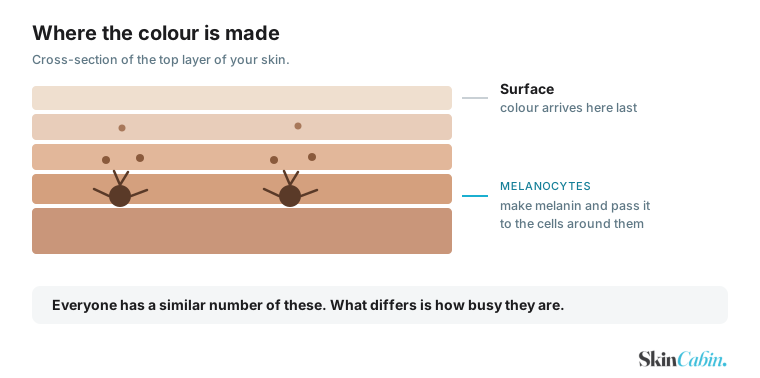 Made at the bottom, carried upwards.
Two kinds of melanin:
- Eumelanin — brown and black. More of it means darker skin, and more natural sun protection
- Pheomelanin — red and yellow. More of this and less eumelanin means paler skin, which burns more easily
This matters later. How much eumelanin you make changes how easily you mark, and how long the marks stay.
The three kinds you'll actually meet
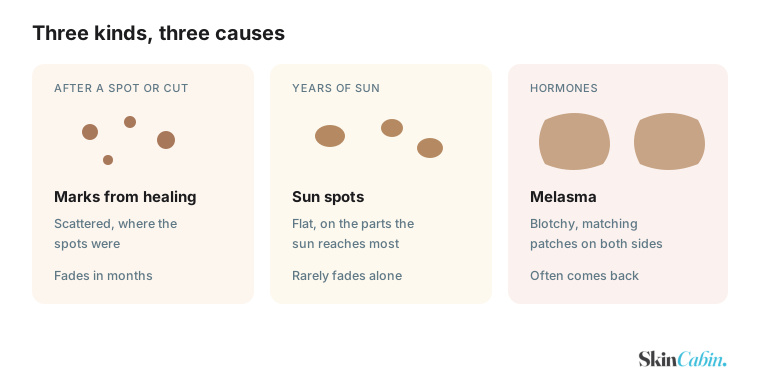 Three kinds, three causes.
Almost everything gets called "pigmentation". These three cover most of it.
Marks left after something healed. A spot, a scratch, a burn, a rash. Your skin made extra colour while repairing. Doctors call this post-inflammatory hyperpigmentation, or PIH.
Sun spots. Flat brown patches where the sun reaches most. Face, hands, chest, shoulders. They build slowly over years.
Melasma. Larger, blotchy, matching patches. Usually cheeks, forehead, upper lip. Strongly linked to hormones, and the hardest of the three to shift.
A fourth thing that isn't pigmentation at all. Red or pink marks left after a spot are not melanin. They're widened blood vessels. They behave completely differently. More on that below. Getting this wrong wastes months.
Part 2 — Why it happens
The two things that start most of it
Strip away the detail and nearly all pigmentation comes from one of two triggers.
1. Ultraviolet light. Your skin makes melanin to protect itself. Melanin absorbs UV. So sun tells your melanocytes to get busy. That's what a tan is.
2. Injury or irritation. Damaged skin sends out signals that switch melanin on while it repairs. The repair finishes. The extra colour doesn't always leave with it.
Everything else changes how strongly you respond to those two. Hormones, age, medication, genetics. Or they add a third route.
Sun damage
The single biggest cause, and the most preventable.
How it builds. Every unprotected hour nudges your melanocytes. One afternoon does very little. Twenty years of walking to work does a lot.
Why it shows up where it does. Sun spots appear where you get the most light over a lifetime. Tops of your cheeks, nose, forehead, backs of your hands, chest, shoulders.
Two things people underestimate:
- Cloud and glass don't stop UVA. The rays that drive pigmentation get through both. A cloudy day still counts. So does a seat by a window
- It's cumulative. Not the day you burned. The decades you didn't think about
And it worsens everything else. Sun makes marks from spots darker and slower to fade. It's also the main reason melasma comes back.
Marks left after spots, cuts and rashes
The most common kind on younger skin.
What causes it:
- Acne, especially spots you squeezed
- Cuts, scrapes and burns
- Insect bites
- Eczema, psoriasis and other rashes
- Waxing, threading and shaving
- Harsh skincare — over-exfoliating, a bad reaction, a peel that went too far
- Some cosmetic treatments
More on this in brown and red acne marks.
How it works. Inflammation is your skin's repair response. Part of that response tells melanocytes to make more melanin. The inflammation clears. The colour can hang around for months.
Why picking makes it much worse. Squeezing a spot pushes the inflammation deeper and spreads it wider. A spot you leave alone might mark for six weeks. The same spot squeezed can mark for a year.
Where the colour sits matters. Melanin near the surface fades faster. Deeper damage pushes it further down, where it clears far more slowly. That's why picking costs you so much time.
Hormones
This one catches people out. Nothing visibly injured the skin.
Melasma is triggered by hormones, and shows up most in:
- Pregnancy — so often it's nicknamed "the mask of pregnancy"
- People on the combined contraceptive pill
- Hormone replacement therapy
- Thyroid conditions
There's a full guide to what melasma is and why it returns.
What makes it distinctive. It's usually symmetrical, with matching patches on both cheeks. Blotchy rather than spotty. And it sits on the forehead, cheeks and upper lip.
Why it's stubborn. The hormonal trigger stays while the hormones do. And melasma responds to heat and visible light, not just UV. A hot stove, a hot yoga class or a day by a window can all set it off.
That heat sensitivity explains a lot. People careful with sunscreen still get melasma back. They're protecting against the wrong thing.
Age
Your skin changes how it handles pigment over time.
Melanocytes become uneven. Some clusters get busier while others slow down. That's why older skin shows patchier colour rather than an even tone.
Damage adds up. Most sun spots showing at fifty were earned in your twenties and thirties. They were building the whole time.
Repair slows. Skin cells turn over more slowly with age, so pigment near the surface takes longer to clear.
Medication and medical causes
Less common, but worth knowing about.
Some medicines make skin more sun-sensitive. That means more pigmentation from the same exposure. Certain antibiotics, some acne treatments, some blood pressure and diabetes medicines.
A few cause pigmentation directly. Some antimalarials and some chemotherapy drugs.
Some conditions affect pigment too. Thyroid disorders and Addison's disease among them.
Did it appear suddenly, or spread quickly, with no link to sun or a spot? See a doctor. That's a different situation from the everyday kinds.
Genetics and skin tone
You inherit how easily you pigment, and how long it lasts.
Freckles are largely genetic. Clusters of busier melanocytes that darken with sun.
Family history matters for melasma. If your mother had it, your odds are higher.
And skin tone changes the whole picture, which deserves its own section.
How deep it sits changes everything
Two people can have marks that look similar and take wildly different times to fade. Depth is usually why.
Near the surface. Melanin sitting in the upper layer of your skin. It looks brown or tan, and it has a clear edge. Your skin sheds these layers naturally, so this kind lifts as those cells turn over. Months, not years.
Deeper down. When inflammation damages the boundary between the top layer and the one beneath, melanin drops through and gets trapped. It looks greyer, bluer or more muted, with a blurrier edge. Nothing sheds it, because those layers don't turn over the same way.
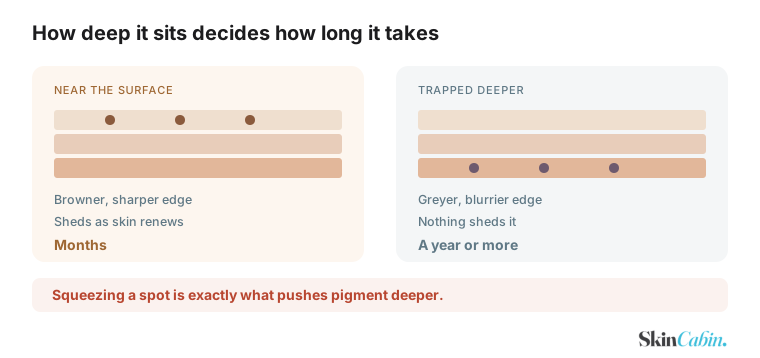 Depth decides the timeline.
How to guess which you have. Stretch the skin gently, or look at it under a bright light. Surface pigment tends to look browner and sharper. Deeper pigment looks hazier and doesn't change much.
Why it matters here. It explains the timelines further down this page, and it explains why two people using the same product get completely different results. It also explains why picking is so costly — squeezing is exactly what drives pigment deeper.
Most marks are a mixture of both.
Part 3 — Does it affect everyone the same?
No, and this is the part most skincare advice skips.
Darker skin marks more easily and for longer
Skin with more eumelanin has melanocytes that respond more readily. The same spot, the same scratch, the same reaction leaves a stronger mark that lasts longer.
What that means in practice:
- Marks after acne are more common and last longer
- They can persist for many months rather than weeks
- Harsh treatments carry more risk. Irritation itself causes more marking
- Melasma is more common
The rule that follows. On deeper skin tones, prevent the inflammation in the first place. Harsh scrubs, strong peels and anything that stings cause the exact problem you're treating.
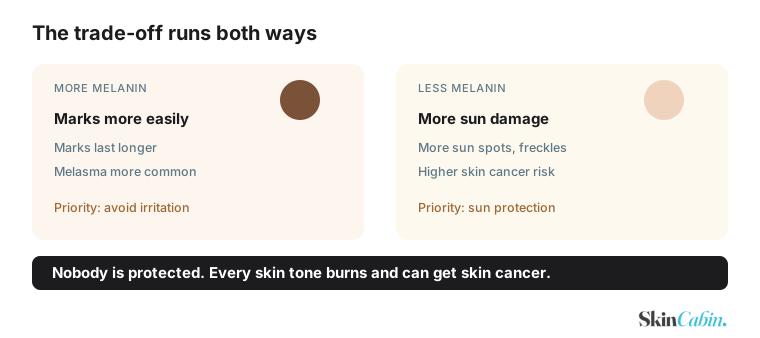 Different risks, not more or less.
Lighter skin gets more sun damage
The trade-off runs the other way.
Less eumelanin means less natural UV protection. Sun spots, freckles and long-term sun damage are all more common. Skin cancer risk is higher too.
Nobody is protected
Worth saying plainly, because the myth persists.
Darker skin still burns. It still gets sun damage, and still gets skin cancer. Higher natural melanin gives some protection. Nowhere near enough to skip sunscreen.
Part 4 — Working out which kind you have
You can get a long way with three questions.
What colour is it?
Brown, tan or grey-brown. That's melanin. Pigmentation.
Pink or red. Probably not pigmentation at all. Red marks after spots are widened blood vessels. Doctors call it post-inflammatory erythema. Different cause, different fix, different timeline.
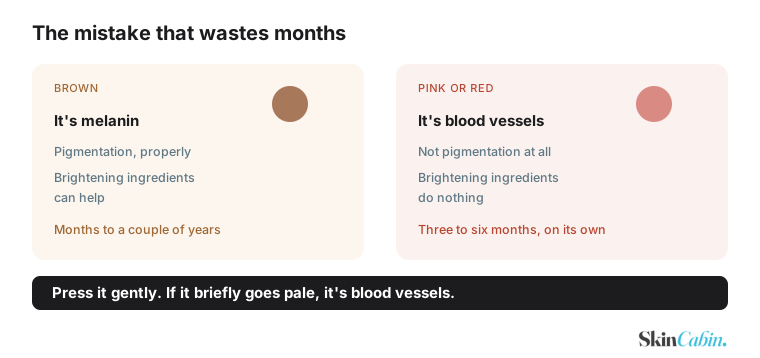 Brown and red are different problems.
Why this matters so much. Brightening ingredients act on melanin. On red marks they do nothing, and people decide the product failed. Press the mark gently. If it briefly goes pale, it's blood vessels, not pigment.
Where is it?
Scattered, matching where spots were — marks from healing.
Tops of cheeks, nose, hands, chest — sun.
Symmetrical patches on both cheeks, forehead, upper lip — melasma.
One patch that doesn't match anything — worth a doctor's opinion.
Is it a freckle, a sun spot or a mole?
Three different things, often lumped together.
Freckles. Small, flat, light brown. They darken in summer and fade in winter. Largely inherited, and most common on lighter skin. Harmless.
Sun spots. Larger than freckles, flat, and they don't fade in winter. They appear from your thirties onward on sun-exposed skin. Also called age spots or liver spots, though they have nothing to do with your liver.
Moles. Raised or flat, usually darker, and present all year. They're clusters of pigment cells rather than a patch of extra colour. Most are harmless — but moles are the ones to keep an eye on, and there's a checklist further down.
For the detail, see freckles, sun spots and moles.
The quick test. Fades and returns with the seasons? Freckle. There year-round and flat? Probably a sun spot. Raised, or clearly a defined spot rather than a patch? Mole, and worth knowing what's normal for yours.
When did it start?
Right after a spot or injury healed — inflammation marks.
Slowly, over years — sun.
During pregnancy, or after starting the pill — hormonal.
Suddenly, with no obvious cause — see a doctor.
Part 5 — Will it go on its own?
Often yes. The timeline depends entirely on which kind it is.
How long each takes
Marks after spots. Three to twenty-four months without treatment. Marks near the surface fade fastest. Deeper marks, darker skin tones and squeezed spots all take longer.
Sun spots. These don't really fade alone. Sun protection stops new ones forming and stops old ones darkening. Shifting them usually needs active treatment.
Melasma. It can fade if the hormonal trigger stops. After pregnancy, say, or after coming off the pill. It commonly returns. Managing it is realistic. Curing it often isn't.
Red marks after spots. Three to six months, typically. No brightening ingredient speeds this up, because there's no melanin involved.
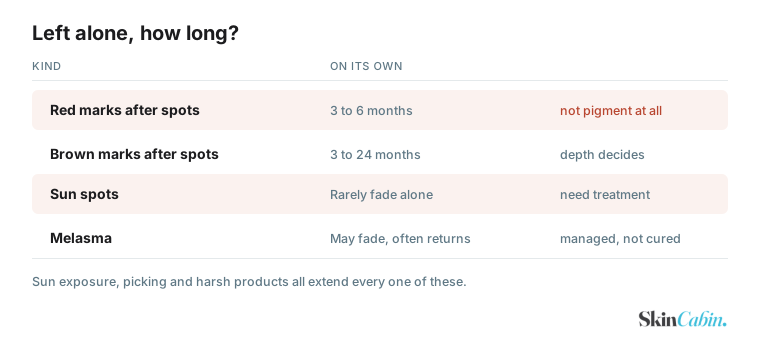 Left alone, how long.
What makes it worse
Every one of these is avoidable.
- Sun without protection. By far the biggest one. Sunscreen is the treatment, not a footnote
- Picking and squeezing. Turns a short mark into a long one
- Over-exfoliating. Irritation causes the thing you're trying to remove
- Harsh products. Anything that stings is causing inflammation
- Heat, if you have melasma. Stoves, saunas, hot yoga
- Waxing and threading on skin prone to marking
- Stopping and starting treatments. This work is measured in months
Things that don't work, and things that make it worse
Worth naming, because these circulate constantly.
Lemon juice. It doesn't lighten pigmentation meaningfully, it's irritating, and it makes skin more sun-sensitive. Some citrus oils on skin in sunlight cause a genuine burn reaction. This is one of the few home remedies that can actively harm you.
Toothpaste. Does nothing for pigment and irritates skin. Irritation causes more marking.
Scrubbing harder. Pigment isn't dirt sitting on top. Scrubbing causes inflammation, and inflammation causes pigmentation. This is the loop people get stuck in.
Baking soda. Far too alkaline for skin. Damages the barrier, which makes marking easier.
Skin lightening creams bought without a prescription. Some contain mercury or unlabelled high-strength steroids. Both are dangerous, and both are still widely sold. If a cream promises fast results and won't list its ingredients, don't use it.
Drinking more water. Good for you generally. Does nothing for pigmentation.
Why prevention beats treatment here
Pigmentation is slow to build and slow to clear. Treatment takes months, and results are partial.
Preventing a mark takes seconds. Sunscreen, and leaving spots alone.
That isn't satisfying when you're looking at marks you already have. But it's honest. It's also why every treatment plan starts with sun protection, not a brightening product.
Part 6 — When to see a doctor
Most pigmentation is a cosmetic concern. Some isn't.
See a doctor if
- A patch appeared suddenly, or is spreading quickly
- Pigmentation started after a new medication
- It's itchy, raised, scaly or painful
- It appeared with other symptoms — tiredness, weight change, feeling unwell
- You have melasma and want treatment. The options that work are prescription
- It's affecting how you feel about yourself
Check any spot that changes
This one is different from everything else on this page.
Get a new or changing pigmented spot looked at properly. Doctors watch five signs:
- Asymmetry — one half doesn't match the other
- Border — ragged, blurred or uneven edges
- Colour — more than one shade, or an unusual one
- Diameter — bigger than about 6mm, though small ones can matter too
- Evolving — changing in size, shape, colour, or starting to itch or bleed
Any one of those is a reason to get it checked. So is a spot that just looks different from your others.
This isn't about the flat brown patches this page covers. It's about telling those apart from something that needs a doctor. And if you're unsure which you're looking at, that's a reason to go.
Part 7 — What next
Quick recap
- Pigmentation is extra melanin in one patch of skin
- Nearly all of it starts with sun or injury and irritation
- Hormones cause melasma, a third and more stubborn kind
- Everyone has a similar number of pigment cells. What differs is how busy they are
- Darker skin marks more easily and for longer. Lighter skin gets more sun damage
- Brown means melanin. Red means blood vessels — completely different problems
- Marks from spots fade in months. Sun spots usually don't fade alone. Melasma comes back
- Picking, sun and over-exfoliating are the three things that make everything worse
- A spot that changes needs a doctor, not a serum
Frequently asked questions
What causes pigmentation on the face? Mostly sun exposure and inflammation. Spots, cuts, rashes and irritation. Hormones cause melasma. Age, genetics and some medicines change how easily it happens.
Why does pigmentation come back? Usually because the trigger is still there. More sun exposure, ongoing hormonal changes, or repeated irritation from picking or harsh products.
Does pigmentation go away on its own? Marks after spots usually fade over three to twenty-four months. Sun spots generally don't. Melasma may fade if the hormonal trigger stops, and often returns.
Why is my pigmentation red rather than brown? Red marks aren't pigmentation. They're widened blood vessels left after inflammation. They fade on their own, and brightening ingredients won't help.
Does everyone get pigmentation equally? No. Darker skin tones mark more easily and for longer after inflammation. Lighter skin tones get more sun damage and sun spots.
Can pigmentation be caused by a vitamin deficiency? Rarely. It's not a common cause. Low vitamin B12 or folate can affect skin colour. But sun and inflammation cause the vast majority. Suspect a deficiency? Ask for a blood test rather than guessing.
Does sunscreen actually prevent pigmentation? Yes, and it's the single most effective thing available. It stops new marks forming and stops existing ones darkening.
Why does my melasma get worse in summer even with sunscreen? Melasma responds to heat and visible light, not just UV. Ordinary sunscreen doesn't block visible light. Heat alone can set it off.
Does picking spots really cause dark marks? Yes. Squeezing pushes inflammation deeper and wider. That makes a darker mark, sitting lower in the skin, which takes far longer to clear.
Is pigmentation permanent? Rarely. Most fades with time and treatment, though it can take many months. Deep pigmentation and melasma are the most stubborn.
Can pigmentation be a sign of something serious? Usually not. But see a doctor for anything sudden, anything spreading fast, or a spot changing shape, colour or size.
Now you know which kind you have. How to treat pigmentation covers what actually works, and what doesn't.
Every product on SkinCabin is scored on its ingredients rather than its marketing. Find products →