Freckles, Sun Spots and Moles — Telling Them Apart
In short
Three different things, often confused.
Freckles are small, light brown, and darken in summer. Mostly inherited. Harmless.
Sun spots are larger, flat, and don't fade in winter. Years of sun exposure. Harmless, but a sign of accumulated sun damage.
Moles are clusters of pigment cells rather than a patch of extra colour. Usually harmless — but these are the ones to keep an eye on.
If a spot is changing, that matters more than which category it falls into. There's a checklist further down.
Freckles
What they look like. Small, flat, light brown or tan. Usually a few millimetres. Often in clusters across the nose and cheeks.
When they appear. Childhood, typically. Often the first sun-related pigment anyone gets.
The giveaway. They darken in summer and fade in winter. Nothing else on this page does that.
Who gets them. Largely genetic. Most common with lighter skin and red or fair hair. It comes down to a gene that changes which kind of melanin your skin makes.
Are they a problem? No. Freckles themselves are harmless.
But they tell you something. Skin that freckles easily is skin that burns easily. That means more sun damage over a lifetime, and higher skin cancer risk. Take sun protection seriously. Not because of the freckles, but because of what they reveal.
Sun spots
Also called age spots, liver spots or solar lentigines. Nothing to do with your liver.
What they look like. Flat, tan to dark brown, larger than freckles. Usually 5mm and up. Clear edges, often irregular in shape.
Where. The parts of you with the most lifetime sun exposure. Backs of hands, face, forearms, chest, shoulders. On bald heads, the scalp.
When. From your forties onward, usually. But they were earned decades earlier.
The giveaway. They don't fade in winter. That's the main difference from freckles.
Are they a problem? Not in themselves. Like freckles, they're a record — in this case of cumulative sun exposure.
Do they fade? Rarely on their own. Sun protection stops new ones forming and stops existing ones darkening, but shifting them usually needs active treatment.
Moles
Different from both of the above, and the reason this page has a checklist.
What they are. Clusters of pigment cells grouped together, rather than a patch of skin making extra colour.
What they look like. Round or oval, brown to black, sometimes skin-coloured. Flat or raised. Usually a clear, even border.
How many. Most adults have between ten and forty. Some are there from birth, most appear in childhood and the teens.
When they change. Moles can darken slightly in pregnancy or with sun exposure, and can fade with age. Slow, gradual change is usually normal.
The point. Almost all moles are harmless. But melanoma is the most serious skin cancer, and it either grows in an existing mole or turns up as a new one. So moles are the ones to know your own baseline for.
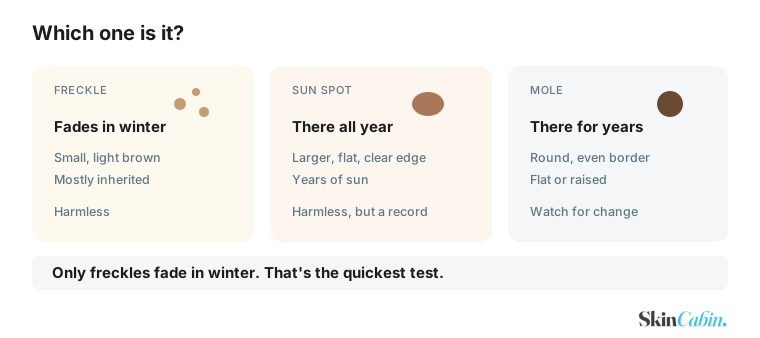 Only freckles fade in winter.
Telling them apart
Does it fade in winter and come back in summer? Freckle.
Flat, brown, there all year, on a sun-exposed area? Sun spot.
Round or oval, clear border, possibly raised, there for years? Mole.
Blotchy patches on both cheeks that appeared without any injury? That's melasma, not any of these. See why pigmentation comes on face.
Flat brown mark where a spot used to be? That's a mark from healing, not a sun spot.
A dent, pit or raised lump you can feel? That's texture, so it's a scar rather than pigment.
The checklist that matters
This is the important part of the page.
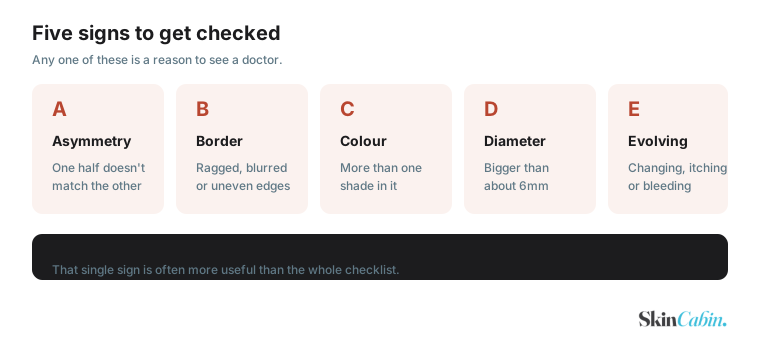 Any one is a reason to go.
Get a new or changing pigmented spot looked at by a doctor. Five signs to watch:
A — Asymmetry. One half doesn't match the other.
B — Border. Ragged, blurred, notched or uneven edges.
C — Colour. More than one shade in the same spot. Browns, blacks, reds, whites or blues mixed together.
D — Diameter. Larger than about 6mm, roughly a pencil eraser. Smaller ones can still matter.
E — Evolving. Changing in size, shape or colour. Or starting to itch, bleed, crust or scab.
Any one of these is a reason to get it checked.
The other thing to watch for
A spot that simply looks different from your others.
Doctors call this the ugly duckling sign, and it's often more useful than the checklist. Most people's moles look broadly similar to each other. One that stands out — darker, larger, oddly shaped, different in some way you can't quite name — deserves a look.
Also worth a doctor's opinion:
- A new mole appearing after about age 30
- Any spot that itches, bleeds or won't heal
- A sore that scabs, heals, then comes back in the same place
- A dark line appearing under a fingernail or toenail
- Any spot you find yourself worrying about
That last one counts. If something is bothering you enough to keep looking at it, that's reason enough. Getting it checked and being told it's fine is a good outcome.
Checking your own skin
Once a month, in good light, takes a few minutes.
- Face, ears, neck, scalp — a mirror or a phone camera helps for the back of your neck and scalp
- Front and back of your torso, and under your arms
- Both arms, including palms, between fingers and under nails
- Both legs, feet, soles, between toes and under toenails
- Use a hand mirror, or ask someone, for your back
Photograph anything you're unsure about, with something next to it for scale. Compare in a month. Change is what matters, and memory is bad at it.
Note for deeper skin tones. Skin cancer is less common, but often found later. It's also more likely on palms, soles and under nails. Check those areas properly.
When to see a doctor
- Any spot matching one of the five signs above
- A spot that looks different from your others
- A new mole after about age 30
- Anything that itches, bleeds, crusts or won't heal
- A dark line under a nail
- Anything you're worried about
This page is general information, not a diagnosis. If in doubt, get it looked at.
Frequently asked questions
What's the difference between a freckle and a sun spot? Freckles darken in summer and fade in winter. Sun spots are there all year, and are usually larger with clearer edges.
Are freckles a sign of sun damage? They're a sign your skin responds strongly to sun. Harmless themselves, but skin that freckles easily also burns easily.
Do sun spots go away? Rarely on their own. Sun protection stops new ones and stops existing ones darkening. Fading them usually needs treatment.
Why are they called liver spots? An old name from a time when they were wrongly thought to relate to liver problems. They don't.
Can a mole turn into skin cancer? Melanoma can grow in an existing mole or appear as a new one. Most moles never cause problems. That's why watching for change matters more than counting them.
How do I know if a mole is dangerous? Use the five signs — asymmetry, border, colour, diameter, evolving. Any one is a reason to get it checked. So is a spot that looks unlike your others.
Is it normal to get new moles as an adult? New moles are common up to about 30. After that, a genuinely new one is worth a doctor's look.
Can I remove a mole myself? No. Never try this. You risk infection and scarring. You also destroy the tissue a doctor would need to examine.
Do freckles mean I'll get skin cancer? No. But they indicate skin that burns easily, which does carry higher risk. Sun protection matters.
How often should I check my skin? Once a month is plenty. Photograph anything you're unsure about and compare later.
For what causes pigmentation generally, see why pigmentation comes on face.