How to Treat Pigmentation
In short
Four things do the work, in this order.
Sunscreen every day. Without it, nothing else holds. Stop the irritation. Picking, scrubbing and harsh products all make pigmentation worse. One active ingredient, used consistently for at least three months. Patience. Visible change takes 8 to 12 weeks. Full results take longer.
Most pigmentation fades. Very little of it disappears completely.
If you're not sure which kind you have, start with why pigmentation comes on face — the treatment depends on the cause.
Part 1 — What treatment can realistically do
The honest version
Skincare can fade pigmentation. It rarely erases it.
What's realistic with consistent use:
- Marks left after spots — often 60 to 90% lighter over three to six months
- Sun spots — noticeably lighter, usually still visible
- Melasma — improved while you treat it, and it tends to return
What isn't realistic:
- Clearing anything in two weeks
- Removing deep pigment with a cream alone
- Curing melasma
- Getting results without sunscreen
Why it takes so long. Your skin renews itself every four to six weeks, and that slows with age. Treatments either slow melanin down or speed up how fast marked cells leave. Either way, you're waiting on your skin's own clock.
The measure that matters. Take a photo in the same light, same spot, once a month. Day-to-day looking in the mirror will tell you nothing.
What each month looks like
So you know whether it's working, rather than guessing.
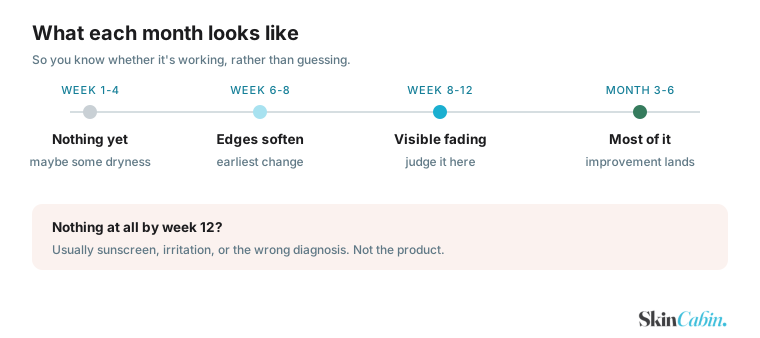 Twelve weeks before you judge it.
Weeks 1 to 2. Nothing visible. Possibly some dryness or flaking if you started a retinoid.
Weeks 3 to 4. Still nothing on the marks. Skin texture may look a bit better.
Weeks 6 to 8. The earliest point anything usually shows. Edges of marks start softening.
Weeks 8 to 12. Visible fading for most people. This is when to judge whether it's working.
Months 3 to 6. Most of the improvement lands here.
Beyond 6 months. Diminishing returns on marks from spots. Sun spots and melasma need ongoing work.
If nothing has changed by week 12 with daily sunscreen and consistent use, something is wrong. Usually sunscreen, irritation, or the wrong diagnosis.
The four things that actually matter
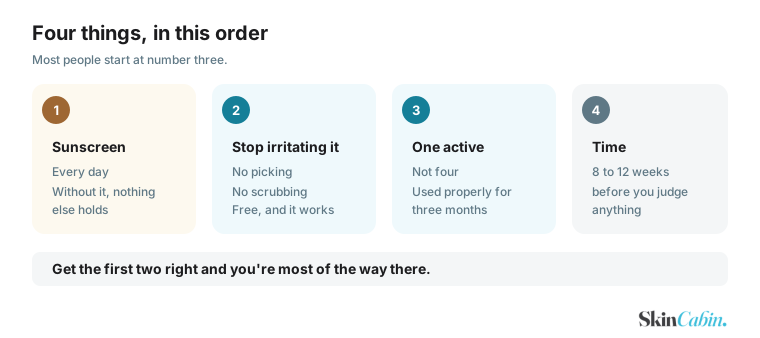 Most people start at number three.
Almost everyone gets the order wrong. They buy a serum first and think about sunscreen later.
1. Sun protection. The single biggest lever. Without it, everything else is working against a tap that's still running.
2. Stopping the irritation. Picking, scrubbing, over-exfoliating and harsh products all cause more pigment. This is subtraction, and it's free.
3. One active ingredient. Not four. One, used properly, for three months.
4. Time. Eight to twelve weeks before you judge anything.
Get the first two right and you're most of the way there. Skip them and no serum will save you.
Part 2 — Sunscreen is the treatment
Not a supporting step. The main one.
Why it matters more than any serum
UV tells your pigment cells to make more melanin. So while you're treating pigmentation, unprotected sun exposure is actively adding to it.
What it does:
- Stops new marks forming
- Stops existing marks darkening
- Lets everything else you're doing actually show
Studies keep finding the same thing. Sunscreen is the difference between getting better and standing still. It isn't a footnote. It's the whole thing.
What to use
SPF 30 minimum, 50 if you have pigmentation you're actively treating.
Broad spectrum, which means it covers UVA as well as UVB. UVA is the one that drives pigmentation, and it gets through cloud and glass.
Full detail in sunscreen for pigmentation.
Every day. Winter, cloudy days, working indoors near a window. UVA doesn't take days off.
Enough of it. Most people use a third of what they should. Roughly two finger-lengths for a face and neck.
Reapply every two hours if you're outdoors.
The bit that catches melasma out
Ordinary sunscreen protects against UV. It does not block visible light.
Melasma responds to visible light — particularly the blue end — and to heat. Which is why people with melasma are diligent with sunscreen and still get flare-ups.
What helps: a tinted sunscreen. The iron oxides that provide the tint also block visible light, and that's the only widely available way to do it.
Also worth knowing: heat alone can trigger melasma. Hot yoga, cooking over a stove, saunas.
Part 3 — What the ingredients actually do
There are dozens of ingredients sold for pigmentation. They work in only three ways.
Knowing which is which stops you buying four products that all do the same job.
The three routes
1. Slow melanin production. Most get in the way of the enzyme that starts melanin being made. Less melanin made means marks fade as old cells leave.
2. Speed up shedding. Move pigmented cells off the surface faster. Doesn't stop new pigment, so these work best alongside route one.
3. Calm inflammation. Inflammation causes pigmentation. Reducing it stops new marks forming and helps existing ones settle.
A good routine has one from route one, plus sunscreen. Route two speeds things up. Route three matters most if your marks come from acne or irritation.
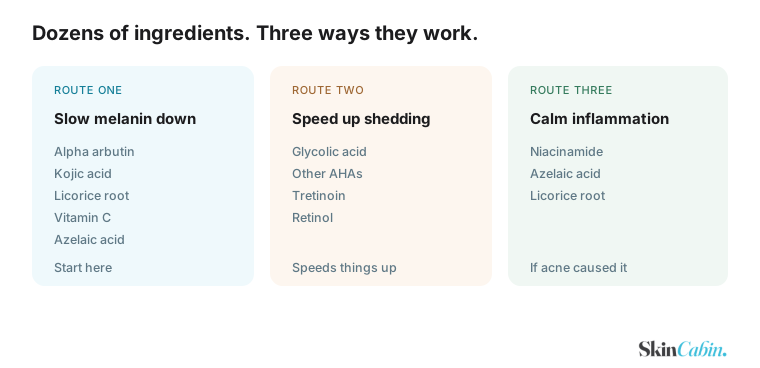 Dozens of names. Three jobs.
Which ingredient does which
If you're choosing between the three most common, see vitamin C vs niacinamide vs alpha arbutin.
Each of these has its own page with the detail — this is just the map.
Slowing melanin production:
- Alpha arbutin — gentle, well tolerated, good starting point
- Kojic acid — effective, more likely to irritate
- Licorice root extract — gentle, also calms inflammation
- Vitamin C — slows melanin and protects against sun damage
- Azelaic acid — works on melanin and acne at once
- Tranexamic acid — one of the few with real evidence for melasma
Speeding up shedding:
- Glycolic acid and other AHAs
- Tretinoin — prescription, and among the most effective
- Retinol — the over-the-counter version, slower and gentler
Calming inflammation and supporting the rest:
- Niacinamide — blocks pigment transfer, calms redness, very well tolerated
- Azelaic acid again — it does all three
- Rosehip oil — mild, more supportive than active
If you're starting from nothing
Two products.
Morning: sunscreen, SPF 50, broad spectrum. Tinted if you have melasma. Night: one active. Azelaic acid or alpha arbutin if your skin is sensitive. Retinol if it isn't.
That's it. Give it three months before adding anything.
Part 4 — Building a routine
The simple version
Morning
- Gentle cleanser, or just water
- Vitamin C, if you use it
- Moisturiser
- Sunscreen
Night
- Cleanser
- Your active — alpha arbutin, azelaic acid, retinol, whichever you chose
- Moisturiser
Adding things safely
One new thing at a time, with two weeks between. If something irritates you, you need to know which thing.
Start at two or three nights a week, not every night. Build up once your skin is comfortable.
Moisturiser is not optional. Irritated skin makes more pigment. A moisturiser is what lets you keep using an active that's working.
What not to combine
Retinol and acids on the same night. They don't cancel out — they both irritate, and irritation causes pigmentation. Alternate nights.
Three or more actives. The commonest mistake. Vitamin C in the morning, an acid at lunchtime, retinol at night. That's a damaged barrier and more marks than you started with.
Anything that stings. Stinging means irritation. Irritation means more pigment. That's the whole loop.
Our guide to what order skincare products go in covers the sequencing in full.
Part 5 — Prescription options
Some of the most effective treatments need a doctor. Worth knowing what they are.
Hydroquinone
The most studied pigmentation treatment there is, and the most tightly controlled.
What it does. Cuts melanin production hard. It works well, and faster than most alternatives.
Why it's restricted. In the UK and EU you need a prescription. In the US it came off the shelves in 2020. Used long-term without supervision, it can cause a permanent blue-grey darkening. That's the opposite of what you wanted.
How it's used properly. In courses, under supervision. A few months on, then a break.
If you can buy it freely online, that is not a good sign. Unregulated lightening creams are one of the genuine dangers in this category.
Tretinoin
Prescription-strength vitamin A. One of the most effective things there is for pigmentation.
It speeds up how fast marked cells leave. It improves texture and fine lines too. Irritating at first, so build up slowly.
If you're pregnant, breastfeeding or trying to conceive, ask your doctor before using anything for pigmentation.
More detail in does tretinoin reduce pigmentation.
Combination creams
Some doctors prescribe a mix of hydroquinone, a retinoid and a mild steroid. It works well on stubborn melasma. It's designed for short courses only.
Not something to improvise.
If you're pregnant or breastfeeding
Pigmentation often shows up during pregnancy, and some treatments aren't suitable.
We won't tell you which. Your circumstances, your stage and your medical history all matter, and none of that is something a website can weigh up.
Speak to your doctor, midwife or pharmacist before starting or continuing anything for pigmentation. That includes over-the-counter products, not just prescriptions.

Sunscreen and gentle skincare are always reasonable while you wait for that conversation.
Part 6 — Professional treatments
Realistic overview, not a recommendation. All of these need a qualified practitioner.
Chemical peels
Stronger versions of the acids you'd use at home. They take off surface layers faster.
Good for surface pigmentation and sun spots. Risk: too strong, or on the wrong skin, and the irritation causes more pigment.
Laser and light treatments
Effective in the right hands. Genuinely risky in the wrong ones.
This matters most for darker skin. Some lasers aim at pigment. On skin with more melanin, they can hit the wrong pigment. That causes burns, patchy lightening, or worse marks than you started with.
Got deeper skin? Ask what experience the practitioner has with your skin tone. Not whether the machine is safe. Whether they are.
Microneedling
It makes tiny controlled injuries to prompt repair. Sometimes used for pigmentation, often alongside other treatments.
Same caution. It works by causing inflammation. And inflammation causes pigment. On skin that marks easily, that's a real risk.
The honest framing
Professional treatments can do things creams can't. Deep pigment and sun spots especially.
They also carry more risk and cost far more. And they still need daily sunscreen afterwards, or it comes straight back.
Start with sunscreen and one active for three months. Done that properly and want more? Then have the conversation.
Part 7 — Why treatment fails
Almost always one of these five. There's a fuller walkthrough in why is my pigmentation not fading.
No sunscreen. By far the most common. You're treating and re-causing at the same time.
Stopping too early. Eight to twelve weeks before visible change. People give up at four.
Too many actives. Irritation causes pigmentation. Piling on products makes the problem worse while feeling like effort.
Treating the wrong thing. Red marks aren't pigmentation. They're blood vessels, and brightening ingredients do nothing to them. Months get lost this way.
Expecting a cure for melasma. It's managed, not cured. Judge it by whether it's gone and it will always look like failure.
Part 8 — Safety
Three things worth being direct about.
Unregulated lightening creams. Some contain mercury. Some contain strong steroids that aren't on the label. Both cause real harm. Both are still widely sold online and in some shops. If a cream promises fast results and won't fully list its ingredients, don't use it.
Hydroquinone without supervision. Long-term unsupervised use can cause permanent darkening. Use it under a doctor, in courses.
Laser on deeper skin tones. The wrong device or an inexperienced operator can cause burns and worse pigmentation. Ask about experience with your specific skin tone.
When to see a doctor
- You have melasma and want treatment — the effective options are prescription
- Three months of proper treatment has made no difference
- Pigmentation appeared suddenly or is spreading
- You have a spot that's changing shape, colour or size
- You're considering laser or peels
- It's affecting how you feel about yourself
Part 9 — Next
Quick recap
- Sunscreen is the treatment, not a footnote
- Stopping irritation is free and does more than most products
- One active, three months, then judge
- Ingredients work three ways. Most people buy three products doing the same one
- Fading is realistic. Erasing usually isn't
- Melasma is managed, not cured
- Red marks aren't pigmentation and won't respond to brightening ingredients
- Hydroquinone and tretinoin work, and need a doctor
- Laser carries real risk on deeper skin tones
- Take a monthly photo. The mirror lies
Frequently asked questions
How long does it take to fade pigmentation? Eight to twelve weeks for visible change. Three to six months for most of the improvement. Deep pigment and melasma take longer.
What is the most effective treatment? Sunscreen, used daily. After that, prescription tretinoin and hydroquinone are the most effective, and both need a doctor.
Can pigmentation be removed completely? Usually not. Most fades substantially. Deep pigment and melasma tend to improve rather than disappear.
Does vitamin C help pigmentation? Yes, a little. It slows melanin down and adds some protection from sun damage. It works better with sunscreen than without.
Can I use more than one brightening ingredient? You can, but start with one. Most people who use several end up irritated, and irritation causes more pigmentation.
Why is my pigmentation getting worse while I treat it? Usually sun exposure, or irritation from too many products. Both cause more pigment while you're trying to remove it.
Is hydroquinone safe? Under a doctor, in courses, yes. Used long-term on your own, it can cause permanent darkening. That's why it's prescription-only here.
Do I need to see a doctor? For melasma, yes — the treatments that work are prescription. For marks after spots, over-the-counter options plus sunscreen are usually enough.
Will laser get rid of it? Sometimes, for the right kind. It carries real risk on deeper skin tones. And it still needs daily sunscreen afterwards.
Why does it come back? Because the cause is still there. Sun exposure, ongoing hormones, or repeated irritation.
Every product on SkinCabin is scored on its ingredients rather than its marketing. Find products →
For what's causing yours in the first place, see why pigmentation comes on face.