Why Is My Pigmentation Not Fading?
In short
Six reasons cover almost every case.
Not enough time — twelve weeks minimum before you can judge anything. Sunscreen gaps — you're treating and re-causing at once. Too many products — irritation makes more pigment. Wrong problem — red marks aren't pigmentation and won't respond. Deep pigment — some sits below what creams can reach. Melasma — it's managed, not cured.
Work through them in that order. The first two account for most of it.
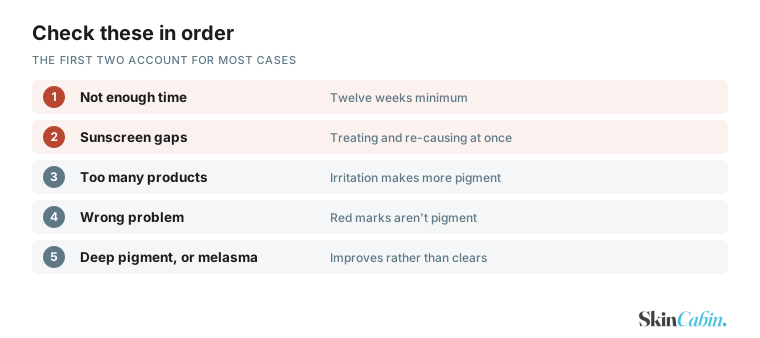 Work down. Stop at the first weak answer.
First: how long has it actually been?
Be honest about this before changing anything.
Under 8 weeks. Too early. Nothing visible happens before then, and nothing is wrong.
8 to 12 weeks. The earliest point you'd expect to see something. Softer edges, slightly lighter. Not dramatic.
12 weeks to 6 months. This is where most of the improvement lands.
Over 6 months with no change at all. Now something is genuinely wrong. Keep reading.
The most common mistake is switching product at week four, then again at week eight. That's two months of no progress and no information about what works.
What to do instead. Photograph the same area, same light, same spot, once a month. Comparing photos is the only reliable way to see slow change. The mirror is useless for this — you look at your face every day, so gradual change is invisible.
Are you actually wearing sunscreen every day?
The most common reason by far, and the easiest to be honest about.
Every day means every day. Not sunny days. Not days out. Every day.
The gaps people don't count:
- Cloudy days — cloud stops some UVB, very little UVA
- Winter — weaker, not absent
- Working indoors near a window — UVA passes through glass
- The school run, the walk to the shop, sitting in the garden
- Reapplying after two hours outdoors
Using enough? Two finger-lengths for face and neck. Most people use about a third of that, which gives roughly a third of the protection.
Missing the edges? Ears, hairline, sides of the neck, upper lip, backs of hands. Pigmentation appears there readily.
If you have melasma and use untinted sunscreen, you're blocking one of three triggers. More in what is melasma.
The test. If you can't say honestly that you've worn it every single day for the last twelve weeks, that's your answer. Fix that before changing anything else.
Are you using too many products?
Counterintuitive, and very common.
Inflammation causes pigmentation. So anything that irritates your skin is making more of the problem while you're trying to remove it.
Signs you've overdone it:
- Skin stings when you apply things that used to be fine
- Tight after washing, and it stays tight
- Redness that comes and goes
- Flaking, or rough patches
- Marks looking worse rather than better
What causes it: vitamin C in the morning, an acid at lunchtime, retinol at night, and a scrub twice a week. Each is defensible. Together they're a damaged barrier.
The fix. Stop everything except a gentle cleanser, a moisturiser and sunscreen. Give it two to four weeks. Then reintroduce one active, twice a week, and build up slowly.
It feels like going backwards. It isn't — irritated skin can't fade pigment.
Are you treating the right thing?
This one wastes the most time.
Press the mark gently and let go.
- Briefly goes pale, then colour returns — blood vessels, not pigment. Brightening ingredients do nothing. It fades on its own in three to six months
- No change — pigment. Treatment can help
- You can feel a dip or a lump — that's texture, so it's a scar. Creams won't change it
Why this matters. Every brightening ingredient acts on melanin. Red marks contain none. Four months of vitamin C on a red mark achieves exactly nothing, and the product worked as designed.
Full detail in brown and red acne marks.
Is the pigment too deep?
Some pigmentation sits below what creams can reach.
Near the surface. Browner, sharper edge. Sheds as skin renews. Responds well to treatment.
Deeper down. Greyer or bluer, hazier edge. Trapped below the layers that shed. Responds slowly and partially.
How it got deep. Bad inflammation, usually. Squeezed spots, aggressive treatments, or pigmentation that's been there for years.
What to do. Keep going, but adjust what you expect. Deep pigment improves rather than clears, and it takes longer. This is the situation where professional treatment genuinely offers something creams can't — though it carries its own risks, especially on deeper skin tones.
Is it melasma?
If so, "not fading" may mean the treatment is working normally.
How to tell. Blotchy patches, roughly symmetrical, on both cheeks, forehead or upper lip. Appeared without any injury. Often started in pregnancy or after starting the pill.
Why it behaves differently:
- The hormonal trigger is still there
- Heat and visible light set it off, not just UV
- It flares seasonally, whatever you do
- It returns when you stop treating
What realistic looks like. Much lighter, most of the time, with flare-ups you learn to predict. Judging it by whether it's gone will always read as failure.
Melasma is also the one where prescription treatment clearly outperforms over-the-counter. If you've done three months properly with no change, that's the point to see a doctor rather than buy another serum.
Still nothing? A checklist
Work down. Stop at the first one you can't answer well.
- Has it been at least twelve weeks?
- Sunscreen every single day, including cloudy and indoor days?
- Two finger-lengths, not a smear?
- Tinted sunscreen, if it's melasma?
- One active only, not three?
- Does your skin feel calm — no stinging, tightness or flaking?
- Have you pressed the mark to check it isn't red?
- Are you comparing monthly photos rather than the mirror?
If all eight are yes and there's genuinely no change after six months, see a doctor. The prescription options are meaningfully stronger, and there's no reason to spend another six months finding out.
When to see a doctor
- Six months of consistent treatment with no change
- You think it's melasma
- It's spreading or getting darker
- Any spot changing shape, colour or size
- You're considering laser or peels
- It's affecting how you feel about yourself
Frequently asked questions
How long should pigmentation take to fade? Twelve weeks for visible change. Three to six months for most of the improvement. Deep pigment and melasma take longer.
Why is my pigmentation getting worse while I'm treating it? Usually sun exposure or irritation from too many products. Both make more pigment while you're trying to remove it.
I've used vitamin C for months with no change. Why? Check whether the marks are brown or red. Press one — if it briefly pales, it's blood vessels, and no brightening ingredient will touch it.
Should I switch products if nothing's happening? Not before twelve weeks. Switching earlier means you never find out what works.
Can pigmentation be too deep to treat with creams? Yes. Deeper pigment looks greyer with a hazier edge, and it improves rather than clears.
Does using more product speed it up? No. It increases irritation, and irritation makes more pigment.
Why does my melasma keep coming back? The hormonal trigger is still there, and heat and visible light set it off. It's managed rather than cured.
Is it worth seeing a doctor? After six months of consistent treatment with no change, yes. Also straight away if you think it's melasma.
How do I know if it's working at all? Photograph the same spot in the same light once a month. Slow change is invisible day to day.
Could my sunscreen be the problem? If you have melasma and it's untinted, partly. Ordinary sunscreen doesn't block visible light.
Every product on SkinCabin is scored on its ingredients rather than its marketing. Find products →
For the full picture, see how to treat pigmentation.