What Is Melasma?
In short
Melasma is a hormonal kind of pigmentation. Larger blotchy patches, usually symmetrical, on the cheeks, forehead and upper lip.
Hormones set it off. Then sun, visible light and heat keep it going. That last part explains a lot. People careful with sunscreen still get flare-ups.
It's the most stubborn kind of pigmentation there is. You can manage it well. You rarely cure it.
What makes melasma different
Three things set it apart from other pigmentation.
It matches on both sides. Patches on both cheeks, not one. Other pigmentation is scattered, or on one side only.
It's blotchy, not spotty. Larger patches with soft edges, rather than clear spots.
Nothing injured your skin. No spot, no scratch, no burn. It just appeared.
Where it shows up:
- Cheeks, both sides
- Forehead
- Upper lip
- Bridge of the nose
- Jawline, less often
- Forearms, occasionally
Who gets it
Women, overwhelmingly. Around nine in ten cases.
People with more melanin in their skin. More common, and often easier to see.
During pregnancy. Common enough to be nicknamed the mask of pregnancy.
On the combined pill or HRT. Both can trigger it.
Family history matters. If your mother had it, your odds are higher.
Age. Usually twenties to forties, when hormone levels are highest.
Why it happens
Nobody fully understands it. But the pattern is clear.
Hormones set the stage. They seem to make pigment cells react more easily. That's why pregnancy, the pill and HRT are the common triggers.
Light and heat pull the trigger. Once your skin is primed, exposure sets the pigment off.
And it's not just UV. This is the part that catches people out.
The three triggers that aren't UV
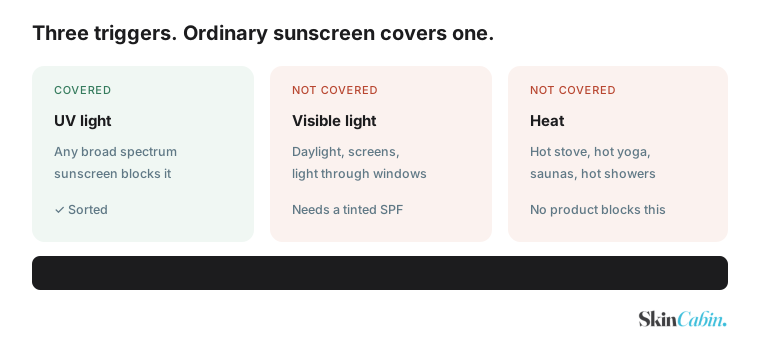 Three triggers. Sunscreen covers one.
Ordinary sunscreen protects against ultraviolet. Melasma responds to more than that.
Visible light. The blue end especially. Ordinary sunscreen doesn't block it at all. Daylight through a window counts, even with no UV.
Heat. Not the light. The temperature. A hot stove, hot yoga, saunas, hot showers, a hot country. Heat alone can set off a flare.
Rubbing and irritation. Harsh scrubs, strong treatments. Melasma reacts badly to anything that inflames skin.
Why this explains so much. Someone wears SPF 50 every day and avoids the beach. They still flare every summer. They're guarding against one trigger out of three.
Why it keeps coming back
The hormone driver is still there. While the hormones stay, so does the sensitivity.
The triggers are everywhere. You can avoid the sun. You can't avoid daylight, warmth and time.
Pigment cells stay primed. Once melasma has shown up, that skin reacts faster next time.
Treatment stops working when you stop. Clear it, drop everything, and it usually comes back within months.
What realistic looks like. Much lighter, most of the time. With flare-ups you learn to predict. Not gone.
Does it ever go on its own?
Sometimes, and it depends on the trigger.
After pregnancy. It often fades in the months after birth, as hormones settle. Not always, and not always fully.
After stopping the pill or HRT. It can fade. Usually slowly, over many months.
Otherwise. It won't clear on its own while the trigger is still there.
Worth knowing if you're pregnant. Treating it hard while the hormone trigger is still running rarely pays off. Sunscreen and patience is often the better plan.
What actually helps
The full treatment picture is in how to treat pigmentation. Three things are specific to melasma.
Tinted sunscreen, not just any sunscreen. The iron oxides that give it colour are the only easy way to block visible light. For melasma that matters more than the SPF number.
Keeping cool. Genuinely part of treatment. Notice a flare after hot yoga or a day cooking? That's information.
Being gentle. Melasma flares with irritation. Strong treatment makes it worse. That's the opposite of most skin problems.
One honest note on professional treatment. Melasma is the pigmentation most likely to be made worse by lasers. Deeper skin tones especially. It's also the one where prescription treatment clearly beats anything over the counter.
What makes it worse
- Sun, without protection
- Daylight through windows, without a tinted product
- Heat of any kind
- Scrubs, strong peels and harsh actives
- Stopping treatment once it improves
- Waxing on the affected area
When to see a doctor
For melasma, sooner rather than later. The treatments that work are prescription. And doing the wrong thing sets you back.
See a doctor if:
- You think you have melasma and want to treat it properly
- Over-the-counter products and sunscreen haven't helped after three months
- It's spreading or getting noticeably darker
- You're considering laser or peels
- You're pregnant or breastfeeding and want advice on what's suitable for you
- It's affecting how you feel about yourself
Pregnant, breastfeeding or trying to conceive? Speak to your doctor, midwife or pharmacist before starting anything. What suits you depends on your circumstances, and a website can't weigh that up.
Frequently asked questions
What is melasma? A hormonal kind of pigmentation. Blotchy patches on both cheeks, the forehead and the upper lip.
What causes melasma? Hormones make pigment cells react more easily. Then sun, visible light and heat set them off. Pregnancy, the pill and HRT are the common triggers.
Is melasma the same as other pigmentation? No. Other pigmentation follows sun or an injury. Melasma is hormonal, matches on both sides, and is far more stubborn.
Does melasma go away? It can fade if the hormone trigger stops. After pregnancy, say, or after coming off the pill. It commonly returns.
Why does my melasma come back every summer? More daylight, more heat. And ordinary sunscreen doesn't block visible light. A tinted one covers the part you're missing.
Can melasma be cured? Realistically, no. It's managed. Most people get it much lighter and learn to predict their flare-ups.
Does sunscreen help melasma? Yes, and it's essential. But use a tinted one. The iron oxides block visible light. Ordinary sunscreen doesn't.
Can heat alone trigger melasma? Yes. A hot stove, hot yoga and saunas can all set off a flare with no sun at all.
Do men get melasma? Yes, though far less often — around one in ten cases.
Will laser get rid of melasma? Sometimes. But melasma is the pigmentation most likely to be made worse by laser. Deeper skin tones especially. Speak to a doctor first.
For the wider picture on what causes pigmentation, see why pigmentation comes on face.
Every product on SkinCabin is scored on its ingredients rather than its marketing. Find products →