What Is Niacinamide?
In short
Niacinamide is a form of vitamin B3. It does several useful things at once, which is why it turns up in so many products.
The useful range is 4 to 5%. Below 2%, expect very little. Above 10%, most people get stinging without extra benefit.
What it's best at: strengthening the skin barrier, calming redness, and fading dark marks. It reduces oil too, though less dramatically than the marketing suggests.
And the biggest myth about it is wrong. Niacinamide does not cancel out vitamin C. That claim comes from lab conditions that don't apply to real products.
What it is
It's one form of vitamin B3. You'll also see it called nicotinamide. Same thing, different name.
It dissolves in water, which makes it easy to put in almost anything. Serums, moisturisers, cleansers, sunscreens.
It's stable. Vitamin C breaks down quickly in the bottle. This doesn't, and it needs no special packaging.
And most skin copes with it well at sensible strengths. That's the other reason it's everywhere.
One thing worth clearing up. Niacin and niacinamide are not the same. Niacin causes the hot, red flush some people get from B3 tablets. Niacinamide doesn't. If a product makes you flush, that's usually the strength or something else in the formula.
What it actually does
Four effects, and they work through different routes.
It helps your skin make its own barrier fats
The best-supported effect, and the most useful.
Your barrier is held together by ceramides and similar fats. Niacinamide nudges your skin to make more of them.
A ceramide cream supplies them from outside. This makes your own skin do the work. Slower, and it lasts better.
What follows: less water escapes, and skin that's harder to upset.
It calms redness
Well supported, and it's why you see it in products for easily upset skin.
It fades dark marks
And the way it does this is genuinely different from most brightening ingredients.
Most of them slow melanin down. Niacinamide doesn't. It blocks the delivery instead. Pigment still gets made. Less of it reaches the surface cells where you'd see it.
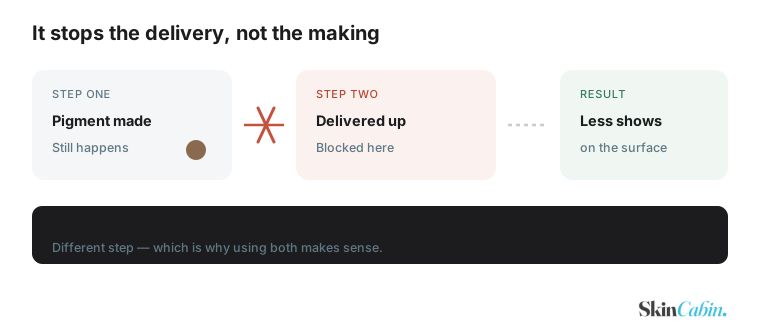 It stops the delivery, not the making.
Why that matters: it works on a different step from vitamin C or alpha arbutin. So using both makes more sense than picking one.
It reduces oil
Real, and smaller than the marketing suggests. Expect less shine, not a different skin type.
Concentration, and what happens at each level
The number decides whether any of the above happens. Most products don't make it easy to find.
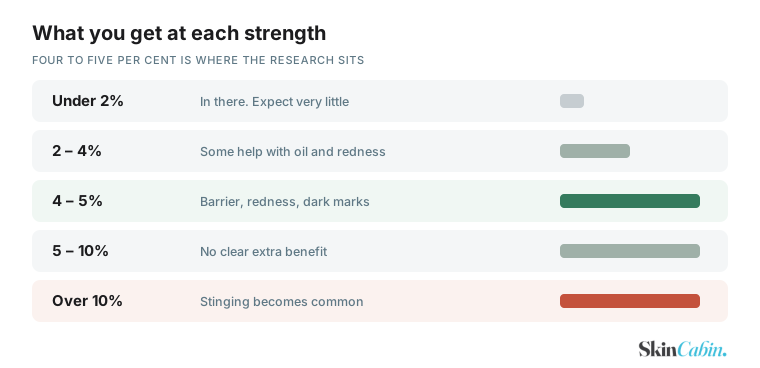 Four to five per cent is where the research sits.
Below 2%. It's in there. Expect very little. Common in products listing it for the label rather than the effect.
2 to 4%. Some help with oil and redness. Modest barrier effect.
4 to 5%. Where most of the useful research sits. Better barrier, less water lost, calmer skin, and the dark-mark studies. Choosing one number? Choose this.
5 to 10%. More is not clearly better. Plenty of people use it and see no extra benefit.
Above 10%. Stinging, warmth and redness become common. The benefit doesn't rise to match. On dry or easily upset skin it often makes things worse.
Why 10% is everywhere. One popular budget serum used it, and the number became a selling point. That's marketing, not research.
And a claim to watch. A moisturiser with 1% niacinamide can honestly say it supports the skin barrier. That borrows an effect shown at four or five times the level.
What the evidence supports, and how strongly
Sorted honestly.
Strong
Barrier support. Holds water better, upsets less easily. Studied at 2 to 5% over several weeks.
Redness and irritation. Well supported at 4 to 5%.
Moderate
Dark marks. Real, mostly from studies at 5% over eight to twelve weeks. Modest alone, better alongside something that slows pigment down.
Oil. Some reduction at 2 to 5%. Less than "controls oil" suggests.
Limited
Fine lines. Some evidence at 5% over twelve weeks. Small effect.
Pore appearance. Pores can look less obvious on smoother, less oily skin. The pores don't change size.
The vitamin C myth
The most repeated claim about niacinamide, and it's wrong.
What people say: niacinamide and vitamin C cancel each other out, so never use them together.
Why it's wrong. The reaction people are worried about needs temperatures above 120°C. Your bathroom doesn't get there.
The practical evidence: plenty of well-made products contain both on purpose.
Full detail, including the separate argument about pH, in can you use vitamin C and niacinamide together.
What else it pairs with
Full detail on combinations in what not to mix with niacinamide.
Retinol. Niacinamide calms the irritation, which makes retinol easier to stick with. A good pairing.
Acids. Fine. Same outdated lab claim, same answer.
Ceramides. The best pairing for dry skin. One supplies the fats, the other gets your skin making more.
Hyaluronic acid and glycerin. Fine, and they do a different job — niacinamide doesn't hold water.
Nearly everything, in fact. It dissolves in water and doesn't mind the pH, which makes it easy to combine.
How to use it
4 to 5%, once or twice a day.
Under your moisturiser if it's a serum. Niacinamide is not a moisturiser. It can't hold water or seal it in.
Give it eight weeks. Barrier changes are slow. Judging at two weeks tells you nothing.
Start once a day if your skin is easily upset, and build up.
Watch for warmth or flushing. Uncommon, and more likely at higher strengths. Drop the percentage if it happens.
If it stings or you're breaking out, see why niacinamide is irritating my skin.
Who should be careful
Skin that's easily upset. Start at 2 to 4%.
A damaged barrier. If ordinary products sting, repair first.
Anyone who's reacted before. A true allergy to it is rare, and it does happen.
Common problems
"It stings." Usually too strong. Drop to 4 to 5%, or use it less often.
"I'm breaking out." Niacinamide doesn't cause purging. Purging comes from speeding up cell turnover, and this doesn't do that. Breakouts on a new product are more likely something else in the formula, or irritation.
"There's white stuff in the bottle." Usually the formula, not a fault. Very high strengths can crystallise, especially in the cold.
"It went foamy." Some formulas do. It's a texture issue, not a safety one.
"Nothing's happening." Check the percentage. Below 2%, there may be nothing to happen.
Choosing between it and something else? See niacinamide vs vitamin C and is niacinamide as good as retinol.
How to read a niacinamide product
1. Is the percentage stated? If not, and niacinamide sits low on the ingredients list, assume there's very little.
2. Is it 4 to 5%? That's the range with the research behind it.
3. What else is in it? It combines well with almost everything, so ceramides or glycerin alongside means the product is doing more.
4. Is it a moisturiser or a serum? A serum needs something over it.
Quick recap
- Niacinamide is a form of vitamin B3, water soluble and stable
- 4 to 5% is the useful range. Below 2% does very little, above 10% often stings
- Best supported for barrier support and calming redness
- It fades dark marks by blocking pigment delivery, not production — different from most brightening ingredients
- It reduces oil, less dramatically than advertised
- It does not cancel out vitamin C. That claim comes from heated lab conditions
- It pairs well with almost everything, including retinol and acids
- It isn't a moisturiser. It goes under one
- Give it eight weeks
Frequently asked questions
What does niacinamide do? It strengthens the skin barrier, calms redness, fades dark marks, and reduces oil. The barrier effect is best supported.
What percentage should I use? 4 to 5%. Below 2% does very little. Above 10% often stings without added benefit.
Is 10% niacinamide better than 5%? No. Ten per cent got popular because of one budget serum, not because research backs it.
Can I use niacinamide with vitamin C? Yes. The claim they cancel out comes from heated lab conditions that don't apply to real products.
Can I use it with retinol? Yes, and it's a good pairing. Niacinamide reduces the irritation retinol causes.
Can I use it every day? Yes, once or twice a day at sensible strengths.
Does niacinamide cause purging? No. Purging comes from speeding up cell turnover, and this doesn't do that. Breakouts are more likely something else, or irritation.
Why does niacinamide make my skin flush? Usually the strength. True flushing comes from niacin, a different compound.
How long before it works? About eight weeks for barrier changes. Redness may settle sooner.
Is niacinamide a moisturiser? No. It can't hold water or seal it in. Use it under one.
Does it help with pigmentation? Yes, modestly, at around 5% over eight to twelve weeks. Better alongside something that slows pigment down.
Every product on SkinCabin is scored on its ingredients rather than its marketing. Find products →