Vitamin C vs Niacinamide vs Alpha Arbutin
In short
They do different jobs, so "which is best" depends on what you need.
Niacinamide — the gentlest. It calms inflammation and blocks pigment moving to the surface. Best if your marks come from acne, or your skin reacts easily.
Alpha arbutin — slows melanin down directly. Gentle, and the easiest starting point for dark marks.
Vitamin C — slows melanin down and adds some protection from sun damage. The only one that does both. Fussier to store, and more likely to sting.
Pick one. Use it for three months. Adding all three is how people end up irritated. And irritation makes more pigment.
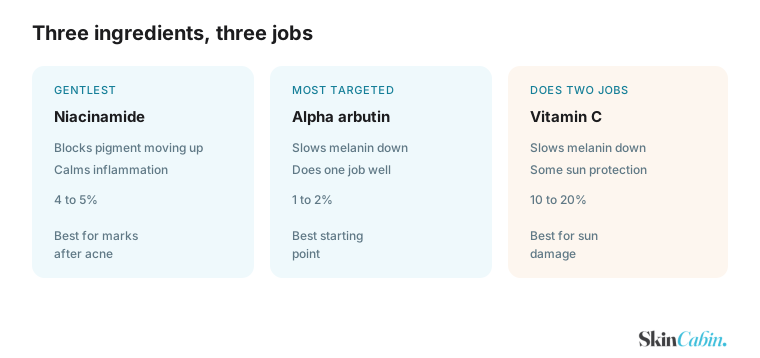 Three jobs, not three versions of one.
What each one actually does
They aren't the same thing. Knowing the difference stops you buying three products for one job.
Niacinamide
The job: it stops pigment being passed from your pigment cells to the skin cells around them. It also calms inflammation.
Why that matters. Inflammation causes most marks after spots. So niacinamide works on the cause, not just the mark.
Strength: usually 4 to 5%. Higher isn't better. Above 10%, many people find it stings.
Best for: marks after acne, redness, skin that reacts easily, oily skin.
Downside: the slowest and mildest of the three on pigment alone.
More in what niacinamide does for hyperpigmentation.
Alpha arbutin
The job: it gets in the way of the enzyme that starts melanin being made. Less melanin means marks fade as old cells leave.
Why people like it. It's targeted and gentle. And it doesn't go off the way vitamin C can.
Strength: usually 1 to 2%. That's the useful range.
Best for: dark marks from spots or sun. Also anyone who found vitamin C too harsh.
Downside: it does one job only. No sun protection, and it won't calm anything.
More in alpha arbutin for pigmentation.
Vitamin C
The job: it slows melanin down, and mops up some of the damage UV causes.
Why that's useful. It's the only one of the three that helps stop new marks as well as fading old ones.
Strength: 10 to 20% for the standard form. Below 8% does little. Above 20% mostly adds sting.
Best for: sun damage, and anyone who wants one product doing two jobs.
Downside: it's the fussiest. Light, air and heat all break it down. Gone dark orange or brown? It's past its best. It stings more than the other two.
More in does vitamin C reduce pigmentation.
Which should you pick?
Match it to your situation, not to what's trending.
Marks left after spots → niacinamide, or alpha arbutin. Pick niacinamide if you still get spots, since it works on the inflammation too.
Sun spots and sun damage → vitamin C. The protective side earns its place here.
Sensitive or easily irritated skin → niacinamide. Comfortably the gentlest.
Melasma → none of these alone will do much. See what is melasma. It usually needs prescription treatment.
Already using retinol → niacinamide. It plays well with everything, and won't add to the irritation.
Not sure → alpha arbutin. Targeted, gentle, and easy to judge.
Can you use more than one?
You can. Whether you should is a different question.
The case against. Three actives means three chances to irritate. Irritation causes pigmentation. Plenty of people who use all three end up with worse marks than they started with.
The case for. They work in different ways. So there's real logic to combining them, once your skin is settled.
If you do:
- Vitamin C in the morning, under sunscreen. It suits daytime.
- Niacinamide any time. It's the most tolerant.
- Alpha arbutin at night.
- Add them one at a time, two weeks apart.
- Stop if anything stings.
Start with one. Three months. Then decide whether you need more.
The combination myths
"Vitamin C and niacinamide cancel each other out."
They don't. The claim comes from old research using unstable forms at high temperatures. It doesn't apply to modern products. Plenty of formulas contain both on purpose.
"You need a high percentage for it to work."
No. Alpha arbutin works at 2%. Niacinamide works at 5%. More is mostly more irritation.
"Natural alternatives work just as well."
Lemon juice barely lightens anything. It irritates, and it makes skin more sun-sensitive. Some citrus oils cause a real burn in sunlight.
What none of them can do
Worth saying plainly.
None replaces sunscreen. Sunscreen does more for pigmentation than all three put together. Vitamin C adds a little. It isn't a substitute.
None works on red marks. Those are blood vessels, not melanin. See brown and red acne marks.
None matches prescription strength. Tretinoin and hydroquinone are much stronger, and both need a doctor.
None works in two weeks. Twelve weeks before you judge any of them.
Frequently asked questions
Which is best for pigmentation — vitamin C, niacinamide or alpha arbutin? It depends on the cause. Niacinamide for marks after acne. Alpha arbutin for dark marks. Vitamin C for sun damage.
Can I use vitamin C and niacinamide together? Yes. The claim they cancel out comes from old research on unstable forms at high temperatures. It doesn't apply to modern products.
Which is gentlest? Niacinamide, comfortably. Alpha arbutin next. Vitamin C is the most likely to irritate.
What strength should I use? Niacinamide 4 to 5%. Alpha arbutin 1 to 2%. Vitamin C 10 to 20%. Higher mostly adds sting.
How long before I see a difference? Eight to twelve weeks with any of them. Most improvement lands between three and six months.
Should I use all three? Start with one for three months. Adding several at once risks irritation. And irritation causes more pigmentation.
Why has my vitamin C turned brown? It's gone off. Light, air and heat all break it down. Once it's dark orange or brown, it's past its best.
Do any of these help melasma? Only modestly. Melasma usually needs prescription treatment and a tinted sunscreen.
Is a higher percentage better? No. Each has a useful range. Going above it adds sting, not results.
Do I still need sunscreen if I use these? Yes. Sunscreen does more than all three together. Without it, they're working against a tap that's still on.
Every product on SkinCabin is scored on its ingredients rather than its marketing. Find products →
For the full treatment picture, see how to treat pigmentation.