What Order Do Skincare Products Go In?
In short
Thinnest first, thickest last. Sunscreen always goes on last in the morning.
Morning: cleanser, serum, moisturiser, sunscreen. Night: cleanser, treatment, moisturiser.
That covers most people. The rest of this page is what to do when you use more than that.
The rule, and when it breaks
Thinnest to thickest works because a thick layer stops a thin one getting through. Put a cream on first and your serum has to travel through it.
That rule holds nearly all the time. Here's where it doesn't.
Sunscreen goes last, whatever its texture. Some sunscreens are thin. It still goes on top of everything else. It needs to sit on the surface to work.
Water-based before oil-based, even when the oil is thinner. Oil blocks water from getting through. Water doesn't block oil.
Treatments go on clean skin, not over other products. Acids, retinol and vitamin C all work better with nothing between them and your face.
So the real rule is: thinnest to thickest, with treatments early and sunscreen last.
The full order
Most people won't use all of these. Skip what you don't have — the order of what's left stays the same.
Morning
- Cleanser, or just water
- Toner, if you use one
- Essence or hydrating serum
- Treatment serum — vitamin C, niacinamide
- Eye cream
- Moisturiser
- Face oil, if you use one
- Sunscreen
Night
- Makeup remover or oil cleanser, if you wore makeup
- Cleanser
- Toner, if you use one
- Essence or hydrating serum
- Treatment — retinol, acids
- Eye cream
- Moisturiser
- Face oil, if you use one
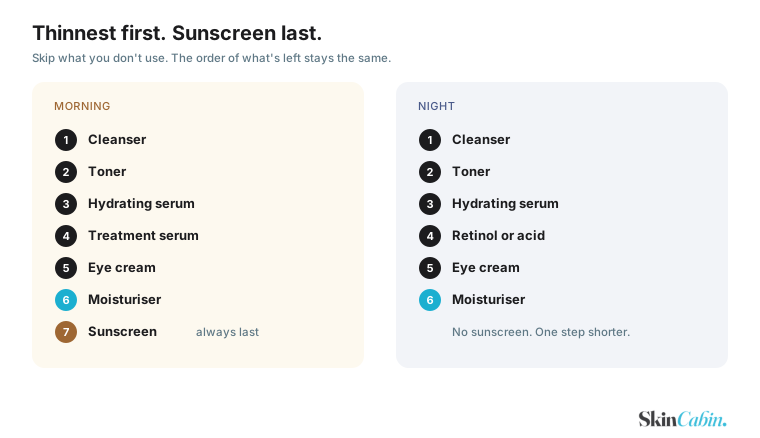 The full list. Skip what you don't use.
No sunscreen at night. Nothing replaces it in the sequence — the night routine is simply one step shorter.
Where each one goes, and why
Cleanser. First, obviously. Nothing works properly through a layer of yesterday.
Toner. Right after cleansing, on damp skin. Modern toners are mostly hydrating rather than stripping.
Essence or hydrating serum. Before your treatments. These are water-based and thin, so they go early.
Treatment serums. On clean, near-dry skin. This is where retinol, acids and vitamin C sit.
Eye cream. Before moisturiser. Some people put it last to keep richer creams away from their eyes — either is fine.
Moisturiser. After everything water-based and thin. It seals what you've already applied. For how much, see how much moisturiser should you use.
Face oil. Last, or nearly. Oil can pass through a cream to reach your skin, but a cream can't pass through oil. So oil goes on top.
Sunscreen. Always last in the morning. Always.
How long should you wait between steps?
Less than the internet tells you.
Between most steps: 30 to 60 seconds. Long enough for the previous layer to stop being wet. That's all.
After a strong acid or retinol: a few minutes. Not because it needs to sink in, but because applying a moisturiser straight on top can move it around unevenly.
Before sunscreen: two minutes. This is the one that matters. Sunscreen over a still-wet moisturiser is the most common reason it pills or slides.
Before makeup: two to three minutes. Rushing here is the top cause of patchy foundation.
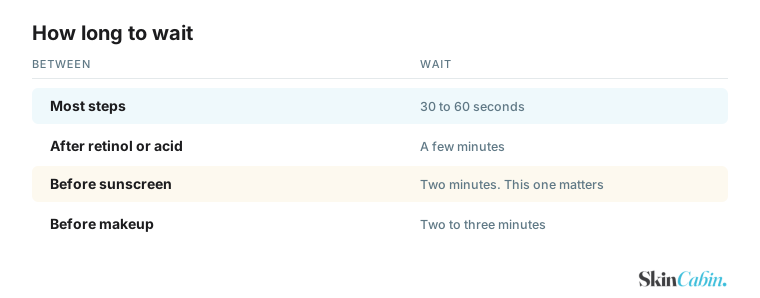 Less than the internet tells you.
What you don't need to do is wait twenty minutes between every step. That advice comes from a misreading of research about skin acidity, and it makes routines so tedious that people give up.
What not to put together
Fewer combinations are genuinely a problem than you'd think. Here are the real ones.
Retinol and acids on the same night
The issue is irritation, not chemistry. They don't cancel each other out. They just both irritate, and doing both at once is how people wreck their barrier.
What to do: alternate nights. Retinol Monday, acid Wednesday. Or acids in the morning and retinol at night, if your skin is tough enough.
Benzoyl peroxide and retinol
This one is real, and it's specific. Benzoyl peroxide can break down some forms of retinol if you apply them at the same time.
What to do: benzoyl peroxide in the morning, retinol at night. Adapalene is more stable and can be used with benzoyl peroxide, but separating them is still simpler.
Too many actives at once
Not a chemical problem. A quantity problem.
Vitamin C in the morning. An acid at lunchtime. Retinol at night. A scrub twice a week. That's the fastest route to a damaged barrier. Pick one or two things and give them time.
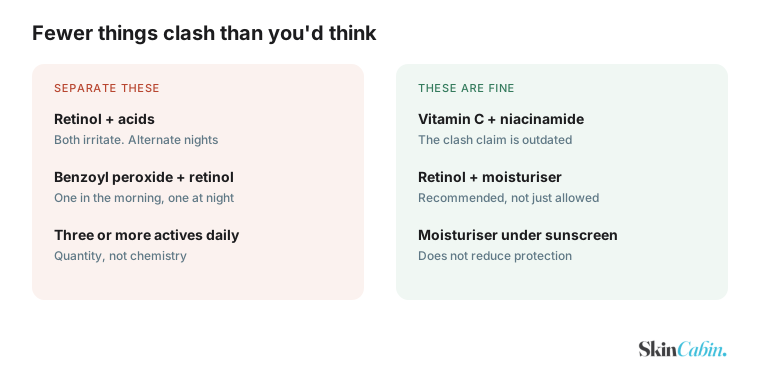 Three real clashes. Three false ones.
The combinations that are fine
Several "don't mix" rules that circulate are wrong.
Vitamin C and niacinamide. These are fine together. The claim they cancel out comes from old research using unstable forms at high temperatures. It doesn't apply to modern products. Plenty of formulas contain both on purpose.
Niacinamide and acids. Fine.
Retinol and moisturiser. Not only fine, actively recommended. If retinol irritates you, put a thin layer of moisturiser on before it as well as after.
Hyaluronic acid and anything. It's a humectant, not an active. It plays well with everything.
Sunscreen over moisturiser. Moisturiser underneath doesn't dilute your sunscreen or reduce its protection. Just give it a couple of minutes.
What happens if you get the order wrong?
Honestly, usually not much.
Your products don't stop working. Nothing gets ruined. In most cases you lose a little effectiveness, and that's it.
Where it genuinely matters:
- Sunscreen not last — this one does reduce your protection
- A thick cream before a treatment serum — the serum reaches less of your skin
- Benzoyl peroxide and retinol together — the retinol may not survive it
Where it barely matters:
- Eye cream before or after moisturiser
- Toner before or after essence
- Exactly how many seconds you wait
Getting the order roughly right and actually doing it beats getting it perfect and giving up.
The three-step version
If the full list feels like too much, this is the version that covers most of the benefit.
Morning: wash, moisturise, sunscreen. Night: wash, moisturise.
Add one treatment when you're ready. Give it a month before adding another.
A routine you follow beats a routine you admire.
Common mistakes
Sunscreen before moisturiser. The most common one, and the one that costs you most.
Applying everything to bone-dry skin. Water-based steps work better on slightly damp skin.
Waiting too long between steps. By the time you apply the next layer, the previous one has already dried out.
Using oil before a water-based product. Nothing gets through.
Starting three actives in the same week. If something reacts, you won't know which one.
Rebuilding your whole routine at once. Change one thing, wait two weeks, then change the next.
Frequently asked questions
What order should I apply skincare? Thinnest to thickest. Cleanser, toner, serum, treatment, eye cream, moisturiser, oil, then sunscreen in the morning.
Does moisturiser go before or after serum? After. Serums are thinner and go on first.
Does sunscreen go before or after moisturiser? After. Sunscreen is always the last step in the morning.
How long should I wait between skincare steps? Thirty to sixty seconds for most. Two minutes before sunscreen or makeup.
Where does face oil go? Last, or just before sunscreen. Oil can get through a cream, but a cream can't get through oil.
Where does eye cream go? Before moisturiser, usually. After is also fine if you want to keep richer creams away from your eyes.
Can I use vitamin C and niacinamide together? Yes. The claim they cancel out comes from old research on unstable forms at high temperatures. It doesn't apply to modern products.
Can I use retinol and acids on the same night? Better not to. They don't react with each other, but both irritate, and together they often damage the barrier. Alternate nights instead.
Does moisturiser stop sunscreen working? No. Applying moisturiser underneath doesn't reduce protection. Wait a couple of minutes so they don't roll off each other.
Does the order really matter that much? Less than people think. Sunscreen last is the one that genuinely counts. The rest costs you a little effectiveness at most.
What if I only have two minutes? Wash, moisturise, sunscreen in the morning. Wash and moisturise at night. That's most of the benefit.
Working out which moisturiser fits into your routine? Every product on SkinCabin is scored on its ingredients, not its marketing. Find products →
For more on where moisturiser sits in all this, see our guide to what a moisturiser does.