How Much Moisturiser Should You Use?
In short
For your face, somewhere between a pea and an almond. For your body, far more than most people use.
Twice a day, on slightly damp skin, within about a minute of washing.
If a face moisturiser lasts you less than six weeks, you're probably using too much. If a body lotion lasts more than four months, you're probably using too little.
The face amount
A pea to an almond. That's the everyday range for most people and most products.
The variation is real. A rich cream goes further than a light lotion, and a large face needs more than a small one. Start in the middle and adjust.
Signs you're using too much:
- White streaks still visible a minute later
- It balls up and rolls off
- Your face looks greasy an hour after
- Small bumps or congestion appearing
Signs you're using too little:
- Skin feels tight again within an hour
- Rough by the end of the day
- You keep going back for a second coat
That second one is the useful test. Tightness within an hour means not enough. Shine within an hour means too much.
The measure dermatologists actually use
There's a proper unit for this, and it's more useful than "a pea" once you move past your face.
One fingertip unit is the amount squeezed onto your index finger, from the tip to the first crease. About half a gram from a standard tube.
One fingertip unit covers roughly two adult palms of skin. 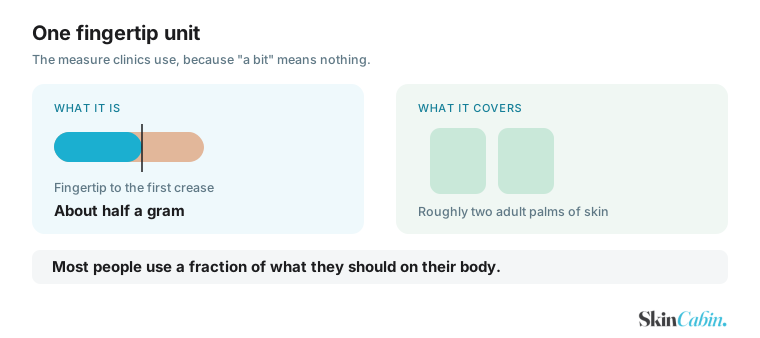 Half a gram. Two palms.
Clinics use it for emollients and prescription creams. "Some" and "a bit" mean wildly different things to different people.
How many for each part of you
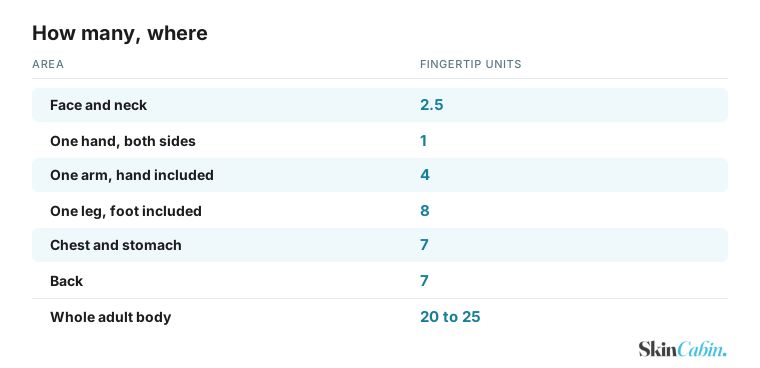 The clinical amounts. They look like a lot.
- Face and neck — about 2.5
- One arm, hand included — about 4
- One hand, front and back — about 1
- One leg, foot included — about 8
- Chest and stomach — about 7
- Back — about 7
- Whole body — about 20 to 25
That will look like a lot. Most people use a fraction of it, which is the single most common reason body moisturiser seems not to work.
Why face and body advice differ
You may have spotted a gap. Two and a half fingertip units is more than an almond.
Both are right, for different jobs.
The fingertip measure comes from clinical use — treating eczema and dry skin conditions, where generous coverage matters and under-application is the usual failure.
The pea-to-almond amount is everyday cosmetic use on a face that's basically fine, where a thick layer just sits there and pills.
How to choose. If your skin is comfortable and you're maintaining, use the smaller amount. If your skin is dry, flaky or you're managing a condition, use the clinical amount. On your body, use the clinical amount either way.
When to apply it
Twice a day. Morning and night.
The most useful moment is straight after washing. Cleansing removes some of your skin's own oil, and water starts leaving faster right afterwards. Applying then makes more difference than the product you chose.
If twice is too much to keep up, keep the night one. Your skin does more repair while you sleep, and there's no sunscreen or makeup to work around.
After a shower, aim for 60 seconds. Not because the number is magic, but because your skin dries within a couple of minutes and you want to catch it while it's still damp.
Damp skin, and why
Pat your face or body with a towel until it's damp but not dripping. Then apply.
The reason is simple. Your moisturiser can hold in water that's already there. On bone-dry skin, there's less to hold.
The evidence. Research on application has found better results when moisturiser goes on straight after bathing rather than an hour or more later, and when a reasonable amount is used twice daily rather than a thin layer once.
How damp is damp. Blotted, not wet. If moisturiser slides around without gripping, your skin was too wet.
Does more work better?
Up to a point, and then no.
Your skin can only hold so much at once. Past that, the extra sits on the surface where it pills, blocks pores, or just gets wiped onto your pillow.
More product doesn't extend how long it lasts either. A double layer at 8am doesn't get you to 6pm. Reapplying at lunchtime would, but a thicker morning layer won't.
Where more genuinely helps: very dry skin, damaged skin, cold weather, and your body rather than your face.
Where it doesn't: trying to fix an unsuitable product by using more of it. If a light gel isn't enough for your skin, a double dose of light gel still isn't. You need a richer texture — see is moisturiser the same as lotion.
How long should a tub last?
This is the easiest way to check whether you're in the right range.
Face moisturiser, 50ml, twice a day — about two to three months.
Body lotion, 400ml, once a day all over — about four to six weeks.
Hand cream, 75ml, used properly — three to four weeks.
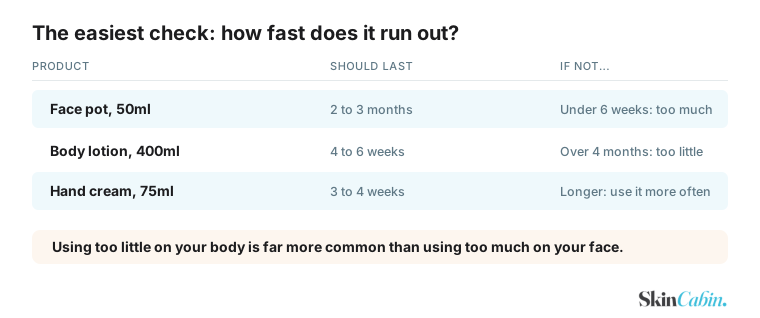 Your bathroom shelf will tell you.
What the numbers tell you. A face pot lasting less than six weeks means you're likely heavy-handed. A body lotion lasting six months means you're barely using any.
Body under-use is far more common than face over-use. Most people apply about a third of what they should below the neck.
Special cases
Under sunscreen. Same amount, then wait two minutes. Using less moisturiser doesn't help sunscreen work better — waiting does.
Under makeup. Same amount, then two to three minutes. Rushing this is the top cause of patchy foundation.
Around the eyes. A rice grain per eye is plenty. Pat, don't rub, and stay on the bone rather than right up to the lash line.
Hands. More often rather than more at once. After every wash if you can.
Feet. Generous, at night, and socks over the top if they're cracked.
Babies and children. Their skin is thinner and more absorbent. Use plain, fragrance-free products, and ask a pharmacist or health visitor rather than scaling down adult advice.
Common mistakes
Treating the face amount as the body amount. Body needs several times more, by area.
Applying to bone-dry skin. Damp skin makes the same amount go further.
Adding a second coat because the first didn't feel like enough. It hadn't finished settling.
Using more to fix a product that's too light. Change the texture instead.
Rationing an expensive product. A moisturiser used too sparingly doesn't work. Buy a cheaper one and use enough of it.
Frequently asked questions
How much moisturiser should I use on my face? Somewhere between a pea and an almond. If white streaks are still visible after a minute, that's too much.
How much moisturiser should I use on my body? Far more than most people do — roughly 20 to 25 fingertip units for a whole adult body. A 400ml bottle should last about four to six weeks with daily use.
What is a fingertip unit? The amount squeezed from your fingertip to the first crease, about half a gram. One covers roughly two adult palms of skin.
Should I apply moisturiser to wet or dry skin? Slightly damp. Pat with a towel until damp but not dripping, then apply within about a minute.
How often should I moisturise? Twice a day for most people. If you can only manage once, make it night.
Does using more moisturiser work better? Only up to a point. Beyond what your skin can hold, the extra pills, clogs or rubs off.
Why does my moisturiser run out so fast? Usually too much per application. A 50ml face pot should last two to three months at twice a day.
How much should I use around my eyes? About a grain of rice per eye. Pat it in and stay on the bone.
Do I need less moisturiser under sunscreen? No. Use your normal amount and wait two minutes before the sunscreen.
Can you use too much moisturiser? Yes. It causes pilling, clogged pores and a greasy finish. It won't make your skin dependent on it.
Getting the amount right matters more with a product that suits your skin. Every moisturiser on SkinCabin is scored on its ingredients. Find products →
For the full picture, see our guide to what a moisturiser does. If yours rolls into little balls, that's usually pilling.