Why Is My Moisturiser Pilling?
In short
Pilling is when your moisturiser rolls into little balls instead of settling into your skin.
It's almost always one of four things. Too much product. Not enough time between layers. Two products that don't get on. Or dead skin on the surface.
None of it means your product is bad, and none of it means your skin isn't absorbing it.
What pilling actually is
Those little balls aren't your skin. They're product.
A layer sits on your skin without settling. Then friction rolls it up. Your fingers do it, or the next layer, or your makeup brush. Same thing that happens when you rub a rubber eraser on paper.
Two things have to be true. More product on the surface than can settle in. And something rubbing it.
That's the whole mechanism. Everything below is about which of the four causes is yours.
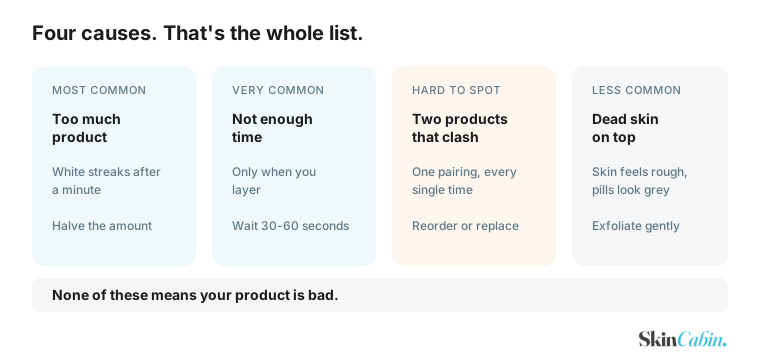 Four causes, four fixes.
Cause one: too much product
The most common, and the easiest to fix.
Your skin can only take so much at once. The rest sits on the surface, waiting to be rolled up.
How to tell it's this. You can still see white streaks a minute after applying. Or it pills everywhere, with every product, not one combination.
The fix. A pea to almond-sized amount for your whole face. See how much moisturiser should you use for body amounts. If you've been using more, halve it for a week and see.
A related version. Applying a second coat because the first "didn't feel like enough." The first one hadn't finished settling.
Cause two: not enough time between layers
The second most common.
Each layer needs a moment before the next one goes on. Apply to a wet surface and neither layer settles. Both roll.
How to tell it's this. It pills only when you layer, never with a single product on its own.
The fix. Thirty to sixty seconds between most steps. Two minutes before sunscreen and before makeup. That's it — you don't need longer.
Cause three: two products that don't get on
This is the one people can't work out on their own, and it's worth understanding properly.
Silicone-based and water-based products often refuse to blend. Layer one over the other and instead of mixing, they separate and roll.
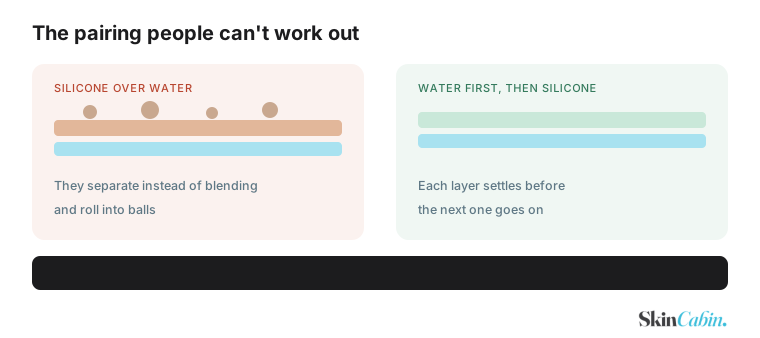 Order changes everything with this pair.
How to spot a silicone product. Look for ingredients ending in -cone or -siloxane. Dimethicone is the common one. They sit high on the list in primers, sunscreens, and anything promising a smooth, blurring finish.
The other common offenders:
- Film formers. Common in sunscreen. Designed to sit on the surface, not sink in
- Thickeners like carbomer and xanthan gum, when two products both have a lot of them
- Heavy oils under water-based products. Nothing gets through
- Powdery mineral sunscreen over a rich cream
How to tell it's this. It pills with one specific pairing, every time, and never with either product used alone.
The fix. You have three options.
- Reorder. Water-based first, silicone-based on top. Not the other way round.
- Wait longer. Two to three minutes between those two specific products.
- Replace one. If the pairing is your moisturiser and your sunscreen, swap whichever you're less attached to.
Cause four: dead skin on the surface
Less common, but real.
Loose dead skin gives product something to catch on. It rolls up with it.
How to tell it's this. Your skin also feels rough or looks flaky, and the pills are slightly greyish rather than white.
The fix. Gentle exfoliation once or twice a week. Not more. Over-exfoliating causes its own problems, and makes everything worse.
Working out which one is yours
Run through this in order. 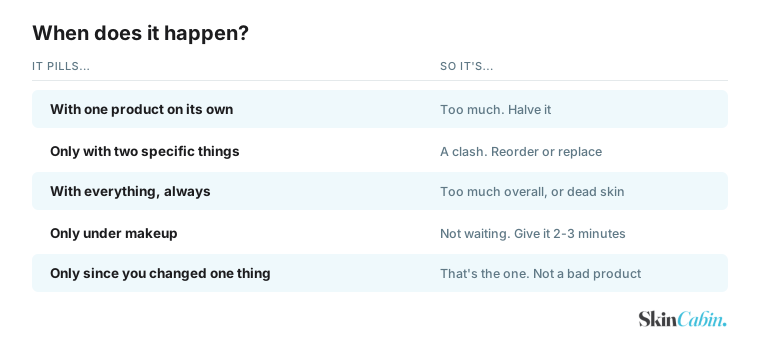 When it happens tells you why.
Does it pill with one product used alone? → You're using too much. Halve it.
Only when you layer two specific things? → Incompatible pairing. Reorder or wait longer.
With everything, whatever you do? → Either too much product overall, or dead skin. Check whether your skin also feels rough.
Only under makeup? → Not waiting long enough. Give it two to three minutes.
Only since you changed one product? → That product is the problem. It doesn't mean it's bad, just that it doesn't get on with what you already use.
How you apply it matters too
Two habits make pilling much more likely.
Rubbing rather than pressing. Friction is half the mechanism. Press product in with flat palms or light patting instead of rubbing it around.
Working over the same spot repeatedly. One pass, then leave it. Going back to blend an area again is what rolls it up.
Also worth knowing. Slightly damp skin helps water-based products spread further, with less friction.
Does pilling mean it isn't absorbing?
No, and this is worth clearing up.
Most skincare isn't meant to sink deep into your skin. Moisturisers work on the top layer. Sunscreen is supposed to stay on the surface. That's how it works at all.
Pilling means there's more sitting on top than the surface can hold. It doesn't mean the product failed, and it doesn't mean your skin has rejected it.
The part that did settle still worked. You've lost the excess, not the benefit.
Which products pill most?
Sunscreen is the number one culprit, because most contain film formers designed to sit on the surface.
Primers, for the same reason.
Rich creams under anything. More product than the surface can take.
Mineral sunscreen over a cream. A common pairing, and it often fails.
Anything with a lot of silicone over anything water-based.
If your routine has two of these back to back, that's where to look first.
When it's not worth fixing
Sometimes the honest answer is to stop trying.
Say two products pill together every time. You've reordered them, waited, and cut the amount. They simply don't get on. No technique fixes a genuine incompatibility.
Replace one. It isn't a failure of technique, and it isn't a bad product.
Common mistakes
Adding more product to fix it. More is what caused it.
Rubbing harder to blend the pills away. Friction is the mechanism. You're making it worse.
Assuming the product is faulty. Pilling is about combination and quantity, not quality.
Exfoliating aggressively to fix it. Unless dead skin is genuinely the cause, this creates a new problem.
Changing your whole routine at once. Change one thing and retest, or you won't know what fixed it.
Frequently asked questions
Why is my moisturiser pilling? Almost always too much product, not enough time between layers, two products that don't blend, or dead skin on the surface.
How do I stop skincare pilling? Use less. Wait thirty to sixty seconds between layers. Press rather than rub. Put water-based products before silicone-based ones.
Does pilling mean my skin isn't absorbing the product? No. It means more is sitting on the surface than can settle. Most skincare works on the top layer anyway.
Why does my sunscreen pill over moisturiser? Sunscreens usually contain film formers that stay on the surface. Wait two minutes after moisturiser. Use less of both. Press rather than rub.
Why does my foundation pill over skincare? Not enough time. Give your last skincare step two to three minutes before makeup.
Can pilling be caused by dead skin? Yes, though it's less common. The clue is skin that also feels rough, with slightly greyish pills.
Which ingredients cause pilling? Silicones over water-based products. Film formers in sunscreen. Heavy thickeners in both layers. Oils under water-based products.
How long should I wait between skincare steps? Thirty to sixty seconds for most. Two minutes before sunscreen or makeup.
Should I exfoliate more if my products pill? Only if your skin also feels rough. Over-exfoliating causes worse problems than pilling.
Is a pilling product a bad product? No. It's a combination problem, not a quality problem. The same product may be fine in a different routine.
Think it's the pairing? Every moisturiser on SkinCabin is scored on its ingredients, so you can check what's in yours before you buy the next one. Find products →
For more on how the layers work together, see our guide to what a moisturiser does and what order skincare products go in.