Is Moisturiser the Same as Lotion?
In short
A lotion is a type of moisturiser. So is a cream, a gel, a balm and an ointment.
They all do the same job. The only real difference is how much oil is in the mix. Lotions have less. Creams have more.
Neither is stronger. They suit different skin, different weather, and different parts of your body.
So what is the actual difference?
Every moisturiser is a mix of water and oil.
Water and oil don't mix on their own. So the ingredients that hold them together decide the texture. Change how much water and how much oil, and you change the whole feel of the product.
That's it. That's the difference between a gel and a balm.
- More water, less oil — light, thin, sinks in fast
- More oil, less water — thick, rich, sits on the surface longer
The names on the packaging follow that scale. Nobody is adding magic to the thick ones.
Two ways to mix water and oil
There's a bit more to it, and this is the part that explains why some products feel greasy and others don't.
Oil in water. Tiny drops of oil floating in water. Water is the main part. This feels light and sinks in quickly. Most gels, lotions and lighter creams are made this way.
Water in oil. Tiny drops of water floating in oil. Oil is the main part. This feels richer, and leaves more of a layer on top. Heavy creams, balms and ointments are usually made this way.
The same two ingredients can feel completely different depending on which one is the main part. That's why two products with almost the same label can feel nothing alike.
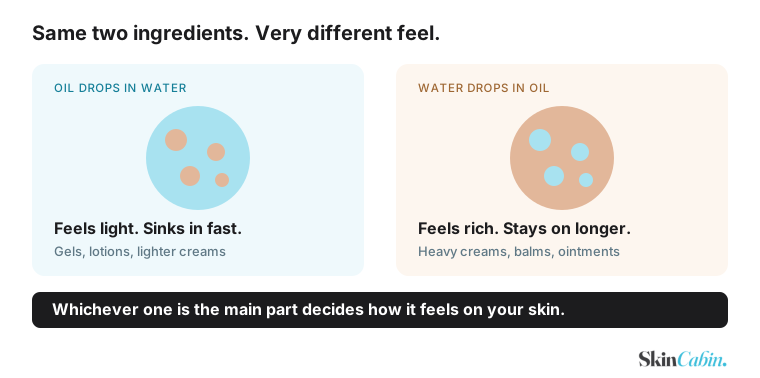 Same two ingredients, mixed the other way round.
Worth knowing A product can be very hydrating and still feel light. Thickness tells you about oil, not about how much water it gives your skin.
The five textures
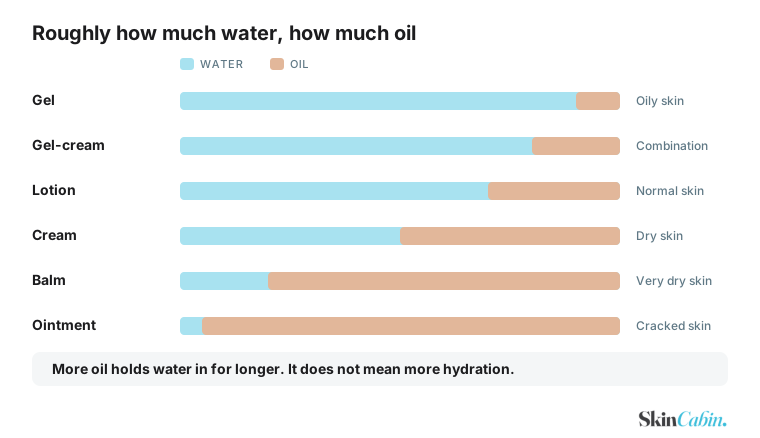 Roughly how much of each, texture by texture.
Gel
Mostly water. Very little oil.
Sinks in within seconds. Leaves nothing on the surface. Often feels slightly cooling.
Suits oily skin, humid weather, and anyone who hates the feeling of product on their face.
The trade-off: with little oil, there's less to hold water in. On dry skin in cold air, a gel alone will often leave you tight within the hour.
Gel-cream
Mostly water, a little more oil than a gel.
You'll see this called gel-cream, water gel, or water cream. It's the middle ground that didn't used to exist, and it's now the most popular texture on the shelf.
Light enough for oily skin, but with enough oil to hold water in. If you find gels not quite enough and creams too much, this is your texture.
Lotion
More water than oil, but a real amount of both.
Thin enough to pour. Spreads easily over a large area, which is why almost every body moisturiser is a lotion.
Suits normal skin, combination skin, and most people in mild weather.
Cream
More oil than a lotion. Often oil is the main part.
Thicker. Takes longer to sink in. Leaves your skin feeling smooth rather than bare.
Suits dry skin, cold weather, and older skin, which makes less oil naturally.
Balm
Mostly oil. Very little water.
Heavy, slightly waxy, and often solid in the tub until you warm it between your fingers.
Suits very dry skin, cracked hands, and cold windy weather. Some people use a balm only in patches, on the spots that stay dry.
Ointment
Almost all oil. Often no water at all.
Greasy. Sits on top of your skin rather than sinking in. Petroleum jelly is the one everyone knows.
This is the strongest thing you can put on for holding water in. It's also the one to use carefully.
Why ointments are short-term. They seal skin so completely that they trap sweat and heat as well as water. Over days on a large area, that can leave skin soft, soggy and more likely to get irritated or infected. Use them on small areas — cracked hands, lips, a rough patch — and for a few days at a time, not as your everyday face cream.
Which texture suits your skin?
Start here, then adjust.
Oily skin — gel or gel-cream. Look for oil-free, and for non-comedogenic, which means the brand tried to make it less likely to block pores.
Dry skin — cream or balm. Apply to damp skin, twice a day.
Combination skin — lotion or gel-cream over the whole face is simplest. If your face is very uneven, use two products.
Sensitive skin — texture matters less than the ingredients list. Go for whatever feels comfortable, fragrance-free, with a short list.
Acne-prone skin — gel or gel-cream. Skip heavy balms and oils on your face.
Older skin — usually a cream. Your skin makes less oil with age, so it needs more from the tube.
Normal skin — a lotion in warm weather, a cream in cold. Easiest job of the lot.
Know your texture? Every moisturiser on SkinCabin is scored the same way, and you can filter by the one you need. Find products →
Which texture for your weather?
This changes more than most people expect.
Hot and humid — gel or gel-cream. Air that already holds water means your skin loses less, so you need less oil sealing it in.
Hot and dry — lotion or light cream. Heat says go light, dry air says you need something holding water in. Split the difference.
Cold — cream. Cold air outside, heating inside and hotter showers all pull water out at once.
Very cold and windy — cream, with a balm on the parts that take the weather. Cheeks, nose, hands.
Air conditioning all day — treat it as dry air, whatever the season. Offices are one of the most common reasons a moisturiser that used to work stops working.
Which texture for which part of you?
Different skin, different needs.
Face — the lightest texture that keeps you comfortable. Facial skin is thinner and more likely to break out.
Body — lotion or cream. Bigger area, so spreadability matters. Body skin also handles richer textures without trouble.
Hands — cream, and a balm at night if they crack. Hands get washed constantly, which strips them faster than anywhere else.
Feet — balm or ointment. The thickest skin on your body can take the heaviest thing you own.
Lips — balm or ointment only. No water-based gel will stay put.
Around the eyes — the same thing you use on your face is usually fine, as long as it doesn't sting.
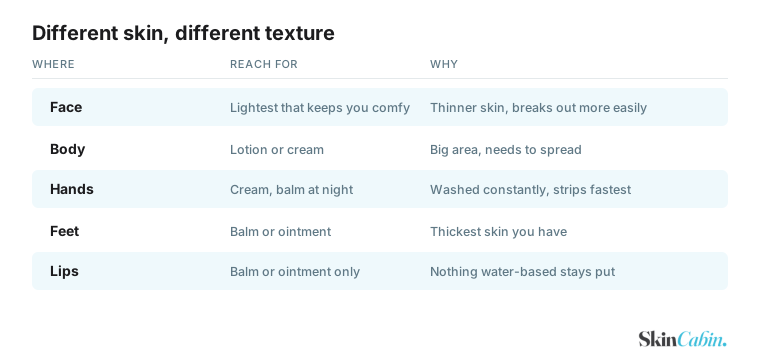 Your feet and your face want different things.
A note on body lotion on your face It usually works, but it's not ideal. Body products tend to be richer and more strongly scented, and facial skin is more likely to react or clog.
Texture and the rest of your routine
Under sunscreen
Lighter textures sit better under SPF. A heavy cream underneath can make sunscreen roll off in little balls.
If that happens, wait two minutes between the two, or switch to something lighter in the morning and keep the cream for night. We cover this properly in why is my moisturiser pilling.
Under makeup
Same rule, more so. Give your moisturiser a couple of minutes to settle before foundation. Rushing this is the most common reason makeup goes patchy.
Gels and gel-creams sit best under makeup. Balms rarely work.
Layering two textures
You can use more than one. It's genuinely useful in cold weather.
Light first, heavy second. A gel or serum, then a cream on top. Never the other way round — a heavy layer underneath blocks the lighter one from getting through.
Some people only layer on the dry patches. That's fine. There's no rule that says one product has to cover your whole face.
Switching textures without upsetting your skin
Your skin can react to a sudden jump, so don't leap from a gel to a balm overnight.
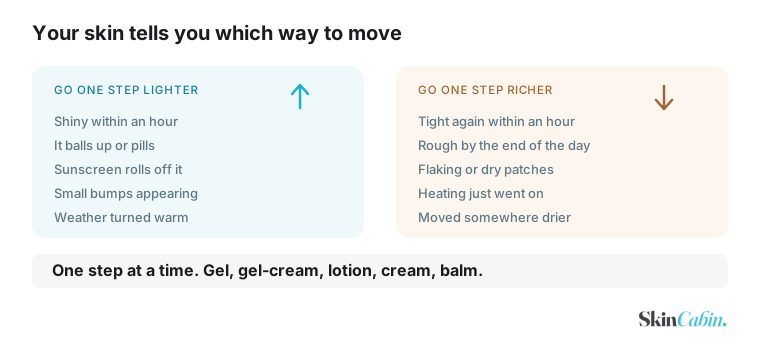 What your skin is telling you.
Move one step at a time. Gel → gel-cream → lotion → cream → balm. Give each step a week.
Change one thing at a time. If you switch texture and cleanser in the same week and something goes wrong, you won't know which caused it.
Start at night. Any new texture is easier to judge without makeup and sunscreen involved.
Give it two weeks. Unless it stings, in which case stop.
Does the texture change how well it works?
Partly, and it's worth being precise about this.
What texture does affect: how much water your skin holds on to. A richer texture has more oil sealing the surface, so less water escapes. That's a real difference, not a feeling.
What texture doesn't decide: whether the useful ingredients are in there. A gel can contain glycerin, niacinamide and ceramides. A thick cream can contain almost nothing but wax and water.
Read the ingredients list either way. Thickness is not proof of anything.
And the part nobody mentions: the texture you like is the texture you'll actually use. A product that feels unpleasant sits in the cupboard. That's worth more than a small difference in how much oil it contains.
Why your usual texture stopped working
Your skin didn't build tolerance. Something around it changed.
- The season turned
- You moved house, city or office
- You started working somewhere air conditioned
- You added an acid, retinol or a new cleanser
- You got older, and your skin makes less oil than it did
Products don't stop working. Conditions do. When your skin feels tight, go one step richer. When it feels greasy, go one step lighter.
Common mistakes
Buying the thickest one on the shelf. Thickness is for dry skin, not for everyone. On oily skin it causes problems it was meant to solve.
Assuming a gel isn't enough. For oily skin in warm weather, a gel is often exactly right.
Using one texture all year. Your skin's needs change with the weather even if nothing else does.
Using body lotion on your face. It'll do in a pinch. It's not the plan.
Judging by how it feels in the first minute. Some good products feel slightly tacky going on and settle within five minutes. Give it that long.
Frequently asked questions
Is a lotion the same as a moisturiser? A lotion is a kind of moisturiser. Moisturiser is the category. Lotion, cream, gel, balm and ointment are the textures within it.
Which is better, lotion or cream? Neither. A cream has more oil, so it suits dry skin and cold weather. A lotion has less, so it suits normal skin and mild weather.
Is a thicker moisturiser stronger? No. Thicker means more oil, which helps hold water in. It says nothing about what useful ingredients are inside.
What is a gel-cream? A texture between a gel and a lotion. Light enough for oily skin, with enough oil to hold water in. Often the best fit for combination skin.
Can I use a gel if my skin is dry? You can, but it probably won't be enough on its own. Either layer a cream on top or move up a step.
Can I use body lotion on my face? It's not ideal. Body products are usually richer and more strongly scented, which can clog or irritate facial skin.
Should I change texture in winter? Most people should. Cold air, indoor heating and hotter showers all dry your skin at the same time. One step richer is usually enough.
Why does my moisturiser roll off under sunscreen? Usually too rich, too much, or not enough time between layers. Wait two minutes, use less, or go lighter in the morning.
What's the difference between a balm and an ointment? An ointment has almost no water and is greasier. A balm has a little more and usually feels waxy rather than slippery.
Can I use two textures at once? Yes. Light first, heavy on top. It's a good way to handle a face with dry patches.
How long should a tub last? Face moisturiser used twice a day usually lasts two to three months. If yours empties in three weeks, you're probably using too much.
For the full picture, read our complete guide to what a moisturiser does.