Sunscreen for Pigmentation — What Actually Matters
In short
Sunscreen isn't a supporting step for pigmentation. It's the main treatment.
SPF 50, broad spectrum, every day — including winter, cloudy days and days spent indoors near a window.
If you have melasma, use a tinted one. The iron oxides that give it colour are the only easy way to block visible light, and ordinary sunscreen doesn't.
Most people use about a third of what they should. Two finger-lengths for face and neck.
Why it matters more than any serum
Ultraviolet light tells your pigment cells to make more melanin. That's the whole mechanism behind most pigmentation.
So while you're treating dark marks, unprotected sun exposure is adding to them at the same time.
What sunscreen does here:
- Stops new marks forming
- Stops existing marks getting darker
- Lets everything else you're doing actually show
Without it, you're emptying a bath with the tap still running. The serum isn't failing. It's being outpaced.
This is why how to treat pigmentation puts sunscreen first and everything else second.
What to look for
SPF 50, not 30
For everyday skin health, SPF 30 is fine. For pigmentation you're actively treating, go higher.
The gap between 30 and 50 sounds small. But almost everyone applies less than the tested amount. Starting at 50 gives you room for that.
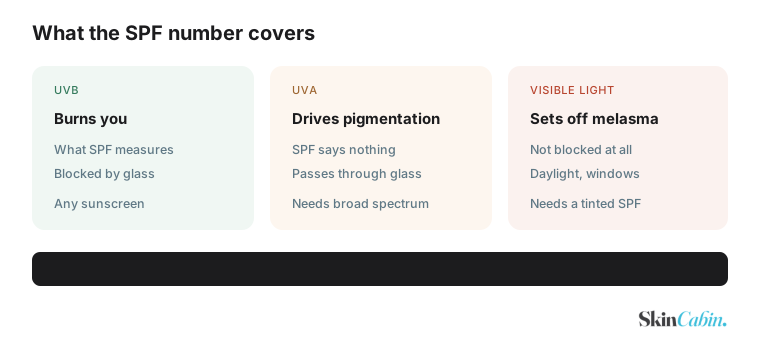 SPF only tells you about one of three.
Broad spectrum
This means it covers UVA as well as UVB.
UVB burns you. It's what the SPF number measures.
UVA drives pigmentation and ageing. It matters most here. And the SPF number tells you nothing about it.
Look for: the words broad spectrum, a UVA logo in a circle, or PA+++ and above.
Tinted, if you have melasma
This is the part most people miss.
Sunscreen blocks ultraviolet. It does not block visible light — the light you can actually see.
Melasma responds to visible light, especially the blue end. So you can wear SPF 50 daily and still flare every summer.
Iron oxides are the fix. They're what make a sunscreen tinted, and they block visible light. It's the only easy way to do it.
Which means: for melasma, a tinted SPF 30 often outperforms an untinted SPF 50.
More on why in what is melasma.
Mineral or chemical?
Either. This matters far less than people think.
Mineral — zinc oxide, titanium dioxide. Sits on the surface. Can leave a white cast, though tinted versions solve that.
Chemical — absorbs UV and converts it. Usually lighter and more cosmetically elegant.
Both work. The best sunscreen is the one you'll wear every day. A perfect formula you dislike does nothing in the cupboard.
How much, and how often
The amount
Two finger-lengths for face and neck — squeeze a line along your index and middle fingers.
That will look like more than you expect. It's the amount sunscreens are tested at. Use half, and you get about half the protection. Not 80%.
For your body, about a shot glass for full coverage.
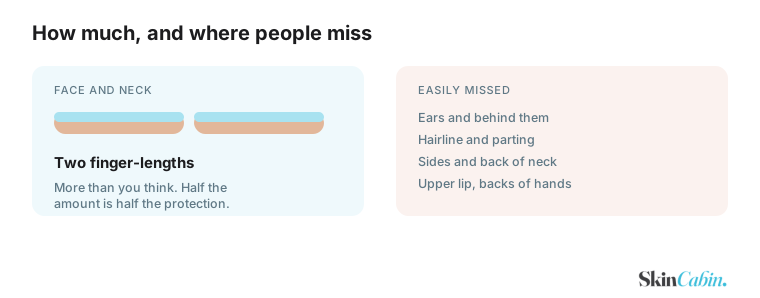 More than you think, and don't skip the edges.
The timing
Every morning, as the last step of your routine.
Reapply every two hours outdoors. Less critical indoors. Still worth a top-up at lunchtime if you sit by a window.
After swimming or heavy sweating, regardless of how long it's been.
The bits people miss
Pigmentation loves the spots you forget.
- Ears, and behind them
- Hairline and parting
- Sides and back of the neck
- Under the jaw
- Backs of hands
- Upper chest
The upper lip especially, if you have melasma. It's one of the most common sites and one of the easiest to miss.
Do you still need it indoors?
Mostly yes, and the reason is UVA.
UVA passes through glass. UVB mostly doesn't. So a day by a window won't burn you. It still delivers the rays that drive pigmentation.
If you sit near a window, wear it. In a room with no daylight it matters much less. Though most people don't stay put all day.
Screens and indoor lighting? Far weaker than daylight. Not worth worrying about next to the window beside you.
What about cloudy days and winter?
Cloud stops some UVB, very little UVA. You burn less on a cloudy day. You still get the wavelength that causes pigmentation.
Winter sun is weaker, not absent. And while you're treating pigmentation, consistency beats intensity. Skip four months a year and you've skipped a third of the treatment.
Common mistakes
Using too little. The single most common one. Half the amount is not most of the protection.
Only wearing it when it's sunny. UVA doesn't take days off.
Skipping the neck and chest. Pigmentation appears there readily and gets treated rarely.
Relying on moisturiser with SPF. Most people apply moisturiser far more thinly than sunscreen needs. Better than nothing. Not a substitute.
Relying on makeup with SPF. Same problem, worse. You'd need far more foundation than anyone wears.
Using untinted sunscreen for melasma. Blocks one of the three triggers.
Stopping once it improves. Pigmentation comes back. Sunscreen is maintenance, not a course.
Frequently asked questions
What SPF should I use for pigmentation? SPF 50, broad spectrum, every day. Most people apply less than the tested amount, so starting higher gives you margin.
Does sunscreen actually fade pigmentation? Not directly. It stops new marks, and stops old ones darkening. That's what lets other treatments work. It's the difference between improving and standing still.
Why do I need a tinted sunscreen for melasma? Ordinary sunscreen doesn't block visible light, and melasma responds to it. Iron oxides do block it, and they're what make a sunscreen tinted.
Mineral or chemical sunscreen for pigmentation? Either works. The one you'll actually wear every day beats the one you avoid.
How much sunscreen should I use on my face? About two finger-lengths for face and neck. It will feel like too much. It isn't.
Do I need sunscreen indoors? If you sit near a window, yes. UVA passes through glass, and UVA is what drives pigmentation.
Do I need sunscreen in winter? Yes, if you're treating pigmentation. Weaker sun still adds up. Consistency beats intensity.
Is SPF in my moisturiser enough? Usually not. People apply moisturiser far more thinly than sunscreen needs. Better than nothing, not a replacement.
How often should I reapply? Every two hours outdoors. Once at lunchtime is enough for most indoor days.
Can I stop once my pigmentation fades? No. It comes back. Sunscreen is the maintenance that keeps the result.
Every sunscreen on SkinCabin is scored on its ingredients rather than its marketing. Find products →
For the full treatment picture, see how to treat pigmentation.