Can Moisturiser Make Your Skin Dependent on It?
In short
No. Your skin does not become dependent on moisturiser, and stopping does not make your skin worse than it was before.
The belief comes from something real, though. Once your skin has been comfortable for a while, going back to dry skin feels much worse than it used to. Your skin hasn't changed. What you're comparing it to has.
Where does this idea come from?
It's one of the most repeated beliefs in skincare, and it isn't stupid. People say it because of something they actually noticed.
Here's the usual story. Someone uses a moisturiser daily for months. Then they run out, or go away without it. Within a day or two their skin feels tight. Worse, they'd swear, than before they ever started.
The conclusion feels obvious. The moisturiser made my skin lazy.
But there's a simpler explanation, and it fits the facts better.
Why it feels true
Your sense of what "normal" feels like moves.
Before you started, mildly dry skin was your baseline. You barely noticed it. It was just what your face felt like.
After months of comfortable skin, that same mild dryness feels awful. You now have something better to compare it to.
Nothing about your skin got worse. Your reference point moved.
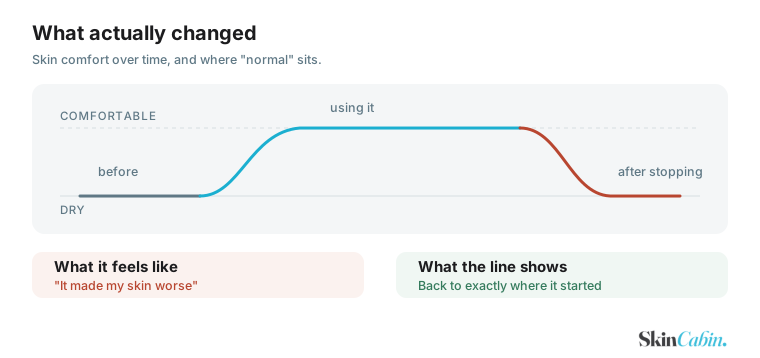 The line ends where it started. Your sense of normal moved.
A comparison that makes this obvious. If you've worn glasses for a year and take them off, the world looks blurrier than you remember. The glasses didn't damage your eyes. You got used to seeing clearly.
The short version Your skin didn't get weaker. Your memory of dry skin did.
Is there any mechanism at all?
This is the fair question, and it deserves a proper answer rather than a flat no.
The theory goes like this. Keep supplying water and oil from outside, and your skin might make less of its own.
What we can say. There's no good evidence that this happens in a way that matters. Some small lab studies have asked whether heavy sealing products affect how skin makes its own fats. The results were mixed. None of it has been shown to cause harm for people using ordinary moisturisers.
What we can't say. That the question has been settled beyond all doubt. Skincare research is often small and short.
But the practical answer is clear enough. Millions of people have used moisturiser daily for decades. If it made skin progressively worse, we would know by now.
What actually happens when you stop
Here's the honest sequence, so you know what to expect.
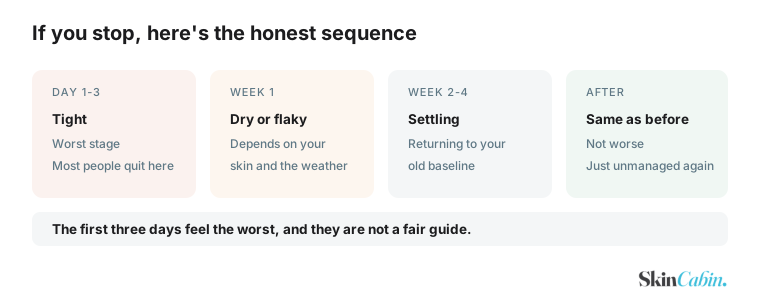 Four weeks, honestly.
Day one to three. Your skin feels tight, especially after washing. This is the most noticeable stage, and it's when most people conclude they were right about dependency.
Week one. Some dryness or flaking, depending on your skin and the weather. Your face is now doing without something that was doing part of the job.
Weeks two to four. Things settle. Your skin returns to roughly where it was before you started — not worse.
Where it doesn't settle. If your skin was dry to begin with, it goes back to being dry. That isn't damage from the moisturiser. That's the original problem coming back, because you removed the thing managing it.
If you want the fuller version of this, we've covered what happens to skin if you never moisturise separately.
The grain of truth worth knowing
There is one version of this concern that isn't a myth, and it's worth being precise about.
A heavy occlusive can hide a problem instead of fixing it. More on this in what is the skin barrier.
Say your skin barrier is damaged. Over-washing, too many acids, a strong treatment. A rich sealing product will make your skin feel fine. The damage underneath stays put. Take it away and the problem is still there, unchanged.
That isn't dependency. It's a product masking something rather than repairing it.
What to do about it. Choose a moisturiser that helps repair rather than just seal. Look for ceramides, niacinamide, panthenol or glycerin near the top of the list. Those help the repair. A wax or petroleum jelly alone just covers.
This is an argument for choosing better, not for stopping.
The thing people are confusing it with
This part matters, and almost nobody explains it.
There is a real condition called topical steroid withdrawal. It happens to some people who use strong steroid creams for a long time and then stop. It can cause burning, redness, and worse skin than before treatment. It's recognised, it's serious, and it's a genuine reason to come off steroids under a doctor's supervision.
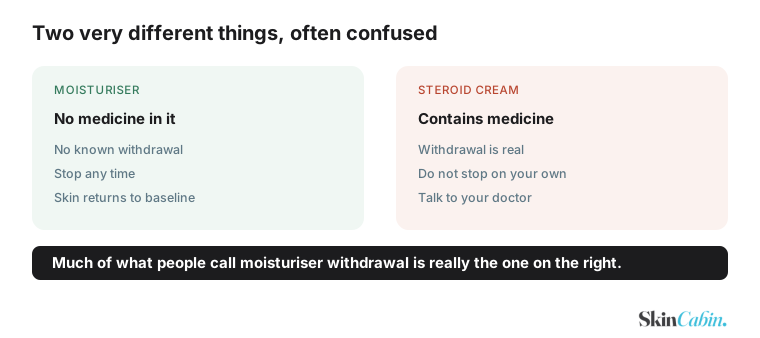 One contains medicine. One doesn't.
Moisturisers are not steroids. They contain no medicine. There is no equivalent condition for them.
Much of what you'll read online about "moisturiser withdrawal" is really steroid withdrawal. Or it's stories from places where the two got mixed up.
If you use a prescription steroid cream on your face or body, don't stop it on your own. Talk to your doctor about how to come off it. That advice has nothing to do with moisturiser.
Does skin need to breathe?
The other half of this belief, and it's worth answering.
No. Your skin doesn't take in oxygen from the air in any meaningful way. It gets what it needs from your blood.
A moisturiser doesn't suffocate anything. Very heavy products can trap sweat and heat. That's a real reason not to cover your whole body in ointment for weeks. But that's about trapped moisture and heat, not about breathing.
The other myths, briefly
Dependency is the big one, but it travels with company.
"Oily skin doesn't need moisturiser." Oil and water are different things. Oily skin can still be short of water. Skipping it often leads to more washing, which makes everything worse.
"Expensive works better." The useful ingredients are cheap. Price mostly reflects texture, packaging and marketing.
"Drinking more water does the same thing." Drinking enough water is good for you. If you're already drinking enough, more won't push extra water into your skin's outer layer.
"Natural is safer." Some of the most common causes of skin reactions are natural. Essential oils, citrus extracts, plant fragrances. Petroleum jelly and dimethicone are both lab-made, and among the least likely to upset anyone.
"You should feel it working." Tingling usually means irritation, not effectiveness. A good moisturiser should feel unremarkable.
Our guide to what a moisturiser does goes through each of these properly.
If you still want to take a break
You don't need to. But if you want to test it for yourself, here's how to do it sensibly.
Don't do it while using retinol, acids or acne treatment. Those genuinely need a moisturiser alongside them.
Pick a mild time of year. Not mid-winter, and not the week you fly somewhere.
Give it four weeks. The first three days are the worst and they aren't representative.
Keep your cleanser gentle. If you switch to a foaming wash at the same time, you won't know what caused what.
Stop the experiment if your skin cracks, bleeds or gets sore. That's past the point of a useful test.
Most people find their skin returns to its old baseline, and then decide they preferred it comfortable.
When to see a doctor
Speak to a doctor or pharmacist if:
- Your skin is cracked, bleeding or weeping
- You're using a prescription steroid cream and want to stop
- Redness is spreading or the skin feels hot
- Itching keeps you awake
- Dryness hasn't improved after four weeks of proper moisturising
Frequently asked questions
Can your skin become dependent on moisturiser? No. There's no known mechanism and no good evidence for it. Skin that's been comfortable simply feels worse when it gets dry again.
Does moisturiser stop your skin producing its own oil? There's no good evidence that it does in any way that matters. Small lab studies have looked at it. The results were mixed. It hasn't been shown to cause real problems for people.
Why does my skin feel worse when I stop? Because you got used to comfortable skin. The dryness you're feeling is usually your original baseline returning, not new damage.
How long does it take for skin to adjust after stopping? Two to four weeks. The first three days feel the worst and aren't a fair guide.
Is moisturiser withdrawal a real thing? No. Topical steroid withdrawal is real and recognised. Moisturisers contain no medicine and there's no equivalent condition.
Should I take a break from moisturiser? There's no benefit to it. If you want to test it, don't do it while using retinol, acids or acne treatment, and give it four weeks.
Does skin need to breathe? No. Your skin gets oxygen from your blood, not from the air.
Can using too much moisturiser be bad? Using more than your skin can absorb wastes product and can cause pilling or clogged pores. It won't make your skin dependent.
Is it bad to use moisturiser every day? No. Daily use is what dermatologists recommend for anyone with dry skin or an eczema history.
My skin got worse after months of using a moisturiser. What's happening? Something else changed. The season, your cleanser, a new active, your age, or where you live. Products don't turn on you.
Looking for something that repairs rather than just seals? Every moisturiser on SkinCabin is scored on its ingredients, not its marketing. Find products →