Does Moisturiser Cause Breakouts?
In short
It can, but less often than people think.
Two different things get called "breaking out from moisturiser". One is blocked pores. The other is irritation, which looks similar and needs a completely different fix.
And skipping moisturiser rarely helps. If you're on acne treatment, going without usually makes things worse.
Two different problems that look alike
Getting this right saves you months.
Blocked pores. Something in the product is sitting in your pores. You get blackheads, whiteheads and closed bumps, usually where you apply most. It builds slowly, over two to four weeks.
Irritation. Something in the product is upsetting your skin. You get small red bumps, sometimes stinging, often with redness around them. It appears within days. Sometimes within hours.
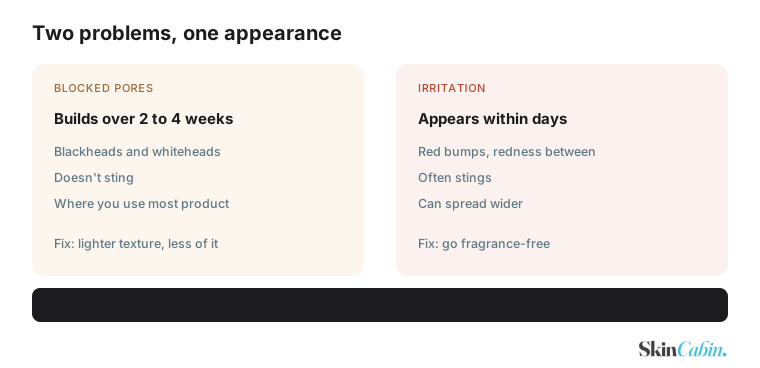 Timing is the giveaway.
How to tell them apart:
- Timing. Blocked pores take weeks. Irritation takes days.
- Feel. Blocked pores don't sting. Irritation often does.
- Look. Blackheads and whiteheads mean clogging. Uniform red bumps with redness between them mean irritation.
- Where. Clogging appears where you use most product. Irritation often spreads wider.
Why it matters. If it's clogging, change the texture. If it's irritation, look at the fragrance. Doing the wrong one wastes weeks.
What "non-comedogenic" actually means
Less than you'd hope.
There's no legal definition and no required test. A brand can put it on the box without doing anything in particular.
Where the idea came from. The original testing was done on rabbit ears in the 1970s and 80s. Researchers applied single ingredients, undiluted, and looked for blocked pores.
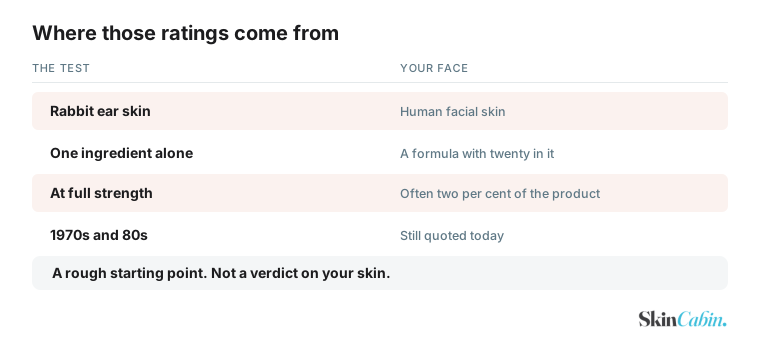 What was tested, versus what you actually use.
Why that's a weak guide. Rabbit ear skin isn't human facial skin. And nobody applies one ingredient at full strength. You apply a formula, where it might be two per cent of the total.
So the ratings you see online come from that old testing. The ones scoring every ingredient out of five. A rough starting point, not a verdict.
What it's still worth. It tells you the brand was aiming at acne-prone skin. That's a signal about intent, not a promise about your face.
Which ingredients are worth watching
No ingredient blocks pores for everyone. These are the ones that cause trouble most often on acne-prone skin.
Coconut oil. The clearest one. Excellent on your body, a common pore-blocker on faces.
Heavy butters. Cocoa butter especially. Shea is better tolerated but still rich.
Some esters. A few come up often, with long names on the label. You'll find them in richer creams and makeup.
Very heavy sealing products on the face. Petroleum jelly doesn't block pores by itself. But a thick layer over congested skin traps what's already there.
Fragrance and essential oils. These cause irritation, not clogging. Worth naming, because the bumps look alike.
What's usually fine. Glycerin, hyaluronic acid, niacinamide, squalane, dimethicone, panthenol, ceramides. Our guide to humectants, emollients and occlusives explains what each does. Silicones get blamed a lot and rarely deserve it.
The one people miss
Some bumps that look like acne aren't acne at all.
Malassezia folliculitis is often called fungal acne. A yeast that lives on everyone's skin causes it. You get small, matching bumps, often itchy. Usually on the forehead, chest, back or shoulders.
Why it matters here. It feeds on certain oils and esters. A moisturiser that suits most people can make it noticeably worse.
The clues. Bumps all the same size. Itchy. In clusters. No blackheads. Worse in heat or after sweating. Regular acne treatments don't touch it.
What to do. Don't diagnose this yourself from the internet. A doctor has to confirm it, and it needs antifungal treatment. But it's worth knowing about. People spend years treating it as ordinary acne.
Is it purging?
Almost certainly not, and this is a useful thing to be sure about.
Purging is real. But it only happens with ingredients that speed up how fast your skin renews itself. Retinol, tretinoin, acids. They bring existing blockages to the surface faster, so you break out before you improve.
Moisturisers don't work that way. They don't speed up skin turnover. So there's no mechanism for purging.
What that means. If a moisturiser is breaking you out, it isn't a phase to push through. Treat it as a sign the product doesn't suit you.
The exception. If you started a moisturiser and a retinol in the same week, the retinol may well be purging. That's why you change one thing at a time.
How long to give it
Irritation: you'll know within a week. Stop if it stings.
Clogging: two to four weeks to appear, and up to six weeks to clear after you stop.
The mistake people make is switching again at week two. Then again at week four. You end up with three products and no idea which caused what.
Change one thing. Wait four weeks. Then judge.
What to do about it
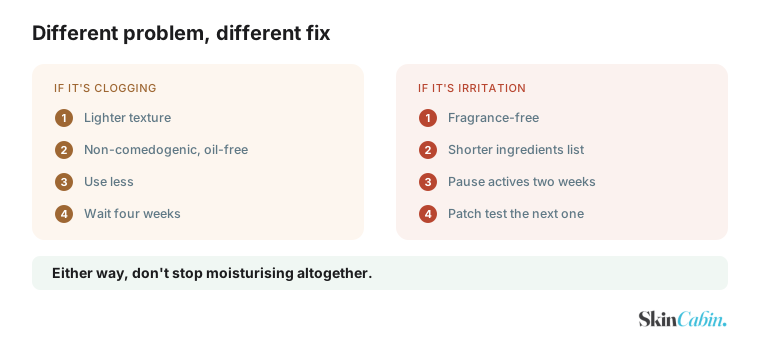 Two problems, two fixes.
If it looks like clogging:
- Switch to a lighter texture — a gel or gel-cream instead of a cream. See is moisturiser the same as lotion
- Look for non-comedogenic and oil-free
- Use less. A pea-sized amount is enough for most faces
- Give it four weeks before deciding
If it looks like irritation:
- Switch to fragrance-free. This alone fixes most cases
- Choose a shorter ingredients list
- Stop any actives for two weeks while your skin settles
- Patch test the next one behind your ear for five days
Either way, don't stop moisturising altogether. Which brings us to the thing people get most wrong.
Why skipping it usually backfires
This is the part worth sitting with if you have acne-prone skin.
Acne treatments dry you out. Benzoyl peroxide, salicylic acid, retinoids, prescription medicines. All of them. That isn't a side effect to push through. It's the main reason people abandon treatments that were working.
Tight skin leads to more washing. That strips more oil, damages the barrier, and makes your skin more reactive.
And oily skin can still be short of water. Oil and water are different. Skin that's shiny by midday can still feel tight.
So the answer is almost never no moisturiser. It's a different moisturiser.
If you want the fuller version of this, see do I actually need a moisturiser.
When it isn't the moisturiser
Before you blame the product, rule these out.
- You changed more than one thing. Cleanser, pillowcase, treatment, all in the same fortnight
- Hormonal timing. Breakouts along the jaw that come and go with your cycle
- Stress or sleep. Both affect skin, and both get blamed on products
- Your phone, pillowcase or helmet strap. Bumps in one specific area
- A new sunscreen or foundation. These are more common culprits than moisturiser
- Seasonal change. Heat and humidity affect acne independently
When to see a doctor
Speak to a doctor or pharmacist if:
- Your acne is painful, deep or leaving marks
- It hasn't improved after three months of over-the-counter treatment
- The bumps are itchy and all the same size
- It's affecting how you feel about yourself
- Your skin is red, sore or spreading
Acne is a medical condition, and treatments exist that work well. Changing moisturiser is worth trying. It isn't a substitute for treatment.
Frequently asked questions
Can moisturiser cause breakouts? Yes, though less often than people assume. Either something is blocking your pores, or something is irritating your skin. They look alike and need different fixes.
How do I know if it's clogging or irritation? Clogging takes two to four weeks and gives you blackheads and whiteheads. Irritation appears within days, often stings, and leaves redness between the bumps.
Does non-comedogenic mean it won't block my pores? No. There's no legal definition and no required test. It tells you what the brand was aiming for, not what will happen on your face.
Are comedogenic ratings reliable? Only roughly. They come from old rabbit-ear testing. Single ingredients, at full strength. That isn't how you use a product.
Can a moisturiser cause purging? No. Purging needs an ingredient that speeds up skin turnover, like retinol or acids. Moisturisers don't do that. A breakout means the product doesn't suit you.
Which ingredients block pores most? Coconut oil is the clearest. Heavy butters and some esters come up often. It varies a lot between people.
Should I stop moisturising if I have acne? Almost never. Especially on acne treatment. Those dry your skin out, and tight skin leads to over-washing.
Do silicones cause acne? Rarely. Dimethicone gets blamed often and doesn't deserve it for most people.
What is fungal acne? Malassezia folliculitis. Small itchy bumps caused by a yeast, not by acne. It needs a doctor to confirm, and antifungal treatment to clear.
How long before I know if a moisturiser is causing it? Four weeks. Irritation shows within days. Clogging takes two to four weeks. Clearing up takes up to six weeks after you stop.
Looking for something lighter? Every moisturiser on SkinCabin is scored on its ingredients, so you can check what's in it before you buy. Find products →
For the full picture, see our guide to what a moisturiser does.