What Is the Difference Between a Moisturiser and a Hydrator?
In short
A hydrator adds water to your skin. A moisturiser adds water and then holds it in.
"Hydrator" isn't an official word. Nothing stops a brand calling any product one. But it usually means something light and watery, with little or no oil.
Most people don't need both. Dry skin in dry air sometimes does.
What is a hydrator?
A hydrator is a product built mostly around ingredients that pull water into your skin.
You'll see the same idea sold under several names: hydrating serum, hydrating essence, hydrating toner, water essence, hydrating gel. They're all doing the same job.
They share three things. A short ingredients list. A watery texture. And very little oil.
Here's the part worth knowing. "Hydrator" has no official meaning. No rule says a product must contain anything before it can use the word. Two products with the same label can be nothing alike.
So the label tells you almost nothing. The ingredients list tells you everything.
What's actually inside one?
Turn a hydrator over and you'll usually find the same handful of things near the top.
- Water — nearly always the first ingredient
- Glycerin — in most of them. Pulls water into your skin. Cheap and reliable
- Hyaluronic acid — common in anything sold as hydrating. Holds a lot of water. Often listed as sodium hyaluronate
- Panthenol — in many, not all. A form of vitamin B5. Adds water and calms your skin
- Butylene glycol or propanediol — often there to help the formula spread and sink in
For what each of these actually does, see humectants, emollients and occlusives.
No hydrator has all of these, and none of them has to. What matters is that the top of the list is water and things that pull water in.
What you usually won't find much of: oils, butters, waxes or silicones. Some do contain a little. Very few contain enough to seal water in.
That absence is the whole story. Those are the ingredients that hold water in. A hydrator brings water to the party and doesn't stay to look after it.
So how is a moisturiser different?
A moisturiser does the same first job, then two more.
A hydrator — pulls water in. That's it.
A moisturiser — pulls water in, smooths the surface, and puts a layer on top so the water can't escape.
That third job is the one that matters most, and it's the one hydrators skip.
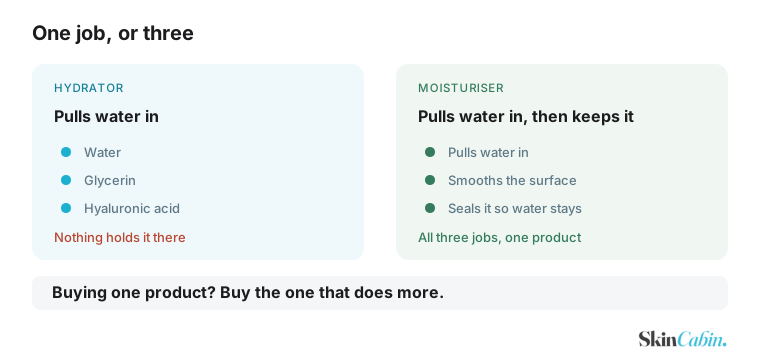 One job, or three.
If you want the full explanation of how the three parts work together, our guide to what a moisturiser does covers it properly.
Why a hydrator on its own can leave you tight
This surprises people, and it's the single most useful thing on this page.
Water doesn't stay in your skin by itself. It evaporates into the air, constantly.
A hydrator pulls water up to the surface of your skin. Nothing seals that surface. So the water leaves again. And it can take a little extra with it.
You put a hydrating serum on. Your skin feels plump for ten minutes. An hour later it feels tighter than when you started.
Nothing went wrong with the product. It did its job. Nothing did the second job.
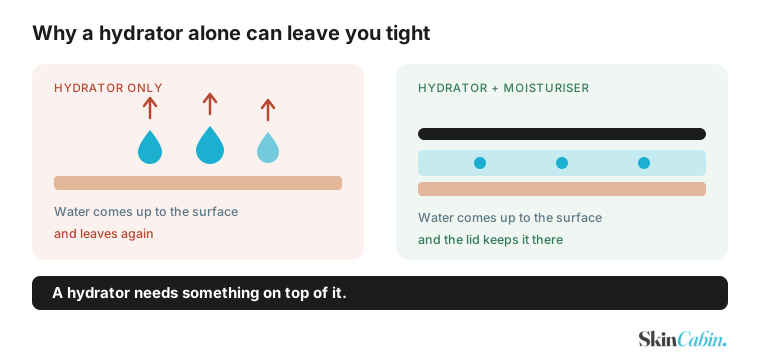 Nothing on top means the water leaves again.
The rule that follows from this A hydrator needs something on top of it. That something is a moisturiser.
When it's worst: cold weather, dry air, air-conditioned offices, aeroplanes. Anywhere the air is thirstier than your skin.
When it barely matters: humid summers. When the air is already full of water, there's less pull taking it out of you, so a hydrator alone can feel fine.
Do you actually need both?
For most people, no. One good moisturiser already contains the water-pulling ingredients a hydrator has.
Here's when a second product genuinely helps.
Worth using both:
- Your skin is dry and the air is dry
- You use retinol or acids and your skin feels tight
- Your skin feels tight even under a moisturiser
- You live somewhere with cold winters and indoor heating
- You have oily skin that still feels tight, and you want water without more oil
One product is enough:
- Your skin is comfortable with what you use now
- You live somewhere humid
- You have oily skin with no tightness
- You're just starting out and don't want a complicated routine
A test that takes a day. Put your usual moisturiser on and note how your skin feels three hours later. Comfortable? You don't need a hydrator. Tight? Try adding one underneath for two weeks.
Are you paying twice for the same thing?
Sometimes, yes. This is worth checking before you buy.
Plenty of products sold as hydrators are just light moisturisers with a different word on the box. Does it have squalane, shea butter or dimethicone in the top five? Then it's a moisturiser. Using it under another moisturiser is doubling up.
How to tell in ten seconds. Read the first five ingredients.
- Water and water-pulling ingredients, nothing oily → a real hydrator
- An oil, butter, wax or silicone in the top five → really a light moisturiser
Neither is bad. But only one of them needs a second product on top.
How to use them together
Order: hydrator first, moisturiser second. Thinnest goes on first, always. For where everything else fits, see what order do skincare products go in.
- Cleanse
- Pat your face until it's slightly damp
- Hydrator, while your skin is still damp
- Wait a minute
- Moisturiser
- Sunscreen, in the morning
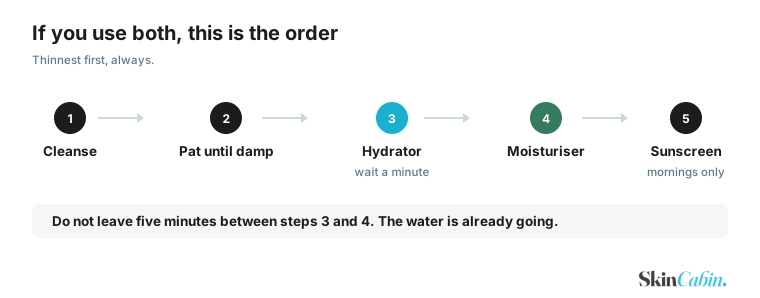 Thinnest first, always.
Why damp skin matters here. A hydrator works best when there's water on your skin to work with. Putting it on bone-dry skin in dry air is what leaves you tight.
Don't wait too long between the two. A minute is enough. Leave it five and the water you just pulled in has started leaving.
Where it fits with actives. If you use vitamin C, an acid or retinol, those go on clean dry skin first. Hydrator after, moisturiser last.
Which one do you need, if only one?
Pick a moisturiser. Every time.
A moisturiser does all three jobs. A hydrator does one. If you're buying one product, buy the one that does more.
There's one narrow exception. Very oily skin, humid weather, and you hate the feel of oil. Even then, a gel moisturiser usually beats a hydrator alone.
Common mistakes
Using a hydrator instead of a moisturiser. The most common one. It leaves skin tighter than doing nothing, which is why people conclude their skin is "getting worse."
Layering three hydrating products. A hydrating toner, then a hydrating essence, then a hydrating serum. That's three products doing one job, and still nothing sealing it in.
Buying a hydrator because your skin is dry. Dry skin is short of oil. Most hydrators have little or none. It's the wrong tool for that job.
Assuming more hyaluronic acid is better. Past a point it makes no difference. And in dry air, a lot of it with nothing on top can leave you worse off.
Applying to a bone-dry face. Damp skin, within about a minute of washing.
Frequently asked questions
What's the difference between a hydrator and a moisturiser? A hydrator pulls water into your skin. A moisturiser pulls water in and holds it there. The sealing step is what hydrators skip.
Is a hydrating serum the same as a hydrator? Yes, in practice. Hydrating serum, essence, hydrating toner and water gel are all names for the same idea.
Can I use a hydrator instead of a moisturiser? Not usually. Nothing seals the surface, so the water leaves again. You can end up tighter than before.
Do I need both? Most people don't. Try both if your skin feels tight under your moisturiser. Or if you use retinol or acids. Or if you live somewhere dry.
Which goes on first? Hydrator, then moisturiser. Thinnest first, always.
Is hyaluronic acid a hydrator? It's an ingredient found in most hydrators. It holds a lot of water, but it needs something on top or that water leaves again.
My hydrating serum makes my skin feel tight. Why? It pulled water to the surface and nothing kept it there. Put a moisturiser on top, and apply the serum to damp skin.
Is "hydrator" just marketing? Partly. It's not an official term, and no standard sits behind it. But the products usually are different from moisturisers. Lighter, with far less oil.
Can oily skin use a hydrator? Yes, and it's a reasonable fit. Oily skin can still be short of water. Just put a light gel moisturiser on top.
Is a hydrator good for dry skin? Only alongside a moisturiser. Dry skin is short of oil, and most hydrators have little or none.
Not sure which you need? Every moisturiser on SkinCabin is scored the same way, and you can filter by texture and ingredients. Find products →
For the full picture, read our complete guide to what a moisturiser does. If you're trying to work out whether your skin is dry or dehydrated, we cover the difference between dry and dehydrated skin separately.