What Is Dry Skin?
In short
Dry skin is short of oil. It feels rough, flakes, and looks dull.
It's a skin type, not a temporary state. Some people have it all their lives. Others develop it as they get older, because skin makes less oil with age. Either way, you manage it rather than cure it.
That's the bit people get wrong. Dehydrated skin is short of water and clears in a few weeks. Dry skin is short of oil and doesn't.
Managing it well is straightforward. It comes down to two things. A gentler routine, and richer products.
Are you sure it's dry skin?
Half the people who describe their skin as dry aren't.
Dry means missing oil. That's what this page is about. Rough, flaking, and it's how your skin is built.
Dehydrated means missing water. Tight and dull, but not flaky, and it clears up in a few weeks once you find the cause.
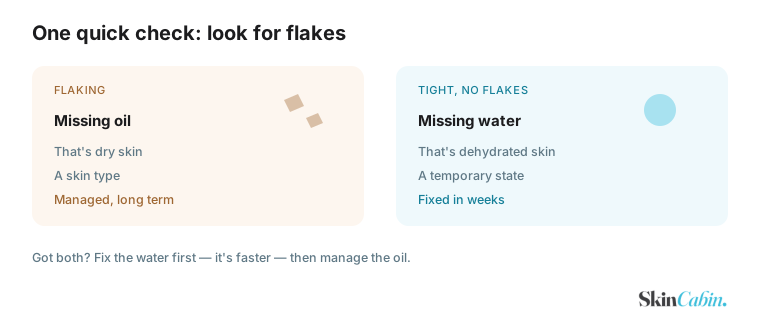 Flakes point to oil. Tightness points to water.
One quick check. Look for flakes. Real flaking points to oil. Tightness without flaking points to water — especially if your face still goes shiny during the day.
Dry skin does get dehydrated too, more easily than other types. If you have both, fix the water first — it's faster — then manage the oil long term.
What is dehydrated skin covers the other half.
What dry skin actually is
Your skin makes its own oil through glands in the surface. Dry skin has fewer of them, or ones that produce less.
Two things follow from that.
Less oil means less sealing. Oil slows water escaping. Without much of it, water leaves faster than your skin can replace it.
Less oil means a weaker barrier. The fats between your skin cells hold that layer together. Less oil, thinner mortar, and the wall lets more through — in both directions.
More on that in what is the skin barrier.
What it looks like:
- Rough or papery texture
- Visible flaking, especially around the nose and eyebrows
- Dull, without much bounce
- Tight after washing, and often between washes too
- Fine lines more obvious
- Itching, in worse cases
- Redness or irritation, because a thin barrier reacts more
Who gets it
It's partly inherited. Some people simply have fewer oil glands, or less active ones.
It increases with age. Oil production drops steadily from your twenties onwards, and more sharply after menopause. Skin that was oily at twenty is often normal at forty and dry at sixty.
Where you live matters. Cold climates, dry air, indoor heating. Northern winters are the peak season.
Some conditions cause it — eczema, psoriasis, and an underactive thyroid among them.
Some medications too, including certain acne treatments, diuretics and cholesterol drugs.
And where on your body. Shins, forearms, hands and feet go dry far more readily than faces do, because they have fewer oil glands.
What makes it worse
Most of this is avoidable, and it makes a bigger difference than any product.
Hot showers. The most common one. Hot water dissolves the fats between your skin cells. Lukewarm is enough — cold isn't better, it just cleanses poorly so people scrub instead.
Long showers. Time matters as well as temperature. Ten minutes rather than twenty.
Soap, especially bar soap. Strips more oil than it needs to. Use a cream or oil cleanser on your face and a gentle wash on your body.
Over-washing. Twice a day is plenty for a face. Most bodies need less.
Towelling hard. Pat dry. And leave your skin slightly damp for moisturiser.
Winter, and heating. Cold air holds less water, and heated indoor air is often drier than outside.
Over-exfoliating. Dry skin flakes, people scrub the flakes, the barrier thins, more flaking. It's a loop.
Wind and sun. Both increase water loss.
How to manage it
Six things, in order of impact.
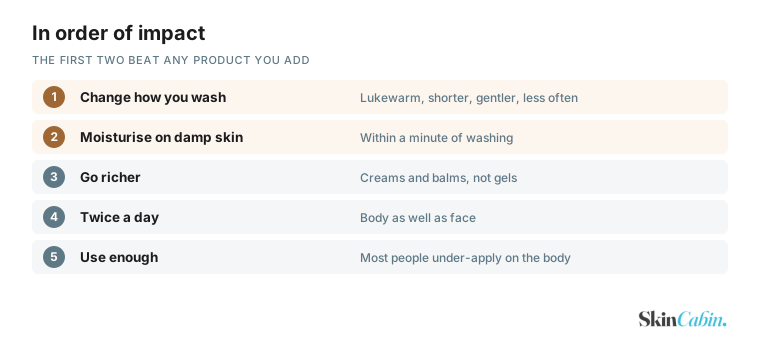 The first two beat any product you add.
1. Change how you wash. Lukewarm, shorter, gentler cleanser, less often. This does more than any product you add.
2. Moisturise on damp skin. Within about a minute of washing, while there's still water on the surface to seal in.
3. Go richer. Dry skin needs cream or balm textures, not gels and lotions. Texture is mostly how much oil is in the tube.
4. Twice a day. Morning and night. Body too, not just face.
5. Use enough. Most people under-apply on the body by a wide margin. See how much moisturiser should you use.
6. Adjust by season. Richer in winter, lighter in summer. Your skin's needs move even if nothing else does.
What to look for in a product
Worth knowing which products actually repair rather than just cover — see does moisturiser treat dry skin or just mask it.
Dry skin needs all three ingredient types, and more of the last two than most people.
Humectants pull water in — glycerin, hyaluronic acid, urea, panthenol.
Emollients fill the gaps and smooth — squalane, plant oils, fatty alcohols, and ceramides especially. Ceramides are the fats your skin is short of, so replacing them matters more here than for anyone else.
Occlusives seal it all in — petroleum jelly, dimethicone, shea butter. Dry skin needs more of this than any other type, and it's the step most often missing.
Our guide to humectants, emollients and occlusives lists what does what.
What to avoid: foaming cleansers, alcohol high on the ingredients list, fragrance if you're reactive, and scrubs.
For itchy skin specifically, an oatmeal bath genuinely helps.
Body, hands and feet
Dry skin below the neck is often worse than on the face, and gets treated far less.
Body. Cream or lotion, applied within a minute of getting out of the shower. Shins and forearms are usually the worst.
Hands. The most exposed skin you have, and washed constantly. Cream after every wash if you can manage it, and a balm at night.
Feet. The thickest skin on your body, and no oil glands on the soles. A balm or ointment at night, with socks over the top if they're cracked.
Lips. No oil glands at all. A balm, reapplied often.
The shower rule. Whatever you use, put it on while your skin is still damp. That single habit does more than upgrading the product.
When it isn't just dry skin
Worth knowing, because dry skin is the label people reach for.
Eczema. Itchy, red, sometimes weeping or crusted. Comes in flares. The barrier doesn't work properly to begin with, and it needs proper treatment rather than a richer cream.
Psoriasis. Thick, scaly, silvery patches with defined edges. Often on elbows, knees and scalp.
Underactive thyroid. Dry skin alongside tiredness, weight gain and feeling cold. Worth a blood test.
Contact dermatitis. A reaction to something specific, appearing where the thing touched.
Ageing skin, simply. Not a condition, and it does need more than it used to.
When to see a doctor
- Skin is cracked, bleeding or weeping
- Itching keeps you awake
- Red, scaly or thickened patches
- Four weeks of proper moisturising hasn't helped
- Dryness came with tiredness, weight change or feeling cold
- It appeared suddenly with no clear cause
Quick recap
- Dry skin is short of oil. Dehydrated skin is short of water
- It's a skin type, not a temporary state. Inherited by some, acquired with age by others. Managed rather than cured
- It increases with age, and after menopause in particular
- Hot showers are the most common thing making it worse
- Moisturise on damp skin, within a minute of washing
- Go richer — creams and balms, not gels
- Ceramides matter more for dry skin than any other type
- The sealing step is the one most often missing
- Body, hands and feet need it more than your face and get it less
- Itchy, red or scaly means see a doctor rather than buy a richer cream
Frequently asked questions
What is dry skin? Skin that produces less oil than it needs. It feels rough, flakes, and looks dull. It's a skin type rather than a temporary state.
What's the difference between dry and dehydrated skin? Dry skin is short of oil and is a type. Dehydrated skin is short of water and is temporary. You can have both.
Can dry skin be cured? No, but it can be managed well. It's about how your skin is made, not something that's gone wrong.
Why is my skin drier than it used to be? Oil production drops with age, and more sharply after menopause. Climate, heating and your routine all add to it.
What's the most effective thing I can change? How you wash. Lukewarm, shorter, gentler cleanser, less often. It beats any product you add.
Should I use cold water instead of hot? Lukewarm. Cold isn't better than lukewarm — it cleanses poorly, so people scrub instead.
Does niacinamide help dry skin? Indirectly. It prompts your skin to make more of its own barrier fats. More in what niacinamide does for dry skin.
What ingredients help dry skin? Ceramides above all, plus glycerin, squalane, shea butter and petroleum jelly. You need something pulling water in and something sealing it.
How often should I moisturise? Twice a day, on damp skin. Body as well as face.
Why is my body drier than my face? Fewer oil glands below the neck. Shins and forearms are usually worst.
When is dry skin something more serious? If it's itchy, red, scaly or thickened, or it hasn't improved after four weeks of proper care. That points to eczema, psoriasis or a thyroid problem.
Every moisturiser on SkinCabin is scored on its ingredients rather than its marketing. Find products →