What Is Dehydrated Skin?
In short
Dehydrated skin is short of water. It feels tight, looks dull, and fine lines show up more.
It's a temporary state, not a skin type. Anyone can have it — including people with oily skin.
That's the bit people get wrong. Dry skin is short of oil. Dehydrated skin is short of water. Different problems, different fixes, and you can have both at once.
Most cases clear in two to four weeks once you find what's causing it.
Dry or dehydrated?
Worth settling first, because everything else depends on it.
Dry skin is short of oil. Your skin doesn't produce much of its own. It feels rough, looks flaky, and it's a skin type — you have it most of the time, and you'll probably always have it.
Dehydrated skin is short of water. It feels tight, looks dull, and it comes and goes. It's a condition, not a type.
You can have both. And an oily skin type can be dehydrated too, which is the combination that confuses everyone.
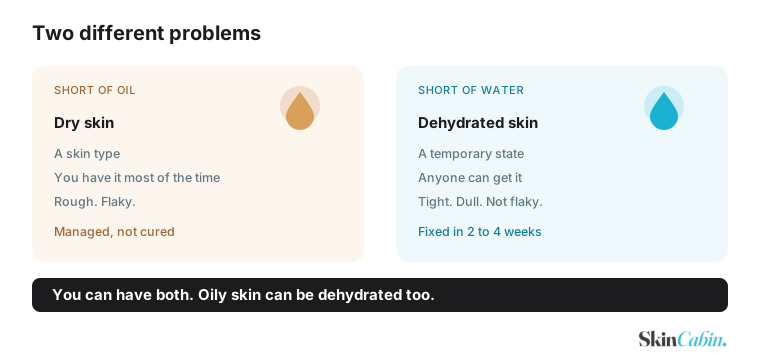 Oil and water are different things.
The quick test. Rough and flaky? Short of oil. Tight but still gets shiny by midday? Short of water.
Still unsure? Try the dry or dehydrated quiz.
That's as much as this page will say about dry skin. If that's what you have, what is dry skin covers it properly.
How to tell if your skin is dehydrated
Five signs. You don't need all of them.
It feels tight. Especially after washing, and it doesn't settle. This is the most reliable sign.
It looks dull. Skin short of water reflects light poorly. People describe it as flat or grey rather than dry.
Fine lines look worse. Dehydrated skin shows lines that aren't really there — they soften again once the water comes back.
It feels rough but doesn't flake. Flaking usually points to dryness. Rough without flakes points to water.
Makeup sits badly. Foundation clings and looks patchy on skin that's short of water.
The pinch test
Rough, quick, and better than nothing.
Pinch a small area of skin on your cheek and let go. If it takes a moment to settle back, that suggests dehydration. If it springs straight back, less likely.
It's not conclusive. Skin elasticity drops with age regardless. Use it alongside the other signs, not instead of them.
Why oily skin gets dehydrated
Full detail in can oily skin be dehydrated.
The combination that makes no sense until you separate oil from water.
Your skin can make plenty of oil and still be short of water. They're produced by different systems and they do different jobs. Having one doesn't give you the other.
Why it happens more than you'd think:
- Oily skin gets treated with harsh, stripping products
- People wash more often, trying to control the shine
- Foaming cleansers and astringents remove water-holding substances along with the oil
- Moisturiser gets skipped because the skin already feels greasy
What it feels like. Shiny by midday and tight at the same time. Or shiny on the surface with a rough, papery feel underneath.
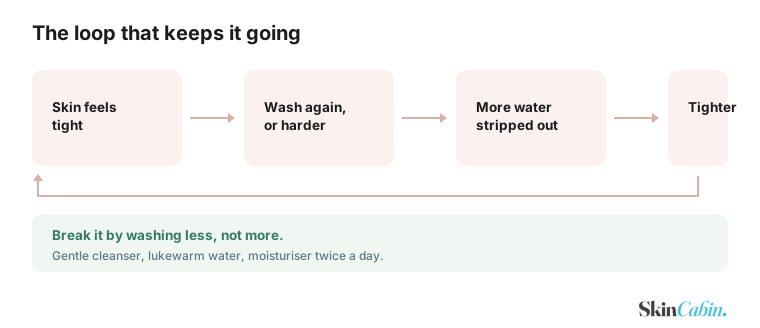 Wash less, not more.
The trap. Feeling tight makes people wash again. Washing strips more. The skin gets tighter. Round it goes.
The fix isn't less oil. It's more water, and a gentler routine that stops removing what's there.
What causes it
Most of it is external, which means most of it is fixable.
Things you're doing
Over-washing. Twice a day is plenty for most faces. Every wash removes some of the substances that hold water in your skin.
Harsh cleansers. Foaming and stripping formulas take more than they need to. If your face feels squeaky, it's too strong.
Hot water. Dissolves the fats that keep water in. Lukewarm is enough.
Over-exfoliating. Scrubs and acids both. This is the most common cause in people who take skincare seriously.
Too many actives. Retinol, vitamin C and acids all together will do it.
Skipping moisturiser. Common on oily skin, and it's the thing that keeps the cycle running.
Things around you
Cold, dry air. Winter is the peak season for dehydrated skin.
Indoor heating. Often drier than the air outside.
Air conditioning. Eight hours a day in conditioned air is a common cause in people whose skin was fine before a job change.
Flying. Cabin air is very dry. A short-term effect, not a routine problem.
Wind and sun. Both increase water loss.
Things about you
Age. Skin holds water less well over time.
Not drinking enough — but far less than people assume. See below.
Some medications, including certain acne treatments and diuretics.
Does drinking water fix it?
Partly, and much less than the name suggests.
If you're genuinely dehydrated, drinking more will help your skin along with everything else.
If you're drinking a normal amount, more won't push extra water into your skin's outer layer. That layer loses water to the air, and the fix is on the outside.
The name is misleading. "Dehydrated skin" describes the outer layer of your skin, not your body's overall hydration. You can drink three litres a day and still have it.
What actually works is reducing how much water escapes, and giving the surface something to hold on to.
How to fix it
The good news is that it responds fast. Two to four weeks for most people.
1. Stop what's causing it. Usually over-washing, a harsh cleanser, hot water, or too many actives. This does more than anything you add.
2. Switch to a gentle cleanser. Cream or milk texture. Once a day is enough while you're recovering.
3. Use lukewarm water. Hot water dissolves the fats that hold water in your skin. Cold is not better than lukewarm. It just cleanses poorly, so people end up scrubbing instead.
4. Moisturise twice a day, on damp skin. Within about a minute of washing.
5. Pause your actives for two weeks. Then reintroduce one at a time.
6. Keep wearing sunscreen. The one thing you don't stop.
What to look for in a product
The full list is in best ingredients for dehydrated skin.
Humectants pull water in — glycerin, hyaluronic acid, panthenol, urea.
Something to seal it — squalane, dimethicone, ceramides, shea butter. Without this, the water you pull in leaves again.
A humectant alone isn't enough. A hyaluronic acid serum with nothing on top can leave you tighter than before, especially in dry air. This is the single most common mistake with dehydrated skin.
Our guide to humectants, emollients and occlusives explains which does what, and what is the difference between a moisturiser and a hydrator covers the two-product version.
What to avoid while recovering
- Foaming or stripping cleansers
- Scrubs and acids
- Retinol, for a fortnight
- Alcohol high on the ingredients list
- Fragrance, if your skin is reacting
- Anything that stings
How long it takes
Days one to three. Less tightness after washing, if you've stopped the cause.
Week one. Skin feels more comfortable through the day.
Two to four weeks. Dullness lifts, fine lines soften, texture improves.
Longer than four weeks with no change? Either the cause is still there, or it isn't dehydration. Skin that stays rough and flaky whatever you do is more likely to be dry — a skin type rather than a state.
When it keeps coming back
Check the season. Most people are dehydrated in winter and fine in summer. That's normal, and it means switching products rather than fixing something.
Check your work. Air conditioning is the most under-diagnosed cause there is.
Check your cleanser. People change moisturiser ten times before questioning the thing stripping their skin twice a day.
Check whether you're actually dry. If it never fully resolves, you may have a dry skin type that needs managing rather than a temporary state that needs fixing.
When to see a doctor
- Skin is cracked, bleeding or weeping
- Four weeks of gentle care hasn't helped
- Itching keeps you awake
- Red, scaly or thickened patches
- It appeared suddenly with no clear cause
Persistent dryness can be eczema, psoriasis or a thyroid problem. All of those need proper treatment rather than a different moisturiser.
Quick recap
- Dehydrated skin is short of water. Dry skin is short of oil
- It's a temporary state, not a skin type. Anyone can get it
- Oily skin gets it often, and skipping moisturiser keeps the cycle running
- Tight, dull, and fine lines showing more are the main signs
- Most causes are things you're doing — over-washing, harsh cleansers, hot water, too many actives
- Drinking more water helps far less than the name suggests
- Stopping the cause does more than anything you add
- A humectant with nothing on top can make it worse
- Two to four weeks to resolve
- If it never fully clears, you may be dry rather than dehydrated
Frequently asked questions
What is dehydrated skin? Skin that's short of water in its outer layer. It feels tight, looks dull, and fine lines show more. It's a temporary state, not a skin type.
What's the difference between dry and dehydrated skin? Dry skin is short of oil and is a skin type. Dehydrated skin is short of water and is temporary. You can have both.
Can oily skin be dehydrated? Yes, and it's common. Oil and water are different things, and harsh routines aimed at controlling shine strip water out.
How do I know if my skin is dehydrated? Tightness after washing that doesn't settle, dullness, fine lines looking worse, and makeup sitting badly.
Does drinking water fix dehydrated skin? Only if you're genuinely dehydrated. If you drink a normal amount, more won't push extra water into your skin's outer layer.
How long does it take to fix? Two to four weeks, once you stop what's causing it.
What causes dehydrated skin? Usually over-washing, harsh cleansers, hot water, over-exfoliating, or dry air from heating and air conditioning.
What ingredients help? Glycerin, hyaluronic acid and panthenol pull water in. Squalane, ceramides and dimethicone keep it there. You need both.
Why does my hyaluronic acid serum make my skin feel tighter? It pulled water to the surface and nothing kept it there. Put a moisturiser over it, and apply to damp skin.
Can dehydrated skin cause breakouts? It can contribute. A stripped, irritated barrier reacts more, and over-washing to control oil often makes both worse. More in dehydrated skin and breakouts.
Is dehydrated skin permanent? No. It's a state, not a type. If it never resolves, you may have dry skin instead.
Every moisturiser on SkinCabin is scored on its ingredients rather than its marketing. Find products →