Sunscreen for Darker Skin Tones
In short
Yes, you need it. More melanin gives some natural protection — nowhere near enough.
The bigger reason isn't burning. It's pigmentation. Dark marks, melasma and uneven tone are more common on deeper skin, and UV drives all of them.
The real problem has been cosmetic, not medical. Most sunscreens left a grey cast, so people stopped wearing them. That's largely solved now, and knowing what to look for is most of this page.
How much protection does melanin actually give?
Some. Not enough to skip sunscreen.
Roughly, deeply pigmented skin gives protection comparable to a low SPF. Estimates vary, and it isn't a precise figure. But nobody puts it near the SPF 30 minimum.
What that means in practice:
- You burn more slowly, not never
- You still accumulate sun damage
- You still get skin cancer
- You get pigmentation more readily than lighter skin does
The dangerous version is "dark skin doesn't burn". It does. It just takes longer. So people stay out longer, which cancels the advantage.
Why pigmentation is the bigger reason
For most people with deeper skin, this is the real argument.
Skin with more melanin has pigment cells that react more readily. A spot, a scratch, a reaction — each leaves a stronger mark that lasts longer. Sun makes every one darker and slower to fade.
Melasma is more common too, and it's driven by UV, visible light and heat.
So sunscreen here isn't mainly about burning. It's about not making the marks worse.
And timing matters. Sun on a fading mark can undo months of work. Treating pigmentation? Sunscreen is the treatment, not a precaution.
More in why pigmentation comes on face and sunscreen for pigmentation.
Skin cancer, plainly
Less common. Often worse outcomes. Both things are true.
Rates are lower on deeper skin. That part is real.
But it's found later, and survival rates are worse. Partly because people assume it won't happen. Partly because it appears where nobody checks.
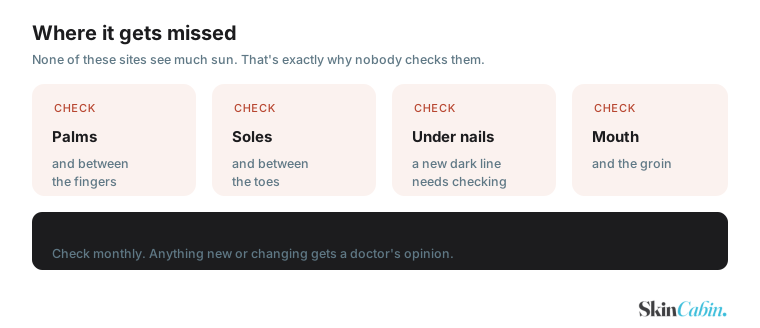 The sites nobody checks.
Where to look, specifically:
- Palms of the hands
- Soles of the feet
- Under the fingernails and toenails — a new dark line under a nail needs checking
- Inside the mouth
- Groin, and other areas that see no sun at all
None of those sites see much sun. That's exactly why they get missed. "You don't burn easily" turns into "you don't need to check". That's the gap.
Check monthly. Anything new, changing, or unlike your other marks gets a doctor's opinion. Full checklist in freckles, sun spots and moles.
The white cast problem
The genuine barrier, and it's worth being straight about.
Why it happens. Mineral sunscreens use zinc oxide or titanium dioxide. Both are white powders. On deeper skin they can leave a grey film.
Why that matters. A sunscreen you won't wear protects nobody. This isn't vanity. It's the main reason sunscreen use has been lower on deeper skin.
What actually solves it:
Tinted mineral sunscreens. Iron oxides give them colour and cancel the cast. They block visible light too, which helps melasma. Best option if you want mineral.
Chemical sunscreens. No cast at all, since there's no white powder. Modern ones are light and often invisible.
Hybrid formulas. A little mineral, mostly chemical. Middle ground.
Sunscreens made with deeper skin in mind. More brands now formulate specifically for this. Worth seeking out.
What to check before buying. Swatch on your jawline, not your hand. Wait five minutes. Some cast fades as it settles. Some doesn't.
Choosing a shade with tinted sunscreen
Tinted products solve the cast and introduce a matching problem.
Too light and you've swapped grey for ashy. Too dark and it looks like makeup.
Look for ranges with several shades, not a single "universal" tint. Universal usually means mid-tone.
Match to your jawline in daylight. Bathroom lighting misleads.
Or use an untinted chemical sunscreen and skip the question. Nothing wrong with that. You lose the visible-light protection, which mainly matters for melasma.
What to look for
SPF 30 minimum. 50 if you're treating pigmentation.
Broad spectrum, always. UVA drives pigmentation, and the SPF number says nothing about it. Look for broad spectrum, a UVA logo, or PA+++.
Tinted if you have melasma. Iron oxides block visible light, which ordinary sunscreen doesn't.
A texture you'll wear daily. The best sunscreen is the one that gets used.
Common myths
"Dark skin doesn't need sunscreen." It burns more slowly. It still takes damage, still gets skin cancer, and marks more readily.
"Sunscreen will make me look ashy." That used to be a fair worry. Tinted mineral and modern chemical formulas both solve it.
"I don't burn, so I'm fine." Burning is one kind of damage. Pigmentation and ageing happen without it.
"Skin cancer doesn't happen on dark skin." It does, it's found later, and outcomes are worse. Check palms, soles and nails.
"I only need it in summer." UVA is fairly steady year-round and passes through glass.
Frequently asked questions
Do darker skin tones need sunscreen? Yes. More melanin gives some protection, well short of what's advised. And it does nothing to prevent marks.
How much natural protection does melanin give? Roughly comparable to a low SPF. Nobody puts it near the SPF 30 minimum.
Can darker skin get sunburnt? Yes. It takes longer, which is precisely why people get caught out.
Can darker skin get skin cancer? Yes. Less common, found later, worse outcomes. Check palms, soles, under nails and in the mouth.
How do I avoid a white cast? Use a tinted mineral sunscreen or a chemical one. Swatch on your jawline and wait five minutes before deciding.
Which is better for deeper skin, mineral or chemical? Chemical leaves no cast. Tinted mineral cancels it and adds visible-light protection. Either works.
Does sunscreen help with hyperpigmentation? It's the single most effective thing. It stops new marks and stops existing ones darkening.
What SPF should I use? 30 minimum, 50 if you're treating pigmentation. Broad spectrum in both cases.
Do I need it indoors? If you sit near a window, yes. UVA passes through glass and drives pigmentation.
What should I look for on my skin? New or changing marks anywhere, and specifically palms, soles, under nails and inside the mouth.
Every sunscreen on SkinCabin is scored on its ingredients rather than its marketing. Find products →
For what the number means, see what does SPF mean.