How Can I Stop Pigmentation on My Face?
In short
Four things prevent most pigmentation.
Sunscreen, every day. By far the biggest lever. Don't pick. Squeezing a spot turns a short mark into a long one. Treat spots properly. Fewer spots, fewer marks. Keep your routine gentle. Irritation is what causes pigment in the first place.
Stopping a mark takes seconds. Fading one takes months. That's the whole argument.
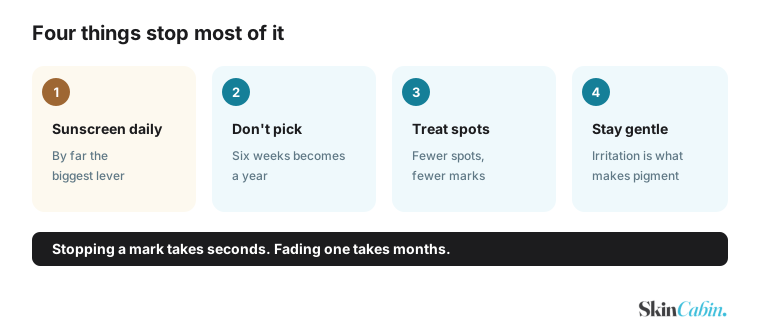 Four things, in order of impact.
Why prevention beats treatment here
Most skin problems are worth treating once they show up. Pigmentation is different.
Marks form slowly and clear slowly. One that took two weeks to appear can take a year to go.
Treatment is partial. Most marks fade a lot. Very few go completely.
And the trigger usually stays. Don't change what caused it, and you're fading old marks while making new ones.
So the honest advice isn't a better serum. It's stopping the next mark forming.
Already have marks? How to treat pigmentation covers that side. This page is what comes after. Or instead.
1. Sunscreen, every day
The single most effective thing you can do.
Why it works. UV tells your pigment cells to make more melanin. That's how most pigmentation starts. Sunscreen stops it at the source.
What it stops:
- New sun spots
- Existing marks getting darker
- Marks after spots hanging around longer than they need to
- Melasma flare-ups
What to use. SPF 50, broad spectrum, every day. Cloudy days, winter, and days indoors near a window all count. UVA passes through glass, and UVA drives pigmentation.
How much. Two finger-lengths for face and neck. Most people use about a third of that.
Got melasma? Use a tinted sunscreen. Ordinary sunscreen doesn't block visible light, and melasma reacts to it.
Full detail in sunscreen for pigmentation.
2. Don't pick
The second biggest lever, and it's free.
What squeezing does. It pushes inflammation deeper and spreads it wider. That puts pigment below the layers that shed naturally.
The difference it makes. A spot left alone might mark for six weeks. The same spot squeezed can mark for a year.
If you find it hard to stop:
- Keep your hands busy in the evening, when most picking happens
- Cover the spot. A pimple patch works as a physical barrier
- Move the magnifying mirror out of the bathroom
- Treat the spot instead. That does more than your fingers will
More on the mechanism in brown and red acne marks.
3. Treat spots properly
Fewer spots means fewer marks. It's the most overlooked prevention step there is.
Why it matters. Every angry spot could leave a mark. Five spots a month is five chances to mark.
What that means. Getting spots often? Treating the acne does more for your marks than any brightening product. Even though it feels like the long way round.
And treat them gently. Harsh acne products irritate. Irritation causes pigment. Aim for fewer spots without an angry face.
4. Keep your routine gentle
This one catches people who are trying hardest.
Irritation causes pigment. So anything that upsets your skin creates the exact problem you're avoiding.
What counts as irritation:
- Scrubs and physical exfoliants
- Strong acids used too often
- Three or more actives at once
- Anything that stings
- Over-washing, or hot water
- Waxing and threading, on skin that marks easily
The test. Does it sting, tingle or leave your skin red? That's inflammation, not the product working.
What gentle looks like. A mild cleanser, a moisturiser, sunscreen, one active at a time. Boring. And it prevents more pigmentation than any serum.
The irritation you can't see
Worth knowing, because it explains a lot.
Not all of it shows. Your skin reacts to pollution, rubbing, heat and daily wear without ever looking red.
That quiet reaction still triggers pigment. Especially on skin that marks easily.
What helps:
- Niacinamide — calms skin and works on pigment at the same time
- Azelaic acid — same, plus it helps with spots
- A good moisturiser — a healthy barrier is less reactive
- Vitamin C — mops up some of the damage before it sets anything off
None of these is dramatic alone. Together, over months, they cut how often your skin is upset at all.
What you can't prevent
Being straight about the limits.
Hormonal marks. Melasma is set off by hormones, and you can't prevent those. Tinted sunscreen and avoiding heat reduce the flares. The driver stays. See what is melasma.
Genetics. How easily you mark is inherited. Skin with more melanin marks more readily. That isn't something to fix.
Past sun exposure. Sun spots showing at fifty were earned decades ago. Sunscreen from today stops new ones. It won't undo the ones already coming.
What that changes. For hormonal and inherited marks, you manage the triggers rather than avoid the cause. Same actions, different hopes.
Stopping it coming back
Cleared your marks? This is the part that keeps them gone.
Keep wearing sunscreen. The commonest reason marks return is stopping once they clear.
Keep the active going. Many people can drop from daily to a few times a week. Dropping to nothing usually means it comes back.
Watch your triggers. Know that heat sets off your melasma, or that picking marks you for months? That knowledge is the prevention.
Treat new spots quickly. The faster a spot settles, the smaller the mark.
When to see a doctor
- Marks keep returning despite daily sunscreen
- You think you have melasma
- Acne is leaving marks faster than they fade
- Any spot changing shape, colour or size
- It's affecting how you feel about yourself
Frequently asked questions
How can I stop pigmentation on my face? Sunscreen every day. Don't pick spots. Treat acne properly. Keep your routine gentle. Those four stop most of it.
Does sunscreen prevent pigmentation? Yes, and it's the most useful single thing. It stops new marks forming, and stops old ones darkening.
Can I prevent pigmentation completely? Not entirely. Hormonal and inherited pigmentation aren't preventable. Sun and inflammation pigmentation largely are.
Does picking spots really cause pigmentation? Yes. Squeezing pushes inflammation deeper. That leaves a darker mark, sitting lower down, which takes far longer to clear.
What ingredients help prevent pigmentation? Niacinamide and azelaic acid both calm skin while working on pigment. Vitamin C adds some protection from sun damage.
Does exfoliating prevent pigmentation? Gentle exfoliation can lift marked cells from the surface. Overdoing it irritates skin, which causes more pigment. More is not better.
Can I prevent melasma? Not the trigger itself, which is hormonal. You can reduce the flares with a tinted sunscreen and by avoiding heat.
Why does my pigmentation keep coming back? Usually the trigger is still there. Sun, ongoing hormones, or repeated irritation.
Should I stop treatment once it fades? Reduce it, don't stop. Sunscreen stays daily. Most people can drop the active to a few times a week.
Does diet affect pigmentation? Not much. Sun and irritation cause the vast majority.
For what causes it in the first place, see why pigmentation comes on face.
Every product on SkinCabin is scored on its ingredients rather than its marketing. Find products →