What Is Glycolic Acid?
In short
Glycolic acid loosens the bonds holding dead skin cells together, so they shed faster.
Two numbers decide whether a product works. The percentage, and the pH. Most brands print the first and hide the second.
A 10% product at pH 4.0 is weaker than a 5% product at pH 3.5. That's not a trick — it's how acids behave, and it explains why two products with the same number on the front do completely different things.
Where the evidence is strongest: texture and dullness. Weaker for wrinkles and pigmentation, and it needs months rather than weeks.
What it is
Glycolic acid is an alpha hydroxy acid, or AHA. Lactic and mandelic acid are in the same family. Glycolic is the smallest of the three.
Small matters here. A smaller molecule gets into skin more easily. That makes glycolic the most active of the three. And the most irritating.
It used to come from sugar cane. Almost all of it is now made in a lab. That's more consistent, and chemically identical.
It dissolves in water, so it works on the surface and the layers just below. Not in your pores. That's salicylic acid's job, because it dissolves in oil. People compare the two, and they don't do the same thing.
How it works
Your dead surface cells are held together by protein connections — think rivets between the cells.
Normally those rivets break down on their own. Cells shed invisibly, a few at a time. That slows with age, with dryness, and with sun damage. Cells pile up. Skin looks dull and feels rough.
Glycolic acid weakens those rivets. Cells release sooner, and the surface renews faster.
That's the main thing it does. Everything else follows from it, or from a second effect at higher strengths.
The secondary effect
At higher strengths, over months, glycolic acid does something else too. It prompts the deeper layer of skin to make more collagen and hold more water.
But this happens at strengths most home products don't reach. The studies showing real change in the deeper layer used around 20% or more, or a course of professional peels. Home products at 5 to 10% mainly work on the surface.
Which matters when you read a label. A moisturiser with 2% glycolic acid can honestly say the ingredient supports collagen. The claim is borrowed from studies at ten times that strength.
The rule: ask what strength the effect was shown at, not whether the ingredient is in there.
The two numbers that matter
Here is the part almost nobody explains, and it's the difference between a product that works and one that doesn't.
Number one: concentration
How much glycolic acid is in the bottle. This is the number on the front.
Typical ranges:
- 2 to 5% — gentle. Good for beginners, sensitive skin, and frequent use
- 5 to 10% — the standard effective range for home use
- 10 to 15% — strong. Not a starting point
- 20% and above — professional treatment territory. Not for home use
Higher is not simply better. Doubling the percentage doesn't double the result. It does reliably increase irritation. And on skin that marks easily, irritation causes pigmentation. Which is often the thing people are treating.
Number two: pH
This is the one that gets hidden, and it matters as much as the percentage.
An acid in water exists in two forms. The active form does the work. The salt form mostly doesn't.
pH decides the ratio. Lower pH means more of the active form. Higher pH means more of the inactive salt.
The tipping point is around pH 3.8. At that pH, roughly half is active. Below it, more. Above it, less.
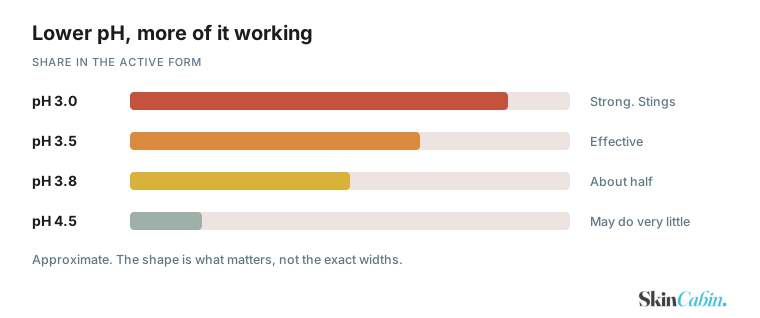 Lower pH, more of it working.
What that means in practice:
- pH 3.0 — most of the acid is active. Strong, and more irritating
- pH 3.5 to 4.0 — the usual range for well-made products. Effective and tolerable
- pH 4.5 and above — much less active. The product may do very little
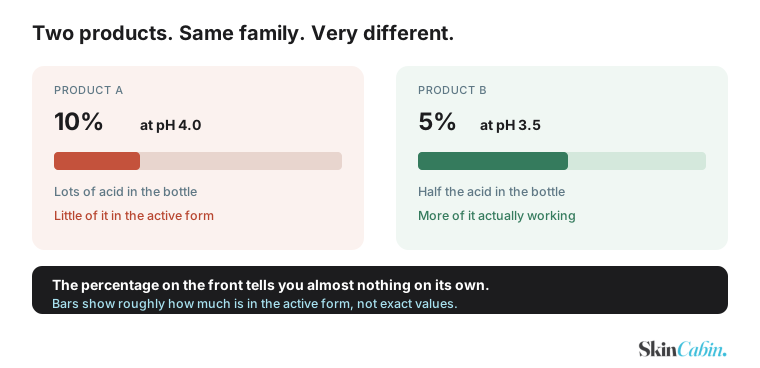 Same family, very different products.
Why this changes everything
A 10% glycolic acid at pH 4.0 can deliver less active acid than a 5% at pH 3.5.
The 10% has more acid in the bottle. Less of it is in the form that works.
Which is why two products both saying "10% glycolic acid" behave completely differently, and why percentage alone tells you almost nothing.
Free acid value
The number that combines both. It's the percentage of the product that's actually in the active form.
Some brands publish it. Most don't.
If a brand publishes free acid value, that's a good sign — it means they know the number matters and they're not hiding it.
If they publish neither pH nor free acid value, you're buying on the front-of-bottle percentage alone, which is the least informative number available.
What else in the formula changes it
Two products with the same acid, same percentage and same pH can still perform differently.
The base it's in
A watery solution or toner gets in fastest. Most active, most irritating.
A cream or lotion slows delivery. Gentler, and often better tolerated for daily use.
A cleanser barely counts. It's on your face for 30 seconds, then you rinse it off. Glycolic acid in a face wash does very little.
A peel pad sits between the two, depending on how wet it is.
Buffering and neutralising
Some formulas are partly neutralised on purpose. Part of the acid is turned into its salt form. That raises the pH and reduces sting.
That's a fair choice, not a cheat. It makes the product gentler. It also makes it less active. Fine, as long as the brand says so.
Buffered formulas hold the pH steady instead of letting it drift. More consistent, and usually a slightly higher pH.
Other ingredients
Water-holding ingredients like glycerin keep the surface damp. That can increase how much acid gets in. Common, and generally helpful.
Alcohol increases penetration and increases irritation. Worth noticing high on a list.
Anything heavy layered on top increases it too. Don't put a thick balm over an acid unless you mean to.
Niacinamide is fine alongside it. The claim that it cancels acids comes from lab conditions that don't apply to real products. Plenty of formulas contain both on purpose.
What the evidence supports, and at what strength
This is the part that matters. An ingredient can be present at any level. The effect only appears above a certain one.
From about 4 to 5%
Faster shedding. The core effect, and it starts low. Smoother surface, less dullness, better light reflection.
Rough patches on the body. Well supported at everyday strengths.
From about 5 to 10%
Texture and tone over weeks. This is the range most home products sit in, and it's where the visible surface benefits land.
Blocked pores, mildly. Some help. Salicylic acid is usually better for spots, because it gets into pores.
Pigmentation, modestly. It clears marked surface cells faster. It doesn't slow melanin down, so it works better alongside a brightening ingredient than alone.
From about 8 to 10%, over 12 weeks or more
Fine lines and sun damage. Real but modest, and only with months of consistent use. Studies at this strength ran 12 to 22 weeks.
At 20% and above, or professional peels
Collagen and deeper-layer change. This is where the studies showing thicker skin and more collagen sit. Not achievable with a supermarket serum.
Stronger pigmentation results. Peel courses, done by a practitioner.
What a low percentage can't claim
Below about 4%, expect very little. The ingredient is present. That isn't the same as active.
Watch for these on labels:
- Collagen or firming claims on a product under 10%
- "Contains AHA" with no percentage stated
- Glycolic acid near the bottom of the ingredients list
- Any claim of results in days rather than weeks
The question to ask isn't whether a product contains glycolic acid. It's how much, at what pH, and what that combination has been shown to do.
How to use it
Start low. 5% or below if you've not used an acid before.
Start twice a week, at night. Build to alternate nights over a month if your skin is comfortable.
On clean, dry skin. Damp skin lets more in and stings more.
Moisturiser after. Sunscreen every morning — sun sensitivity lasts about a week after you stop.
Full routine, product forms and how to build up in how to use glycolic acid.
What not to combine
Retinol on the same night. Both irritate, and together they damage the barrier. Alternate nights.
Another acid, or a scrub. One form of exfoliation is enough.
Vitamin C at the same time. Not dangerous, and it stings for many people. Separate them by time of day.
More on sequencing in what order do skincare products go in.
Side effects, and who should be careful
Full list, and what to do if you've overdone it, in side effects of glycolic acid.
Expected at first: mild tingling for a minute or two, slight dryness, some flaking as the surface adjusts.
Not acceptable: burning, lasting redness, stinging with everything else you put on, skin still tight days later. That means too strong, too often, or both.
Sun sensitivity catches people out. It's well documented, and it lasts about a week after your last use.
On the body. Underarms and knees behave differently from your face — see glycolic acid for dark underarms and for dark knees.
Take particular care if
Your skin marks easily. Irritation causes pigment, and deeper skin tones mark more readily. Lower strength, less often, and stop at the first redness.
You have a damaged barrier. Stinging with ordinary products means repair first, acids later. See what is the skin barrier.
You have eczema or rosacea. Both flare with acids. Ask a doctor before starting.
You're using a prescription retinoid. Together they irritate a lot. Ask how to space them.
You're pregnant, breastfeeding or trying to conceive. Speak to your doctor, midwife or pharmacist before starting or continuing. Suitability depends on your circumstances, and that isn't something a website can weigh up.
How to read a glycolic acid product
Five things, in order of usefulness.
1. Is the pH stated? If yes, look for 3.5 to 4.0. If no pH and no free acid value, you're guessing.
2. What's the percentage? 5 to 10% for home use. Under 5% to start.
3. What's the base? Toner or solution is stronger. Cream is gentler. Cleanser does little.
4. Where does it sit on the ingredients list? Near the top means what the label says. Near the bottom means less, whatever the front claims.
5. Anything to avoid? Alcohol high up, added fragrance if you react easily, or a second acid you hadn't spotted.
Quick recap
- Glycolic acid loosens the bonds holding dead cells together, so they shed sooner
- It's the smallest AHA, which makes it the most active and the most irritating
- Two numbers matter: percentage and pH. Most brands print one
- Below about pH 3.8, more of the acid is in its active form
- A 10% at pH 4.0 can be weaker than a 5% at pH 3.5
- Free acid value combines both. A brand that publishes it is being straight with you
- The base matters. Solutions are strong, creams are gentle, cleansers do little
- Evidence is strongest for texture and dullness, from about 4 to 5%
- Collagen change needs 20% or more, or professional peels. Not a 2% moisturiser
- Start at 5% or under, twice a week, at night
- Sunscreen daily. Sun sensitivity lasts about a week after you stop
Frequently asked questions
What does glycolic acid do? It weakens the bonds holding dead surface cells together, so they shed sooner. That's what improves texture and dullness.
Does glycolic acid boost collagen? At 20% or more, or with professional peels, yes. At the 5 to 10% found in home products, the effect is on the surface, not the deeper layer.
A product says it has glycolic acid but doesn't say how much. Is that a problem? Yes. Without a percentage and a pH, you can't tell whether it does anything. An ingredient being present isn't the same as it being active.
What percentage should I use? Under 5% to start. 5 to 10% is the standard effective range at home. Above 15% is professional territory.
Why does pH matter? It decides how much of the acid is in its active form. Below about pH 3.8, more is active. Above pH 4.5, much less is, and the product may do very little.
Can a lower percentage work better than a higher one? Yes. A 5% at pH 3.5 can deliver more active acid than a 10% at pH 4.0.
What is free acid value? The share of the product that's actually in the active form. It combines percentage and pH into one number. More useful than either alone.
Is glycolic acid in a cleanser worth it? Not much. It's not on your face long enough to do real work before you rinse it off.
How often should I use it? Twice a week to start, at night. Build to alternate nights over a month if your skin stays comfortable.
Does it make you more sensitive to the sun? Yes, and the effect lasts about a week after your last use. Daily sunscreen isn't optional.
Can I use it with niacinamide? Yes. The claim that niacinamide cancels acids comes from lab conditions that don't apply to real products.
Can I use it with retinol? Not the same night. They don't react with each other. But both irritate, and together they often damage the barrier.
Glycolic or salicylic acid? Glycolic dissolves in water and works on the surface. Salicylic dissolves in oil and gets into pores. Salicylic is usually better for spots.
Is glycolic acid safe for darker skin? Used carefully, yes. Irritation causes marks, and deeper skin tones mark more readily. So lower strength, less often.
Every product on SkinCabin is scored on its ingredients rather than its marketing. Find products →