What Is Snail Mucin?
In short
Snail mucin is the slime a snail leaves behind, filtered and put into skincare. On an ingredients list it's snail secretion filtrate.
It hydrates well and soothes. Those effects are real, and they come mostly from things you can buy on their own — hyaluronic acid, glycosaminoglycans, glycerin.
The evidence for anything else is thin. Small studies, several paid for by people selling it, and mostly done on cells in a dish rather than faces.
And the bigger problem: it isn't a standard ingredient. What's in it varies by snail species, diet, how the slime was collected and how it was treated. Two products both saying 96% can be quite different things.
What it is
Snails make mucin as they move. It lets them travel over rough ground, and it guards them against damage and bacteria on the way.
That's what got the skincare industry interested. A snail can cross broken glass and heal. So the thinking goes, something in the slime must be worth having.
Fair starting point. Not evidence. What works for a snail's foot doesn't have to work on your face.
On the label it shows up as snail secretion filtrate. That's the slime, filtered and preserved.
What's actually in it
Four groups, and they matter to different degrees.
Water-attracting ingredients
Glycosaminoglycans, hyaluronic acid, and some glycolic acid.
These pull water toward the surface of your skin and hold it there. This is the part that works, and it's why snail mucin feels good.
Worth knowing: you can buy every one of these on its own, usually cheaper, and with the amount stated.
Proteins
Collagen and elastin.
Both are in your skin, and both matter for firmness. But collagen put on skin is too big to get in. It sits on the surface, holds a little water, and does nothing to your structure.
So "contains collagen" is true, and it misleads. It doesn't top up your own.
Copper peptides and zinc
Copper peptides have decent evidence on their own, for healing and collagen support.
In snail mucin, nobody states the amount. You can't tell whether a product has a useful level or a trace.
Allantoin
Soothing, and easy on skin. Calms irritation and makes skin feel more comfortable.
Also sold on its own, cheaply, with the amount stated.
The problem nobody mentions
This is the part worth reading twice, and it applies to every snail mucin product you'll see.
Snail secretion filtrate isn't one fixed thing.
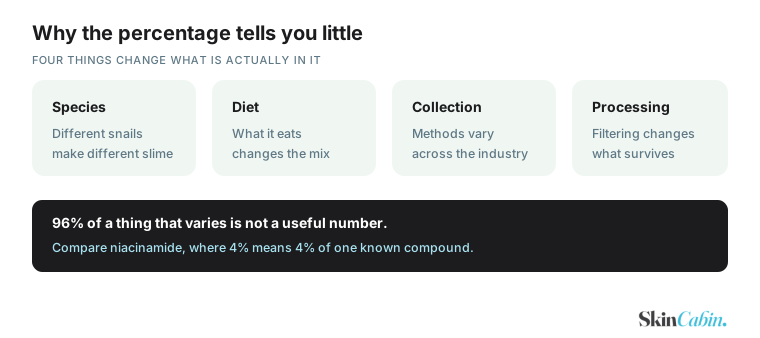 Four variables, one number on the front.
What changes it:
- The species of snail. Different snails make different slime
- What the snail eats. Diet changes what's in it
- How it's collected. Methods vary a lot across the industry
- How it's treated. Filtering and preserving change what survives
So the percentage on the front tells you very little. A product at 96% might have more useful material in it than one at 92%. Or a lot less. The label can't tell you.
Compare that to niacinamide. There, 4% means 4% of one known thing, and the research lines up with the number.
What to do about it. Judge the product on the rest of its ingredients, and on how it feels. The big number on the front isn't the signal it looks like.
What the evidence supports
Graded honestly, which is not how you'll usually see it presented.
Reasonable
Hydration. It holds water at the surface. That fits what's in it, and people notice.
Soothing. Skin feels less irritated. The allantoin and the water-holding ingredients both help.
Limited
Wound healing. Some studies. Mostly small, several paid for by industry, often on cells rather than people.
Brightening. Small and slow, where it shows up at all. Nowhere near vitamin C or niacinamide.
Acne. No good evidence it treats acne. Spot-prone skin usually copes with it well, which is a different claim.
Not supported
Firming, from the collagen in it. That collagen can't get in.
Anything called regenerating or repairing. That's marketing language doing work the research won't back.
One caveat on all of it. A fair share of the published work comes from people with something to sell. That doesn't make it wrong. It does mean treating the findings more carefully than usual.
Brightening specifically is covered in does snail mucin brighten skin.
Who it suits
Dry or dehydrated skin. The hydration effect is the reliable one.
Skin that's easily upset. Most people cope with it well, and it rarely stings.
Anyone who likes how it feels. That's a real reason. A product you enjoy is one you'll keep using.
Less useful if: you're treating dark marks, lines or acne. Better-backed ingredients exist for all three.
Not a replacement for moisturiser. Most snail mucin essences mainly pull water in, so they need something over the top to keep it there.
Is it cruelty-free?
A fair question, and the honest answer is uncomfortable.
Snails aren't killed for it. Mucin is collected from live snails.
How it's collected varies, and the industry says little about it. Some producers use methods meant to keep snails calm. Others stir them up to make them produce more.
"Cruelty-free" on the box can't be checked. No standard covers snail welfare, and nobody certifies it independently.
And snail welfare is poorly understood. How much snails feel stress isn't clear.
What that means in practice. If it matters to you, look for brands that describe how they collect it, rather than just using the phrase. And know that even a full description usually can't be checked.
More in how snail mucin is harvested.
For lips, see snail mucin on lips.
How to use it
On damp skin, like any humectant.
Under a moisturiser. Not instead of one.
Once or twice a day. Well tolerated at any frequency for most people.
Patch test first if you've reacted to things before. Reactions are uncommon, and they do happen. More in snail mucin side effects.
Give it four weeks for hydration and comfort. Longer for anything else, if it comes at all.
If you're allergic to shellfish or molluscs, check with a doctor before using it.
Quick recap
- Snail mucin is filtered snail slime — snail secretion filtrate on the label
- It hydrates and soothes. Those effects are real
- The useful parts are water-holders and allantoin, all sold separately and cheaper
- It isn't one fixed thing. Species, diet, collection and processing all change it
- So the percentage on the front tells you very little
- Evidence beyond hydration is thin, and often paid for by industry
- The collagen in it doesn't firm skin. It can't get in
- Cruelty-free claims can't be checked
- Good for dry, dehydrated or easily upset skin
- Not the best choice for dark marks, lines or acne
Frequently asked questions
What is snail mucin? Filtered snail slime. On labels it's snail secretion filtrate. It hydrates and soothes.
Does snail mucin actually work? For hydration and soothing, yes. For brightening, firming or acne, the evidence is thin.
Why does the percentage vary so much between products? Because it isn't one fixed thing. Two products at the same percentage can hold different stuff.
Is 96% snail mucin better than 92%? Not necessarily. What's in it varies more than how much of it there is.
Does it help with acne? No good evidence it treats acne. Spot-prone skin usually copes with it well, which is different.
Does it fade dark marks? A little at best. Vitamin C and niacinamide have far more behind them.
Does the collagen in it firm my skin? No. Collagen is too big to get into skin. It sits on the surface.
Is it cruelty-free? Snails aren't killed. Collection methods vary and nobody certifies them, so the claim can't be checked.
Can I use it every day? Yes, for most people. Patch test first if you react easily.
Is it a moisturiser? No. It mostly pulls water in, so it needs something over the top to hold it there.
Can I use it if I'm allergic to shellfish? Check with a doctor first. Snails are molluscs.
Every product on SkinCabin is scored on its ingredients rather than its marketing. Find products →