Silicones in Skincare — Are They Bad for Your Skin?
In short
Silicones are safe for skin. They do not clog pores, block sweat, or suffocate anything. They smooth the surface, slow water loss a little, and make products feel good. The real question is not safety. It is whether a silicone is doing the job you need done.
That answer will annoy people on both sides.
One camp says silicones are the reason their skin is smooth. The other says silicones caused their acne. Both camps are arguing about the wrong thing.
Silicones are not very interesting on their own. They are a tool. A good one, for some jobs. Useless for others.
So this page does two things. First it shows you what a silicone actually does when it lands on skin. Then it goes through every scare you have read, one at a time, and tells you which ones hold up.
One of them does.
What is a silicone?
A silicone is a man-made stuff built from silicon and oxygen.
Silicon and oxygen link up in a long repeating chain. Other bits attach along the sides. Change those side bits and you get a different silicone that acts differently.
That chain is why silicones feel the way they do. It is long and bendy. It spreads into a very thin film without pulling or dragging.
Skincare uses a lot of them. Some are thin and runny. Some are thick and rubbery. Some dry off the skin in minutes.
They are all the same basic idea, built to different lengths.
✓ What you know now A silicone is a long chain of silicon and oxygen. Change the side bits, change what it does.
Is silicone the same as silicon?
No, and the difference matters more than it looks.
Silicon is an element. It has a box on the periodic table. You never find it loose in nature. It turns up locked inside sand and rock.
Silicone is a material people make in a factory. It does not exist in nature at all.
The route goes sand, then silicon, then silicone. Three steps, not two.
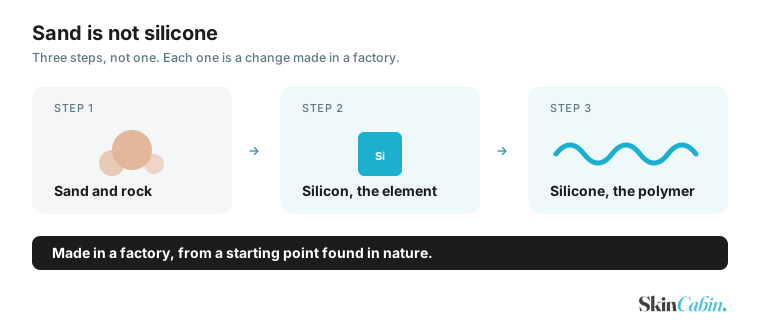
Made in a factory. Sand is just where it starts.
You will see people online say silicone is natural because it comes from sand. Your kitchen table comes from a tree. Nobody calls it a forest.
That sounds like nitpicking. But it is the reason "silicone is basically just sand" and "silicone is a scary lab chemical" are both wrong. It is a made material with a natural starting point. Most things are.
How do I spot a silicone on an ingredient list?
Look at the ending of the word, not the word itself.
Three endings cover nearly all of them:
- -cone — dimethicone, cyclomethicone, amodimethicone
- -conol — dimethiconol
- -siloxane — cyclopentasiloxane, cyclohexasiloxane
Learn those three and you can read any label in the shop.
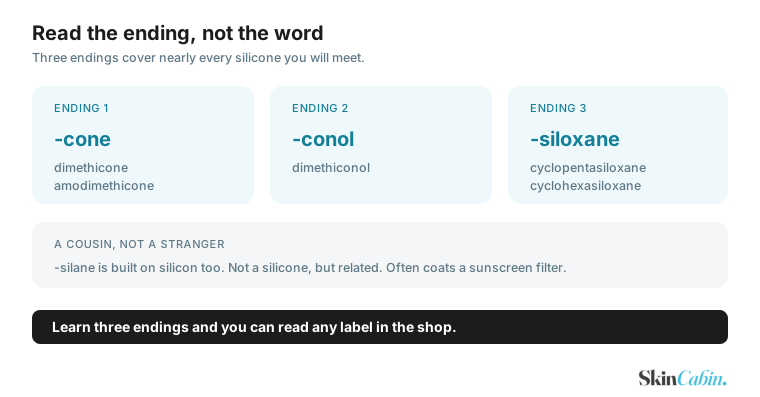
Three endings, and you can read any label in the shop.
There is a fourth ending worth knowing. Some ingredients end in -silane. Trimethoxycaprylylsilane is one you will meet on mineral sunscreens.
Silanes are built on silicon too. But they are not silicones in the strict sense, because they are not long chains. They are usually there to coat something else, like a sunscreen filter, so it spreads better.
If you are avoiding silicones, know that a silane is a cousin, not a stranger.
What are the most common silicones in skincare?
Four names cover most of what you will meet.
Dimethicone is the workhorse. It is in moisturisers, primers, sunscreens, foundations and hair products. When people argue about silicones, this is nearly always the one they mean.
Dimethicone crosspolymer is dimethicone built into a soft sponge instead of a fluid. It behaves quite differently. Hold that thought, because it matters later.
Cyclopentasiloxane is a light one that evaporates. It carries other things onto the skin then leaves. It is why some serums feel like they vanish.
Amodimethicone is a hair one. It is built to stick to damaged spots on the hair rather than coat everything evenly.
Same family. Very different jobs.
What does a silicone actually do on your skin?
It spreads into a thin film and sits there.
That is the whole mechanism. It does not sink in. It does not react with anything. It does not feed your skin.
It sits on top and changes what the surface is like.
Skin is not smooth up close. It has ridges, flakes, gaps between dead cells, and the fine lines you already know about. Light hits all that unevenness and scatters.
A silicone film fills the dips. The surface becomes more even. Light bounces off it more evenly too.
That is why skin looks softer and slightly blurred with a silicone on it. Not because anything changed underneath. Because the top got flatter.
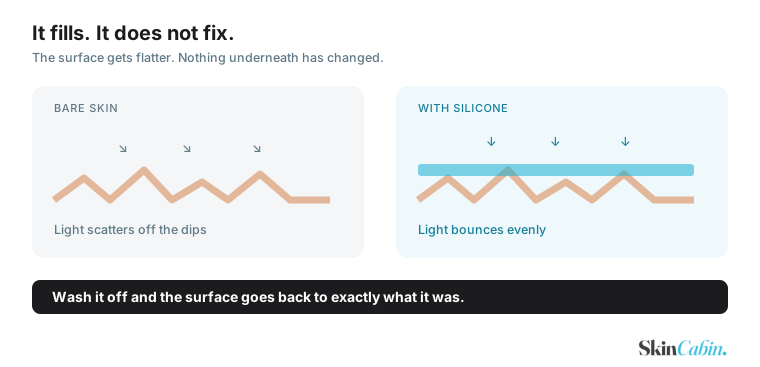
Flatter surface, softer look. Nothing underneath has changed.
Which brings up the honest limit.
Silicone fills. It does not fix. Wash it off and the surface goes back to exactly what it was. Smooth today, smooth only today.
That is not a criticism. Concealer does not cure anything either, and nobody minds.
Why is dimethicone in almost every moisturiser?
Because it does three jobs at once, cheaply, and almost nobody reacts to it.
It smooths the surface. It slows water loss a bit. And it makes the product feel light instead of greasy.
That last one sounds shallow. It is not. A moisturiser only works if you use it. People stop using products that feel heavy or sticky.
Dimethicone is how a formulator adds richness without adding grease. It is the reason a lotion can feel like nothing and still do something.
There is also a formulating trick worth knowing. Dimethicone cuts the tackiness of heavier ingredients. Put it with petrolatum and the mix stops feeling like a slick.
So it is often not the star. It is the thing that makes the star tolerable.
Does dimethicone stop your skin losing water?
A little. Less than you have been told, and scientists really do disagree about how much.
Here is the background. Your skin loses water to the air all day. It is normal. It only becomes a problem when it happens faster than your skin can keep up.
Ingredients that slow that loss are called occlusives. Petrolatum is the benchmark. It cuts water loss by around 98 per cent.
Dimethicone is in the same category but nowhere near the same league. A standard dermatology text puts silicones at 20 to 30 per cent.
But one study went further and found something odd. Silicones applied to the forearm did reduce water loss at first. Then the numbers came out no different from bare untreated skin. The paper is called "Silicones as Nonocclusive Topical Agents", which tells you where the authors landed.
So the honest answer has a shrug in it. Dimethicone slows water loss weakly. How weakly depends on the rest of the formula. And good researchers disagree about whether it matters.
Treat dimethicone as a light seal, not a real one.
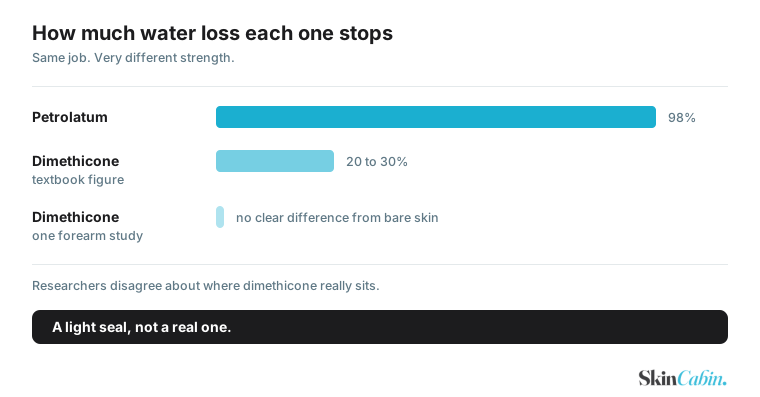
Nobody quite agrees where dimethicone sits.
That sounds like hedging. It is actually the most useful thing on this page, and here is why.
If your skin is properly dry, a moisturiser whose only real sealing ingredient is dimethicone will let you down. Not because the ingredient is bad. Because you asked a light tool to do heavy work.
You want something stronger in the mix. Petrolatum, shea butter, or a proper set of skin lipids.
Not sure what your current moisturiser is actually built on? Check what's in it.
Why do silicones make products feel so good?
Because of something formulators call slip.
Slip is how easily a product moves across skin. High slip spreads with almost no pressure. Low slip drags.
Silicones have very high slip. A small amount changes how a whole product feels.
This is why two creams with near-identical ingredient lists can feel completely different. One has a silicone near the top of the list. The other does not.
It is also why silicone-free products often feel heavier. Nothing has gone wrong. The slip is just missing.
Feel is not the same as function. A product that feels lovely is not automatically working. A product that feels like nothing is not automatically weak.
Keep those two judgements apart and you will waste less money.
Why do my products pill or roll up?
Because two films on your face cannot agree with each other.
Pilling is when a product balls up into little rolls as you rub it in. It looks like the product is coming off. In a way it is.
Here is what causes it. Some ingredients form a film as they dry. Silicones do. So do some gels, some sunscreens, and anything with a film former in it.
Put one film on top of another and they can refuse to blend. Rub them, and instead of spreading they gather and roll.
So silicone is often part of a pilling problem. It is rarely the whole problem on its own.
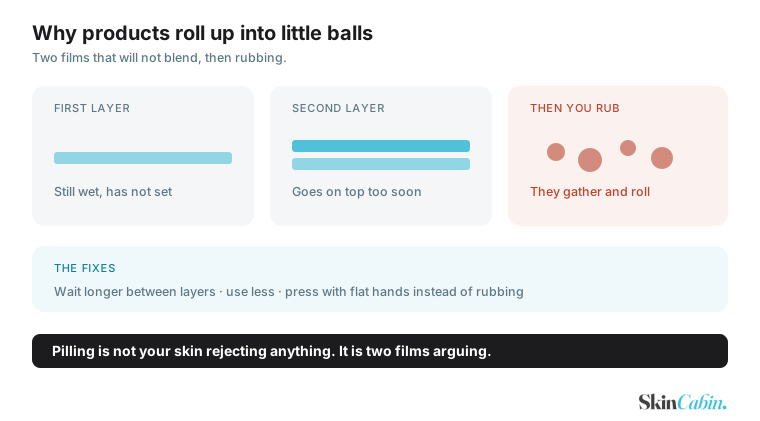
Two films that will not blend.
Three things make it worse:
- Layering too fast. The layer underneath has not set. You are stirring two wet films together.
- Too much product. Thicker films have more to roll up.
- Rubbing instead of pressing. Rubbing is what balls it up in the first place.
The fixes are dull and they work. Wait longer between layers. Use less. Press products in with flat hands instead of massaging them.
If one pairing always pills, change the order. Put the thinner one first and let it dry properly.
Pilling is not your skin rejecting anything. It is two films arguing.
That sounds trivial. But it is the reason people abandon sunscreens that were working fine, and blame their skin for a physics problem.
Do silicones block other ingredients from getting in?
Mostly no, and the exception is smaller than people think.
The worry goes like this. If silicone forms a film, anything you put on afterwards is stuck outside it.
Two things undercut that.
The film is full of gaps, as covered above. It is not a lid.
And silicone is rarely on its own. In a real product it is mixed through a formula with water, oils and everything else. It does not lay down a clean sealed sheet.
There is a grain of truth worth keeping, though.
A thick silicone layer can slow down what you put on next. It is a delay, not a wall. Layer a serum over a silicone-heavy primer and you may notice it does not sink in properly.
Which is a good argument for something simpler. Put your thinnest, most active products on first, and your smoothing or sealing ones last.
That order is worth following whatever is in your products. It has nothing to do with silicone specifically.
Actives first, finishers last. That is the whole rule.
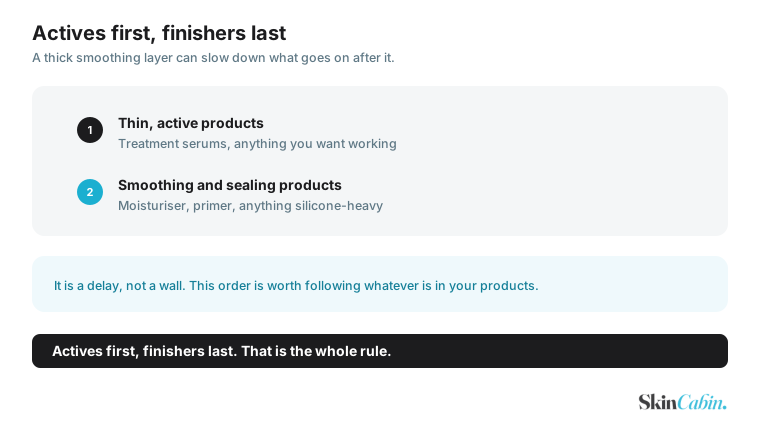
Thin and active first. Smoothing and sealing last.
Do silicones help scars?
Yes. This is the one place silicone does something genuinely medical, and almost nobody mentions it.
Silicone gel sheets and gels are a standard treatment for raised scars. Not a folk remedy. They appear in the scar guidelines surgeons use. For a thickened or raised scar, they are usually the first thing tried.
The evidence is best for hypertrophic scars and keloids. Those are the raised, thickened kinds, where the skin has over-repaired itself.
How they work is not fully settled. The leading idea is that the sheet holds water in the scar tissue. That seems to change the signals telling the scar to keep building. It may be doing more than that. Researchers are honest that they do not entirely know.
What is clearer is the practical side.
It is slow. Scar treatment runs over months, not weeks, and needs near-daily wear to do anything.
It works best early, on a scar that is still forming, though it can help older ones.
And it is very safe, which is much of why it is tried first. The worst common outcome is that it does nothing.
Two things to be clear about.
A moisturiser with dimethicone is not a scar treatment. The medical use is a dedicated sheet or gel, worn for hours a day. Your face cream is not doing this.
Raised scars are worth showing a doctor. Keloids especially, because other treatments exist and starting early matters.
Why are silicones in primers and makeup?
Because filling gaps is exactly what a primer is for.
Foundation settles into creases and pores. That is what makes makeup look worse after a few hours, not better. A primer flattens the surface first so the foundation has somewhere even to sit.
Silicone does that better than almost anything. Fill the dips, and there is nowhere for foundation to collect.
The same logic explains silicones inside foundation itself. Even coverage needs an even surface.
The effect lasts exactly as long as the product does. Take it off and every line is back. That is not a failure. It is what a primer is.
Do silicones absorb oil?
Plain dimethicone does not. This one is repeated everywhere and it is wrong.
Dimethicone is a fluid. Fluids do not soak things up. It has no structure to hold oil in.
Two things nearby are true, though, and they explain why the myth sticks.
Dimethicone crosspolymer does absorb some oil. It is the sponge version. It has a soft open structure that can hold liquid inside it. If a primer really does cut shine, this is often part of why.
Plain dimethicone makes oily skin feel drier. It mixes with your own oil and changes how that oil sits. Dermatologists sometimes call it an astringent emollient for exactly this reason. Your face feels less slick. No oil has gone anywhere.
The real oil absorbers in a mattifying product are usually silica, clay, starch, or that crosspolymer.
So the shine control is real. The mechanism on the label is not what you thought.
Why are silicones in sunscreen?
Two reasons, and the less famous one is more important.
The famous reason is water resistance. Silicones do not dissolve in water, so a film containing them does not wash straight off.
That said, silicone is not doing most of that work. Water resistance mainly comes from ingredients called film formers, built specifically for the job. Silicone helps. It is not the hero.
The quieter reason matters more. Silicone helps sunscreen spread evenly.
Sunscreen only protects the skin it actually covers, at the thickness it was tested at. A sunscreen that drags gets applied thinly and patchily. A sunscreen that glides gets applied properly.
The gap between the number on the bottle and real cover is mostly a how-you-put-it-on problem. Slip helps close it.
An SPF you apply well beats an SPF you apply carefully.
What do silicones do for hair?
They coat the hair and reduce friction. Most of the visible benefits come from that one change.
Hair is covered in overlapping scales, like roof tiles. On healthy hair they lie flat. On damaged hair they lift.
Lifted scales catch on each other. That is what tangling is, and it is a lot of what frizz is.
A silicone film smooths those scales down. Hair slides past hair instead of catching. So it detangles, it looks shinier, and it flies away less.
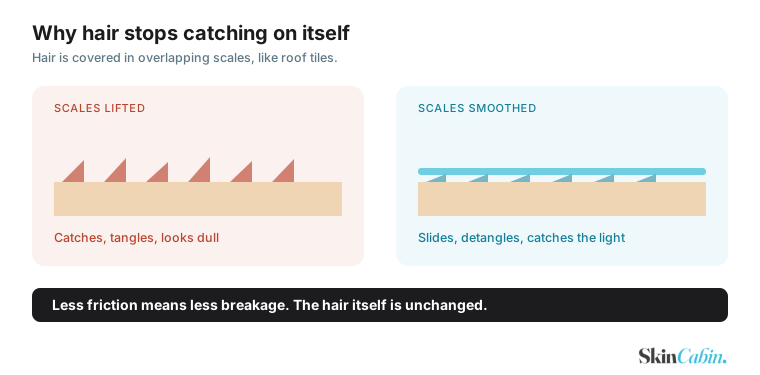
Smooth scales slide. Lifted scales catch.
Less friction also means less breakage when you comb. That is worth saying carefully, because it is routinely overstated.
Silicone reduces breakage. It does not strengthen hair. The fibre itself is unchanged. You have simply stopped snapping it on the way through.
Silicones also reduce heat damage, which is why they are standard in heat protectants. Again, reduce. Not prevent. A straightener at maximum heat will still cause damage.
Amodimethicone is worth a mention here. It is built to land on damaged patches specifically, rather than coating the whole strand. Same family, smarter aim.
Build-up, curly hair and which silicones rinse out are covered in silicones and hair.
Do silicones clog pores?
No. This is the biggest myth about silicones and it does not survive contact with evidence.
Here is where the fear comes from. People picture silicone as cling film. A sheet of plastic laid over the face, sealing every opening.
That picture is wrong, and everything built on it collapses with it.
The film is not solid. It is patchy and full of gaps. Think of a net, not a plastic bag.
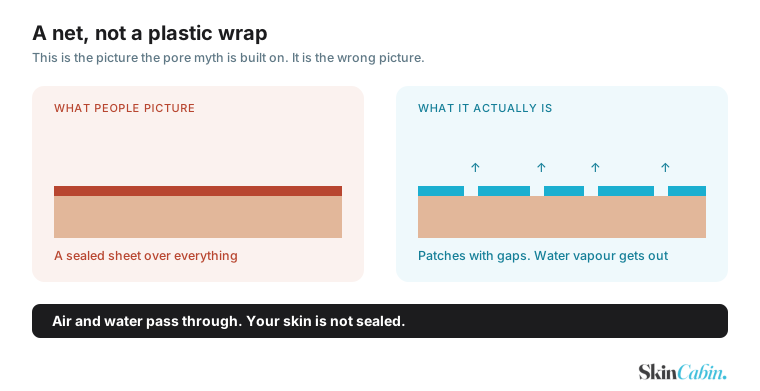
A net, not a plastic wrap.
Water vapour passes through. That is not a guess. It is why the water loss numbers earlier in this page are so low. If the film sealed the surface, those numbers would look like petrolatum's.
And a clogged pore does not form on the surface anyway. It forms inside the follicle, from dead cells and oil sticking together down in the channel. Dimethicone is not down there. It cannot be. It sits on top and stays there.
That is the whole answer. Silicone sits on top. It cannot block a process happening underneath it.
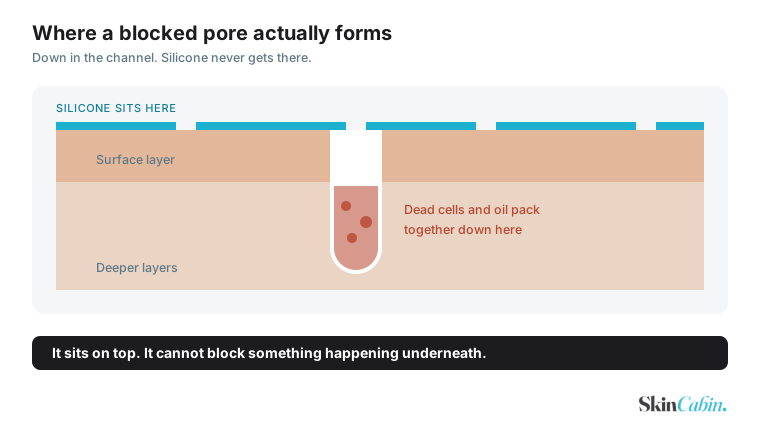
The blockage forms below. The silicone stays above.
You will also see silicones listed with a comedogenic rating, often a one or a zero. Ignore those numbers, including the flattering ones.
The comedogenic scale was built by testing ingredients on rabbit ears in the 1970s. Rabbit ears are not faces. Published ratings for the same ingredient disagree with each other. A number implies a precision that does not exist.
We do not use those ratings on this site. Not for silicones, and not for anything else.
So why did my skin break out?
It is a fair question and it deserves a better answer than "it was not the silicone".
Something caused it. Three things are worth checking before you blame the silicone.
Look further down the list. Silicone is usually near the top, so it gets the blame. Some fatty esters and plant oils are much more strongly linked to breakouts, and they sit lower down where nobody reads.
Check what else changed. A new product rarely arrives alone. New routine, new season, new stress, new medicine. A single change is easy to blame and rarely the only one.
Accept it might be you. Skin is personal. Reactions to silicone are rare, not impossible. If a product with dimethicone always causes you trouble and one without it does not, that is your evidence and it is worth more than this page.
Just check the other two first. Otherwise you spend years avoiding the wrong ingredient.
Do silicones suffocate the skin?
No. This idea is wrong twice over.
The first problem is the film. As covered above, it is permeable. Air and water vapour pass through.
The second problem is the premise. Your skin does not breathe. It does not take oxygen from the air in any way that matters. Your lungs do that, and your blood delivers it.
So even a truly airtight film would not suffocate anything. And silicone is nowhere near airtight.
Sweat gets out too. Sweat ducts are far bigger than any gap you are worried about.
Your face is not being smothered. It is wearing a very thin, very holey coat.
Can silicones irritate your skin?
Very rarely. They are among the least reactive ingredients in a bathroom cabinet.
Silicones are chemically stable. They do not readily react with skin, or break down into something that does. That stability is the whole reason they are used in wound dressings, scar sheets and medical implants.
If an ingredient reacted with the body, you would not put it inside one.
But you will read that silicone "cannot" irritate skin, or that it is "hypoallergenic". Both go too far.
Allergic reactions to dimethicone do exist in the medical literature. They are rare enough to be written up as individual cases, which tells you how rare.
And "hypoallergenic" is a word with no legal definition anywhere. Any brand can print it on anything. It means nothing.
Very unlikely to react is true and useful. Cannot react is neither.
If a product with silicone stings, look at the rest of the formula. Fragrance and strong actives are far more common culprits.
Do silicones dry your skin out?
No. If anything they do the mild opposite.
This myth seems to come from how silicones feel. They feel dry and powdery rather than oily. People assume a dry feel means a drying effect.
It does not. Slowing water loss, even weakly, is the opposite of drying.
What is fair to say is that dimethicone alone is not enough for dry skin. That is a limit, not a harm. There is a difference between an ingredient that dries your skin and one that fails to fix dryness.
Do silicones build up on skin and hair?
Partly true, and much less dramatic than it sounds.
Some silicones do not dissolve in water. Dimethicone is one. Splashing your face will not shift it.
But you do not clean with water. You clean with a cleanser or a shampoo, and both remove silicone perfectly well.
Water alone will not shift it. An ordinary cleanser will.
Two details are worth knowing:
Some silicones rinse more easily. The ones modified with PEG are water-friendly and come away with much less effort. Not instantly, but easily.
Some are designed to hang around. Amodimethicone deliberately clings to damaged hair. It is doing its job. It also needs a proper wash to remove.
Clarifying shampoo gets recommended for this. It is good practice anyway, for oils and styling products and everything else that accumulates. Just do not treat it as a silicone antidote. That accepts a premise that was never true.
If you wash normally, build-up is not your problem.
Are silicones banned anywhere?
Yes. This is the one criticism that is real, and and it is not the one you have been arguing about.
The European Union has limited one group called cyclic silicones. Three of them: D4, D5 and D6.
On a label they appear as cyclotetrasiloxane, cyclopentasiloxane and cyclohexasiloxane. Cyclomethicone is a blend name that may contain them.
D4 was already banned in EU cosmetics. D5 and D6 are now capped at under 0.1 per cent. Rinse-off products came under the rule on 6 June 2026. Leave-on products follow on 6 June 2027.
Now the part everyone gets wrong.
This has nothing to do with skin safety. The rule is about the planet, not your face. These particular silicones break down very slowly and build up in water and air. Regulators identified cosmetics as the main route into the environment and expect the rule to cut what escapes by a lot.
Nothing in the decision says these ingredients harm your face.
And it does not cover dimethicone. Not dimethiconol, and not dimethicone crosspolymer either. The silicone you are most likely to be avoiding is not the silicone anyone restricted.
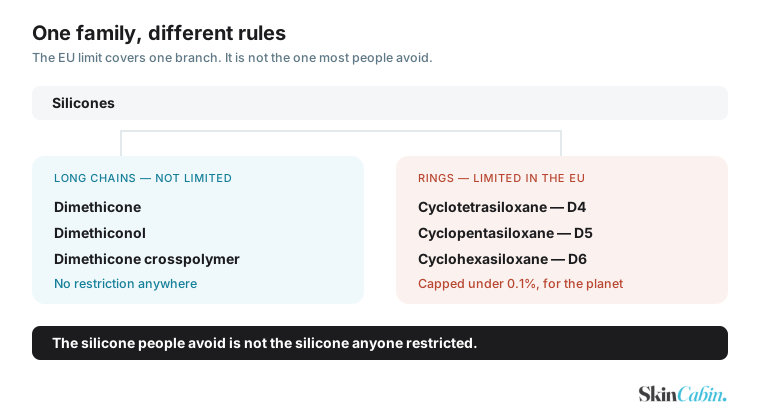
The rule covers the rings, not dimethicone.
Cyclic silicones are the ones in trouble. Dimethicone is not.
This section exists because three videos and a hundred blog posts defending silicones never mention it. That is how you lose an argument you were winning.
Are silicones bad for the environment?
The cyclic ones are a legitimate concern. The rest is less clear.
D4, D5 and D6 are officially classed as very slow to break down, and prone to building up. They linger, and they gather in living things. That classification is why the rule happened.
Beyond those three, the picture gets murkier. Large silicone polymers like dimethicone behave differently and break down differently. They are not what the rule covers.
Where does that leave you?
If the environment is your reason for avoiding silicones, that is a real reason. Aim it at the cyclic ones specifically. Look for the -siloxane ending.
If your skin is your reason, the green case does not support you. It is a different argument about different molecules.
Two honest reasons can point in different directions. That is allowed.
Is silicone-free worth paying for?
It depends entirely on why you want it.
For skin, no. Silicone-free is a promise about a fear, not about your skin. There is no skin benefit to removing an ingredient that was not causing harm. Products get rebuilt around a marketing claim, and you pay for it.
For hair, sometimes. This one is a real preference. Some people prefer uncoated hair, especially with curls, where the weight and slip can flatten the pattern. Nothing is wrong with the silicone. You just may not want the effect. There is more on this in silicones and hair.
For the environment, aim more carefully. A blanket silicone-free buy may still be doing less than simply avoiding the three cyclic ones by name.
The pattern is worth learning beyond this ingredient. Free-from claims sell you the absence of something. That is only valuable if the something was a problem for you.
The full version of that decision is in is silicone-free worth paying for.
Who should skip silicones?
Short list.
People whose skin reliably reacts. Rare, but you know your own face. If the pattern is consistent, act on it.
Anyone with properly dry skin relying on silicone alone. Not skip, exactly. Add. You need a heavier occlusive alongside it.
Curly hair types who prefer the uncoated feel. Preference, not safety.
Anyone avoiding cyclic silicones for green reasons. Skip the -siloxanes. Dimethicone is a separate question.
Everyone else can stop thinking about it. Which is the point. Silicone is not a decision worth much of your attention.
Common mistakes
Blaming the silicone first. It is near the top of the list, so it is easy to spot. Being visible is not the same as being guilty.
Reading a comedogenic rating as fact. The scale is not reliable, in either direction.
Expecting a silicone moisturiser to fix dry skin. It is a light tool. Dry skin needs a heavy one.
Believing smooth means repaired. Silicone fills. It does not fix. Everything comes back after washing.
Buying silicone-free for your skin. If the reason is hair feel or the environment, fine. For skin, you are paying for nothing.
Treating all silicones as one thing. Dimethicone, cyclopentasiloxane and dimethicone crosspolymer behave differently and are regulated differently.
Skipping the cleanse. Silicone is not water-soluble. Splashing is not washing.
When to see a doctor
Silicone is not a medical concern. Some things around it are.
See a doctor if skin stays red, sore or itchy after you stop a product. A reaction that outlasts the cause needs looking at.
See one if acne is not improving after a few months of sensible over-the-counter care. Acne that sticks around responds to prescription treatment. Waiting costs you time, and sometimes leaves marks.
And see one if you keep reacting to products and cannot find the pattern. Patch testing exists for exactly this. It beats cutting out one thing at a time based on what you read online.
FAQ
Is dimethicone safe? Yes. It is one of the best-tolerated things in skincare. Wound care and medical devices use it for the same reason.
Does dimethicone cause acne? There is no good evidence that it does. It sits on the skin surface, and clogged pores form inside the follicle.
Is dimethicone an occlusive? Weakly, and researchers disagree about how weakly. Estimates range from a modest effect to nearly none. Petrolatum is far stronger.
Can I use silicones with acne treatments? Yes. They are common in products designed for acne-prone skin, partly because they ease the dryness that acne treatments cause.
Do I need a double cleanse to remove silicone? No. An ordinary cleanser removes it. Double cleansing is useful for heavy makeup and sunscreen, which is a separate question.
Are silicones safe in pregnancy? We do not give pregnancy advice. Ask your doctor or midwife about anything you are using.
Is cyclopentasiloxane being banned? In the EU it is restricted to under 0.1 per cent, on green grounds. Rinse-off products from June 2026, leave-on from June 2027.
Do silicones cause hair loss? No. They coat the strand. There is no mechanism by which a surface coating affects the follicle.
Should I avoid silicones if I have sensitive skin? Usually the opposite. Their chemical stability makes them one of the safer things on a sensitive skin label.
Is silicone natural? No. It is made in a factory, from a starting material found in sand and rock.