What Is Rosehip Oil?
In short
Rosehip oil is pressed from the seeds inside rosehips — the fruit left after a wild rose flowers. Not from petals.
It's a good oil. High in the fatty acids skin uses, light enough for most people, and it doesn't block pores the way heavier oils can.
The "nature's retinol" claim needs more scrutiny than it gets. What's definitely in it is carotenoids — vitamin A precursors. Whether it contains meaningful retinoic acid itself is far less certain than the marketing suggests.
And it goes off fast. Rosehip oil is high in the fats that oxidise quickly. A rancid oil is worse than no oil, and most people don't know to look.
What it actually is
Pressed from the seeds inside rosehips, usually from Rosa canina or Rosa rubiginosa.
Not rose oil. Rose oil comes from petals, costs far more, and does something different. Easy to confuse.
Cold-pressed is better. Heat and solvents damage the fats you're buying it for. Good products say cold-pressed on the label.
The colour tells you something. Real rosehip oil is orange to deep amber, from the carotenoids in it. Pale yellow oil has usually been refined, which strips those out.
The vitamin A claim, examined
This is what rosehip oil is mostly sold on, and it deserves a closer look.
The claim: rosehip oil contains all-trans-retinoic acid, so it works like a retinoid.
What that molecule is. All-trans-retinoic acid is tretinoin — a prescription medicine in most countries.
Which is the first problem. If rosehip oil contained a meaningful amount, it would be regulated as a drug rather than sold as a cosmetic oil. It isn't.
What's definitely in it: carotenoids. Those are vitamin A precursors — related compounds your body can convert, in the gut, when eaten. Whether skin does anything similar with them applied topically is a different question, and not a settled one.
Our position. We haven't found good evidence that rosehip oil delivers a retinoid effect. The claim is repeated everywhere, usually tracing back to old and limited research.
What that means for you. Don't buy rosehip oil expecting retinol. If you want a retinoid, buy a retinoid. Rosehip oil is a good oil on its own terms.
What's actually in it
Three fatty acids do most of the work.
Linoleic acid, the largest share. Skin uses it to build its barrier, and acne-prone skin tends to be lower in it. That's the most interesting thing in the bottle.
Linolenic acid, also high. Contributes to barrier function and calms irritation.
Oleic acid, a smaller share. Richer and heavier — the part most likely to feel greasy or bother some people.
Plus carotenoids and some vitamin E. The carotenoids give the colour. The vitamin E slows oxidation a little, and not enough.
The problem nobody mentions
Rosehip oil oxidises fast, and this matters more than any benefit claim.
Why. The fats that make it good — linoleic and linolenic acid — are exactly the ones that react with air and light. High polyunsaturated content means fast spoiling.
What happens when it does. The oil turns darker, smells sharp or crayon-like, and thickens. Oxidised oil can irritate skin and may make inflammation worse, which is the opposite of why you bought it.
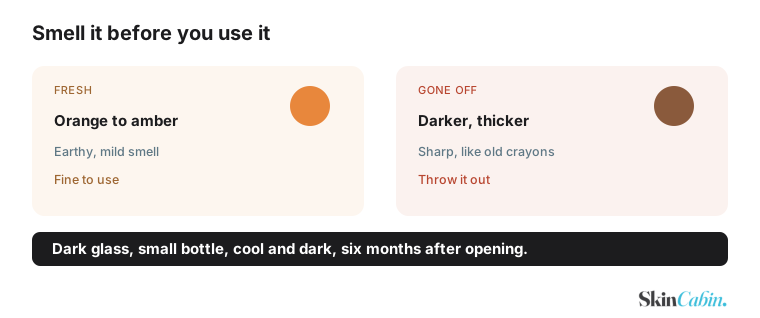 Fresh is orange and mild. Dark and sharp means bin it.
How to slow it:
- Dark glass, never clear. Light accelerates it
- Small bottles. A big one spoils before you finish it
- Cool and dark. The fridge is genuinely reasonable here
- Use within six months of opening
- Smell it before applying. Fresh rosehip oil smells earthy and mild. Sharp, bitter or like old crayons means bin it
This is why cheap rosehip oil in a clear bottle on a warm shelf is a bad buy regardless of what the label claims.
Using it for acne-prone skin, marks or ageing? See rosehip oil for acne, for dark spots, and anti-ageing benefits.
What it's good for
Graded honestly.
Reasonable
Barrier support and dryness. The fatty acids are ones skin uses. It absorbs well and doesn't sit heavily.
Suits acne-prone skin better than most oils, because of the linoleic acid content.
Limited
Scars and marks. Some small studies, often with other ingredients, and the effects are modest.
Fine lines. Well-moisturised skin shows lines less. That's not the same as rebuilding collagen.
Not supported
Anything described as a retinol alternative. See above.
Dramatic scar removal. It doesn't do that.
How to use it
Last, or nearly last. Oils go over water-based products, not under. They seal what's beneath them.
A few drops, pressed in. Not rubbed.
On damp skin if you're using it alone, so there's water to seal.
Night is easier, and morning is fine under sunscreen if your skin isn't oily.
Over a moisturiser, not instead of one. Rosehip oil seals — it doesn't add water. On its own it can leave you no better off.
Not a primer. It's occasionally recommended as one, and it makes makeup slide.
What to look for when buying
Cold-pressed. Stated on the label.
Dark glass, ideally with a dropper.
Orange or amber colour. Pale means refined.
A small bottle — 30ml rather than 100ml.
One ingredient. Rosa canina or Rosa rubiginosa seed oil, and nothing else. Blends with cheaper oils are common.
Ignore claims about retinol content. Nobody is measuring it, and no product states it.
Quick recap
- Pressed from rosehip seeds, not rose petals
- It's a good oil. High in the fatty acids skin uses, light, and suits acne-prone skin
- The "nature's retinol" claim needs scrutiny. What's certain is carotenoids, which are precursors
- All-trans-retinoic acid is a prescription drug — a cosmetic oil containing meaningful amounts would be regulated as one
- It oxidises fast. Dark glass, small bottle, cool storage, six months
- Smell it. Sharp or crayon-like means throw it out
- Goes last in your routine, over a moisturiser
- Best evidence is for barrier support and dryness
Frequently asked questions
What is rosehip oil? Oil pressed from the seeds inside rosehips, the fruit of wild roses. Not from petals.
Is rosehip oil the same as retinol? No. It contains carotenoids, which are vitamin A precursors. We haven't found good evidence it delivers a retinoid effect.
Why do people call it nature's retinol? A claim that it contains all-trans-retinoic acid. That molecule is a prescription medicine, and a cosmetic oil with meaningful amounts would be regulated as a drug.
Does rosehip oil go off? Yes, quickly. It's high in fats that react with air and light. Six months after opening.
How do I know if mine has gone off? Smell it. Fresh is earthy and mild. Sharp, bitter or like old crayons means bin it.
Should I keep it in the fridge? It genuinely helps. Cool and dark slows oxidation.
Does rosehip oil clog pores? Less than most oils. It's high in linoleic acid, which suits acne-prone skin better than heavier oils.
When should I apply it? Last, or nearly last. Over a moisturiser, not instead of one.
Can I use it as a primer? Not really. Makeup tends to slide on it.
What should I look for when buying? Cold-pressed, dark glass, orange colour, small bottle, one ingredient.
Every product on SkinCabin is scored on its ingredients rather than its marketing. Find products →